

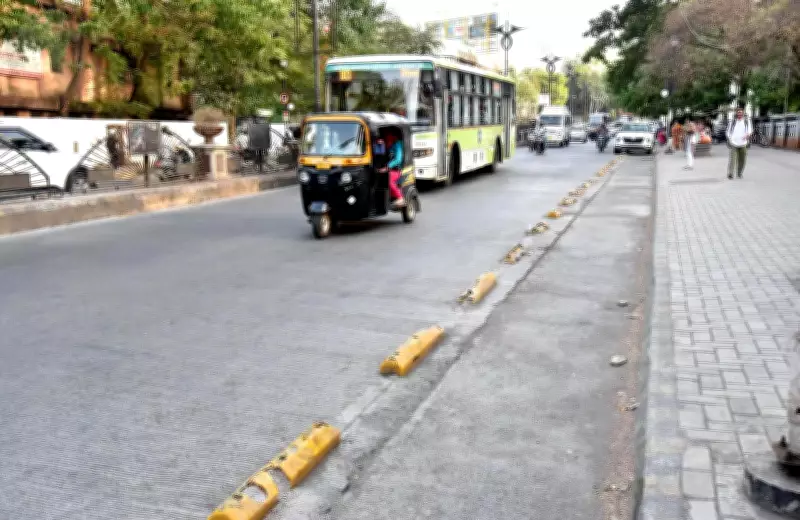
The Nashik Municipal Corporation (NMC) is set to introduce a dedicated Non-Motorised Transport (NMT) policy in July 2025, aimed at promoting safer and more convenient travel for pedestrians and cyclists while reducing the city's growing reliance on motor vehicles.
Key Features of the NMT Policy
The proposed policy prioritises the development of dedicated cycle tracks, wider and obstruction-free footpaths, and safer road-crossing facilities. It also includes measures to improve last-mile connectivity and encourage eco-friendly modes of transport for short-distance travel across the city.
Civic officials have indicated that the policy is expected to be finalised by the first or second week of June and officially unveiled in the first week of July.

Emphasis on Pedestrian and Cyclist Infrastructure
A senior NMC official stated, "The policy will give thrust to cycle tracks for cyclists and walkable footpaths for pedestrians. It will also include provisions for road safety audits, which will be conducted at different stages — before, during and after road construction — and subsequently every two to three years."
The NMT policy is part of the civic body's broader strategy to improve urban mobility by curbing rising congestion, enhancing road safety, and reducing pollution levels. The initiative is being developed in consultation with transport experts, with inputs from citizens and coordination with traffic authorities.
Collaboration with ITDP
The NMC has already taken key steps by partnering with the Institute for Transportation and Development Policy (ITDP) to prepare a comprehensive mobility framework for the city. Under a five-year collaboration, the institute will assist the civic body in improving traffic systems, redesigning junctions, managing parking, and building safer, more accessible streets.
The proposed policy is expected to guide these efforts by promoting the "healthy streets" approach, which prioritises pedestrians, cyclists, and accessible urban spaces over vehicle-centric road designs. It will also integrate inclusive transport planning principles to transform streets and strengthen public transport systems.
Public Participation and Technical Assistance
The agency will provide technical assistance for intersection improvements, parking management, and street design. Officials confirmed that the policy is being prepared with active public participation, including feedback through online and offline surveys, and coordination with agencies such as traffic police and the regional transport office.
Significance Amid Rising Vehicle Numbers
The move gains significance as Nashik continues to witness a steady rise in vehicle numbers, leading to increased traffic congestion and road safety concerns. According to data from the RTO department, the total number of vehicles in Nashik city has increased from 13 lakh in 2019-20 to 16.60 lakh in 2023-24. Of these, 11.57 lakh are two-wheelers, 2.95 lakh four-wheelers, 5,600 taxis, 22,686 auto rickshaws, 5,512 buses, 81,083 cargo vehicles, among others.






