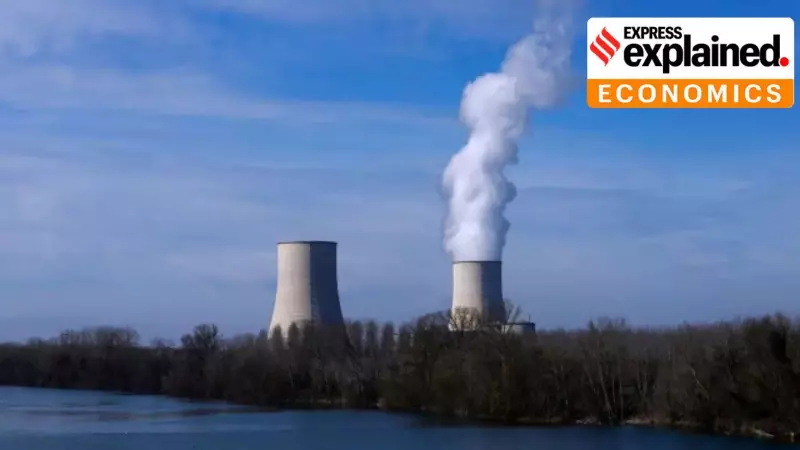
Draft National Electricity Policy 2026 Charts Ambitious Nuclear Path and Financial Reforms
In a significant policy development, the Indian government has unveiled the draft National Electricity Policy (NEP) 2026, marking a decisive pivot toward nuclear energy as a cornerstone of the nation's future power strategy. This comprehensive blueprint, set to replace the two-decade-old policy notified in 2005, outlines a transformative vision for India's electricity sector, balancing ambitious generation targets with crucial financial restructuring.
Nuclear Ambitions Take Center Stage
The draft policy places nuclear power at the forefront of India's long-term energy security, describing it as a clean, reliable, and sustainable energy source. It aligns with the government's goal to scale nuclear capacity to 100 gigawatts electrical (GWe) by 2047—a more than tenfold increase from the current installed capacity of 8.8 GWe. This push builds on the recent SHANTI Act, which opened the nuclear sector to private participation by removing legal and regulatory barriers.
Key initiatives include:

- Adoption of advanced nuclear technologies like Small Modular Reactors (SMRs) and other small-capacity reactors.
- Direct use of nuclear power by commercial and industrial consumers, potentially replacing coal-based captive plants.
- Collaboration between the central government and private sector to develop Bharat Small Reactors and modular reactors.
- Eligibility for Green Bond funding to facilitate financing for nuclear projects.
The policy also advocates for repurposing retired thermal power plant sites for nuclear generation and designing future plants with flexible operation capabilities to support variable renewable energy sources like solar and wind.
Tariff Reforms and Cross-Subsidy Exemptions
To improve the financial health of the power sector, the draft NEP 2026 proposes structural changes aimed at ensuring cost-reflective tariffs and reducing losses. A major highlight is the introduction of an index-linked automatic tariff revision mechanism. This system would activate if state electricity regulatory commissions fail to revise tariffs on time, preventing revenue gaps for power utilities and promoting timely cost pass-through.
Additionally, the policy suggests exemptions from cross-subsidy charges and surcharges for:
- Manufacturing units
- Indian Railways
- Metro rail systems
These measures aim to enhance competitiveness, optimize logistics costs, and reduce commuting expenses, thereby supporting economic growth. Currently, large consumers procuring power through open access must pay these levies to compensate distribution companies for revenue losses.
Renewable Energy and Grid Stability
While emphasizing nuclear power, the draft policy continues to support renewable energy expansion through market-based mechanisms and captive power plants. It places greater emphasis on energy storage solutions to ensure grid stability as the share of variable renewable energy grows. This balanced approach underscores India's commitment to a low-carbon energy pathway, aligning with climate goals to cut emissions intensity by 45% from 2005 levels by 2030 and achieve net-zero emissions by 2070.
Demand Projections and Financial Health Focus
The draft sets ambitious demand-side targets, projecting per capita electricity consumption to rise to 2,000 kWh by 2030 and over 4,000 kWh by 2047, reflecting the power demands of a growing economy. It ties this growth to India's climate commitments, highlighting the need for sustainable energy sources.
Beyond generation, the policy strongly focuses on restoring the financial health of distribution companies (discoms). It promotes strategies to reduce aggregate technical and commercial (AT&C) losses and ensure tariffs reflect actual costs, thereby enhancing operational efficiency.

Industry Perspectives and Challenges
Despite the optimistic outlook, industry insiders have expressed caution regarding nuclear power's high capital intensity. For instance, the upfront costs of nuclear projects are significantly higher than thermal power, potentially raising power tariffs and production costs for industries like aluminium. Additionally, limited control over nuclear fuel supply and pricing, which is tightly regulated by the government, poses a deterrent for private investment, as companies may have little say over critical cost components.
Experts like Rajasekhar from the Centre for Social and Economic Progress note that while the index-linked tariff mechanism is proposed, operational details are still awaited. Maintaining regulatory sanctity will be crucial to ensure consumer confidence in tariff-setting processes.
In summary, the draft National Electricity Policy 2026 represents a bold step toward reshaping India's energy landscape, with nuclear power at its core, complemented by financial reforms and a continued push for renewables. As the policy moves toward finalization, its implementation will be closely watched for its impact on energy security, economic competitiveness, and environmental sustainability.