

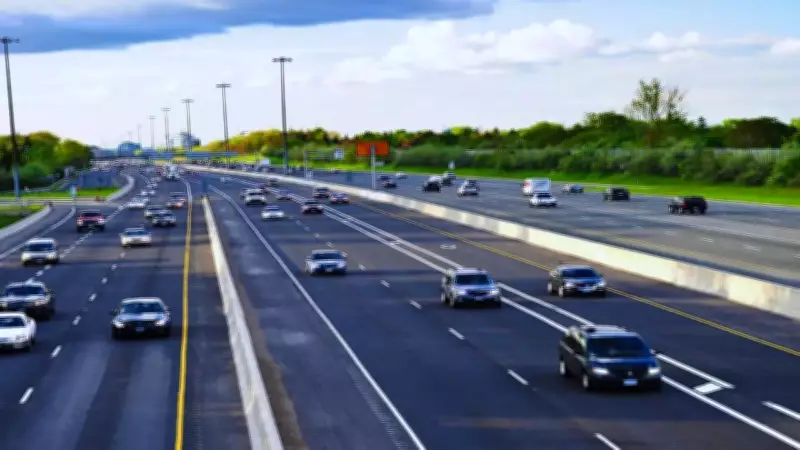
Union Minister for Road Transport and Highways Nitin Gadkari on Monday inaugurated the Multi-Lane Free Flow (MLFF) tolling system on Delhi's Urban Extension Road-II (UER-II), integrating the capital's newest transport corridor into India's expanding barrier-less toll network. This initiative aims to boost connectivity and ease travel for adjacent villages and surrounding habitations.
Expansion of Barrier-Less Tolling
The UER-II rollout follows the government's earlier launch of India's first MLFF system at the Chorayasi Toll Plaza on the Surat–Bharuch stretch of NH-48 in Gujarat. This marks another milestone in the shift toward technology-driven, stop-free highway infrastructure. The MLFF system uses Automatic Number Plate Recognition (ANPR) and FASTag to enable uninterrupted toll collection, allowing vehicles to pass without halting. This model is designed to ease congestion, shorten travel time, improve fuel efficiency, reduce emissions, and limit manual intervention.
Benefits for Commuters and Businesses
During the Gujarat launch, Gadkari stated that the barrier-less tolling initiative would improve 'Ease of Living' and support 'Ease of Doing Business' by ensuring quicker and more efficient transport movement. With its introduction on UER-II, the system now extends into the capital's transport network, where improved road infrastructure is expected to benefit both urban traffic flow and surrounding localities.

Wider Transport Landscape Changes
This development coincides with broader changes in India's transport sector. Railways Minister Ashwini Vaishnaw informed airline investors that the country's planned high-speed rail network is expected to dominate several heavily used short-haul sectors, sharply reshaping competition on those routes.
How the MLFF System Works
The MLFF system introduces barrier-less tolling with minimal human involvement, allowing vehicles to move through toll points without halting and ensuring uninterrupted traffic movement. It employs technologies such as ANPR and FASTag-enabled electronic toll collection for contactless toll payments. Designed to transform travel on National Highways, MLFF is expected to improve convenience and operational efficiency while sharply reducing congestion, cutting travel time, boosting fuel efficiency, and lowering vehicular emissions.
Guidelines for Users
To ensure smooth usage, NHAI has advised National Highway users to maintain adequate balance in their FASTag accounts. In cases of insufficient balance, invalid, or malfunctioning FASTags, users will receive an Electronic Notice (E-Notice) for non-payment of user fee. The pending user fee must be paid within 72 hours of the notice being issued.
Strengthening Toll Administration
Beyond commuter convenience, the MLFF rollout is also expected to strengthen toll administration by improving transparency and reducing operational expenses associated with physical toll plazas. The system is set to support the creation of a more efficient, cost-effective, and technologically advanced tolling network across India's National Highways.






