Noida Sanitation Workers Voice Concerns Over Administrative Restructuring
In Noida, a significant administrative overhaul by the Noida Authority has triggered widespread confusion and operational challenges among sanitation workers. The Authority recently integrated its health department with existing work circles, a move intended to streamline operations but which has instead created a complex reporting structure that workers claim is hindering their daily duties.
Operational Confusion and Reporting Issues
Sanitation workers have expressed frustration over the new system, stating that they previously reported to designated officials within the health department. Under the revised framework, which merges the health department and traffic cell with work circles, responsibilities for sanitation, sewer maintenance, drainage work, and traffic management are now directly handled by zonal work circle officials. This change has led to a scenario where a single worker cleaning three to four sectors may fall under the jurisdiction of different work circles, raising questions about accountability and reporting lines.
Satveer, a sanitation worker, highlighted the issue: "We would clean designated areas and report to officials in the health department. After the merger last week, a worker cleaning three to four sectors now falls under the jurisdiction of different work circles. Who do we report to?" This sentiment echoes among nearly 1,500 contractual sanitation workers who went on strike to oppose the new norms and demand the regularization of their services, alongside medical insurance for employees hired through agencies.

Impact on Residential Areas and Public Health
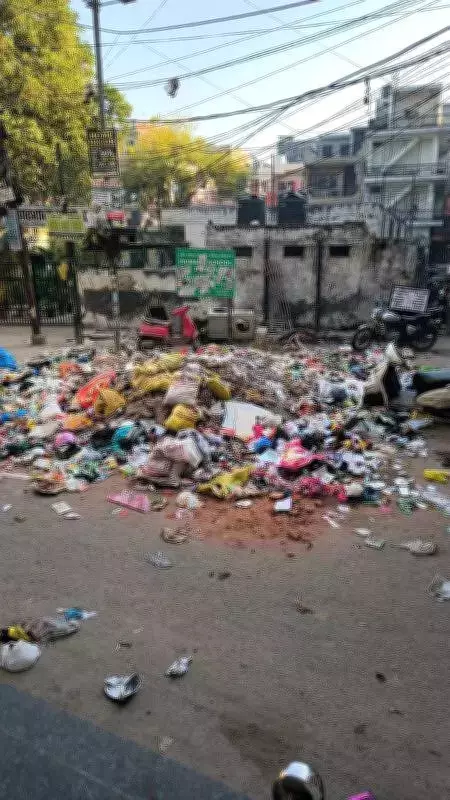
The strike has had a tangible impact on neighborhoods across Noida, with garbage collection severely disrupted. KK Jain, general secretary of the Federation of Noida Residents Welfare Associations, reported: "Garbage was not picked up regularly from sectors 34, 35, 50, and 51." In Sector 27, garbage piled up in front of a primary school, posing health and safety risks.
Ankita Nigam, a resident of Sector 27, shared her concerns: "Garbage has remained scattered in E Block for a week now. It is blocking the road and creating a problem for residents and commuters." The accumulation of waste not only obstructs pathways but also raises public health alarms, especially in densely populated urban areas.
Authority's Response and Proposed Solutions
In response to the protests, SP Singh, general manager of the Authority in charge of work circles 1-5, stated: "Discussions were held with the protesting workers, following which they resumed duty on Wednesday. The workers were informed about contact persons in respective work circles." To address the ongoing confusion, a meeting with workers and supervisors has been scheduled at Balak Inter College in Sector 91 on Thursday.
Singh added that the Authority is taking steps to mitigate the workers' grievances. He announced: "A request for proposal will be issued shortly to finalize an agency for providing medical facilities to the workers." Additionally, the Authority has agreed to increase allowances for oil and soap and provide raincoats to the workers before the monsoon season, aiming to improve working conditions and address some of the demands raised during the strike.
Background and Rationale for the Merger
Previously, the health department functioned independently with a senior manager, managers, and sanitation inspectors. The Authority defended the merger, stating that it aims to address accountability gaps and prevent departments from shifting responsibility. By integrating functions under zonal work circles, officials believe it will enhance coordination and efficiency in municipal services.
However, the transition has exposed underlying issues in the contractual workforce's treatment, including demands for job security and better benefits. The strike underscores the need for careful implementation of administrative changes, ensuring that reforms do not inadvertently disrupt essential public services or neglect the welfare of frontline workers.