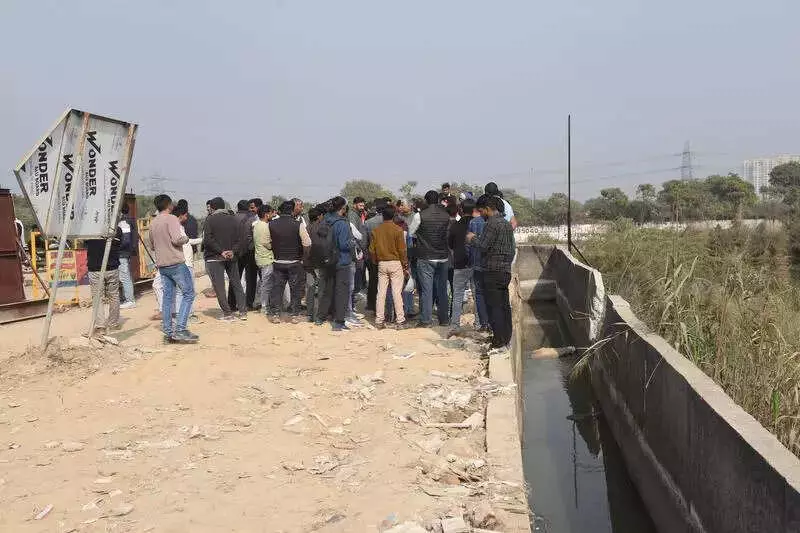
Noida's Deadly Water Trench: A Decade of Neglect Uncovered
A tragic incident in Noida has exposed years of administrative failure. A 27-year-old software engineer drowned in a waterlogged trench in Sector 150 last Friday midnight. This trench was originally allotted for a private mall project. Over a decade, it transformed into a dangerous pond. Rainwater and wastewater from nearby housing societies accumulated there with no proper outlet.
Stormwater Plan Remained Only on Paper
The irrigation department drafted a stormwater management plan back in 2015. This plan never moved beyond paperwork. Multiple surveys and site inspections occurred over the years, but no concrete action followed. Documents reveal the department proposed building a head regulator in 2015. This structure would divert runoff into the Hindon River.
In February 2016, the Noida Authority released Rs 13.5 lakh to the irrigation department. This funding was for a survey and design preparation of the proposed regulator. Despite this allocation, progress stalled.

Persistent Communications Without Resolution
A letter from October 9, 2023, highlights the ongoing dialogue. The executive engineer of the irrigation department's construction division in Ghaziabad wrote to the Noida Authority's senior manager. This correspondence noted multiple communications exchanged between 2015 and 2023. It emphasized the urgent need to channel rainwater from developing sectors into the Hindon.
The letter stated that the irrigation department had prepared designs for a regulator with mechanical gates at Sector 150. A consultant developed these designs, and IIT-Delhi vetted them. However, a joint site inspection on October 4, 2023, changed the course. Noida Authority officials observed that stormwater from additional sectors had connected to the existing drain. This connection could increase discharge significantly.
Officials then suggested using hydraulic or pneumatic gates instead of mechanical ones. This recommendation necessitated a fresh approach.
Further Delays and Additional Costs
Following the inspection, the irrigation department sought an additional Rs 30 lakh. This funding was for a new survey, revised designs, and updated hydrological data. Required data included maximum discharge, water depth, longitudinal slope, and freeboard. A revised survey report remains pending to this day.
Senior officials from both agencies attended the inspection. The list included deputy general managers, senior managers, assistant managers, and engineers. Their presence underscored the project's importance, yet delays continued.
Monsoon Misery and Resident Anguish
The impact of this delay became painfully clear during the 2023 monsoon. Sector 150 and surrounding areas experienced severe waterlogging. Basements in numerous housing societies faced flooding. Affected societies included projects by ATS, ACE, Godrej, Tata, Eldeco, and Samridhi.
Rainwater could not discharge into the Hindon River due to the absent regulator. Without a controlled outlet, water stagnated in low-lying areas. This stagnation created a risk of backflow whenever the river swelled. Residents accused the Noida Authority of inaction. Many societies resorted to using heavy dewatering pumps. Choked drains also caused sewer backflow into homes, compounding the crisis.
Promises After Tragedy
After the engineer's death, irrigation department executive engineer BK Singh spoke to the media. He announced that work on the regulator would commence within a week. Singh revealed the project's estimated cost at Rs 10.5 crore, with funding from the Noida Authority.
The department has received the selected contractor's financial bid. Remaining formalities include submission of official documents and a security deposit. These steps are expected to wrap up within a week, according to Singh.
He explained the project's lengthy journey through multiple stages. These stages involved proposal preparation, Authority consent, vetting by a state-level committee, and the tendering process. Final approval came from the chief engineer committee before bids were invited.
The department now aims to complete the head regulator before the next monsoon season. This timeline seeks to minimize future disruption and prevent similar tragedies.

Residents Voice Frustration
Local residents expressed deep frustration over the prolonged delay. They believe the regulator could have prevented the fatal accumulation of water. The trench sits on a low-lying commercial plot near the Hindon-Yamuna confluence.
"The regulator could have controlled flows and accommodated excess water within the plot," said Jitendra Meena, a resident of Tata Eureka Park. His statement echoes the sentiment of many who endured waterlogging and infrastructure neglect.
This incident highlights a systemic failure in urban planning and project execution. A decade of inaction turned a construction site into a death trap. Authorities now face mounting pressure to deliver solutions swiftly and ensure such negligence does not recur.