

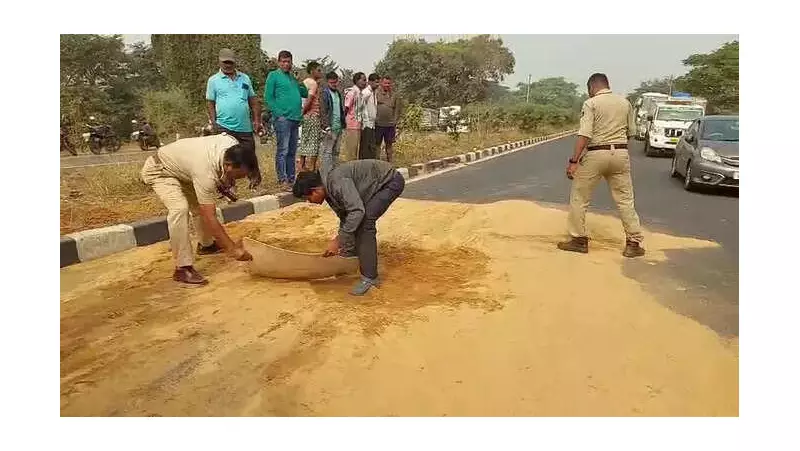
In a decisive move triggered by a tragic accident, the Odisha government has mandated the regular use of mechanised cleaning on major roads to remove hazardous sand and construction debris. This directive comes just four days after two women lost their lives on the Bhubaneswar-Puri National Highway-316.
Triggering Tragedy and Immediate Government Response
The state's action was prompted by a fatal incident where two women, riding a scooter, met with a fatal accident. Their vehicle skidded on spilled sand on the highway and they were subsequently run over by a truck. This event highlighted the persistent danger of material spillage on roads, leading to immediate governmental intervention.
On Sunday, the State Transport Authority (STA), under Transport Commissioner Amitabh Thakur, issued a comprehensive Standard Operating Procedure (SOP). This directive was sent to key agencies including the National Highways Authority of India (NHAI), the state works department, and municipal bodies.

Key Directives of the New Safety SOP
The SOP outlines stricter measures for road maintenance. A central instruction is the deployment of mechanical sweeping machines on national highways, state highways, major district roads, and important urban roads. The frequency of cleaning is ordered to be increased specifically on:
- High-risk stretches and accident-prone locations.
- Areas near mining belts and active construction zones.
- Designated truck routes.
Authorities have been tasked with identifying vulnerable spots where spillage is common. These include curves, road junctions, downgrades, and urban merge points. Enhanced monitoring and cleaning are mandated for these locations.
Commissioner Thakur emphasized the statutory duty of road maintenance bodies to provide clean and hazard-free roads. "Loose sand and construction debris on carriageways significantly reduce tyre grip, leading to skidding and fatal accidents, particularly affecting two-wheeler riders," he stated. He clarified that while enforcement against unsafe material transport continues, timely removal of spillages is equally critical for prevention.
Legal Accountability and Future Compliance
The government's directive carries significant legal weight. It invokes Section 198A of the Motor Vehicles Act, 1988, which holds road-owning agencies accountable for lapses in design, construction, and maintenance. Failure to adhere to safety standards can now attract legal consequences.
The official letter issued a stern warning, stating that any lapses discovered during inspections or accident inquiries would be taken seriously. Accountability would be fixed at the field-officer level, reinforcing personal responsibility within departments.
This proactive step addresses growing public concern over accidents linked to poor road conditions and negligence in clearing construction and sand spillage. It marks a shift towards systematic, mechanised maintenance to safeguard all road users, especially vulnerable two-wheeler riders.






