

Pimpri Chinchwad Mayor Launches Major Drive Against Sewage Pollution in Rivers
In a decisive move to combat water pollution, Pimpri Chinchwad Mayor Ravi Landge has issued a stern directive to the civic environment department. He has ordered officials to identify, within just seven days, all housing societies that are discharging untreated sewage into nullahs and initiate strict legal action against them.
Immediate Action Following Pollution Complaints
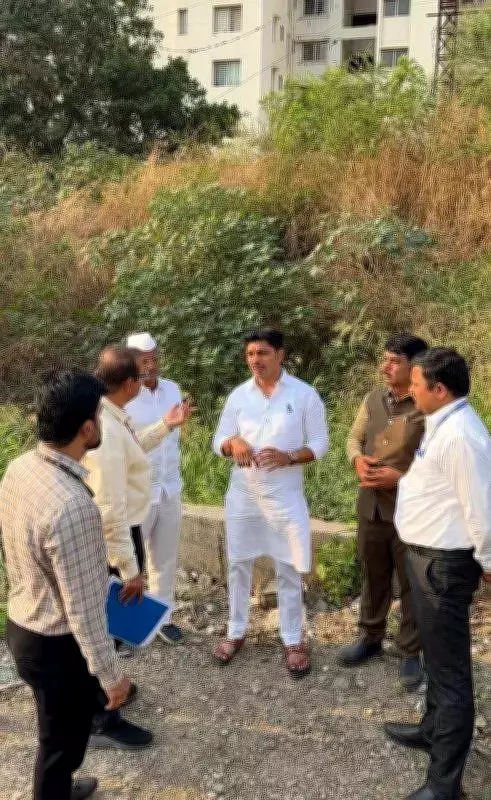
The mayor's directive comes in response to mounting complaints about effluents from residential complexes and a private educational institute polluting the Pavana river. Mayor Landge personally visited the Kiwale area on Tuesday to assess the situation, where he instructed civic officials to ensure that all sewage treatment plants (STPs) installed in housing societies are fully operational and compliant with regulations.
"Legal action will be taken against housing societies and institutions that fail to comply with pollution control norms," Mayor Landge warned emphatically. "Even officials found negligent in enforcement will face disciplinary action."

Existing Regulations and Current Compliance Status
Under existing municipal rules, STPs are mandatory for all housing societies with 100 or more flats or a built-up area of at least 20,000 square meters. Civic officials revealed that there are at least 494 such societies within Pimpri Chinchwad Municipal Corporation (PCMC) limits. Alarmingly, surveys have found that STPs are not functioning in 99 of these societies.
Yogesh Alhat, executive engineer in PCMC's environment department, provided details of the enforcement measures already underway. "The 99 non-compliant societies have each been served three notices," Alhat stated. "Their names have been shared with the water supply department for snapping their connections as a punitive measure."
Broader Environmental Concerns and Proposed Solutions
The pollution issue gained public attention after former corporator Tukaram Bhondave recently held a protest over the deteriorating condition of the Pavana river in Kiwale. Mayor Landge emphasized that the solution requires comprehensive measures beyond mere enforcement.
"The use of treated water should be made mandatory for gardening, flushing, and other non-potable purposes," Landge proposed. "Housing societies should also be required to submit weekly progress reports, and continuous monitoring using technical tools must be implemented."
Expanding the Crackdown Across PCMC
Mayor Landge clarified that the action would not be limited to Kiwale or the Pavana river alone. "A joint drive will be undertaken against sewage being discharged through drains into all three rivers flowing through our city—the Indrayani, Mula, and Pavana," he announced, indicating a city-wide environmental cleanup initiative.
The problem stems from how housing societies typically manage their sewage. While some discharge into the municipal drainage network (where it gets treated at civic STPs), others release effluent directly into nullahs. These nullahs often flow into channels not connected to treatment plants, significantly increasing the risk of untreated sewage entering rivers.
Recent Enforcement Actions and Societal Response
During an inspection drive launched on April 17, authorities found five out of 17 inspected societies releasing untreated effluent directly into nullahs. Each was fined Rs 10,000, demonstrating the beginning of stricter enforcement.
However, representatives of housing societies argue they are being unfairly targeted. Sanjeevan Sangle, president of the Chikhali-Moshi Pimpri Chinchwad Housing Societies Federation, pointed to systemic issues. "Many violations stem from lapses by developers," Sangle explained. "Developers often fail to install proper STPs or hand over poorly designed units that stop functioning within months. Completion certificates are issued without proper onsite inspections."
This crackdown represents a significant escalation in PCMC's efforts to protect its water bodies from pollution, balancing enforcement with addressing underlying infrastructure and development issues that contribute to the environmental challenge.






