

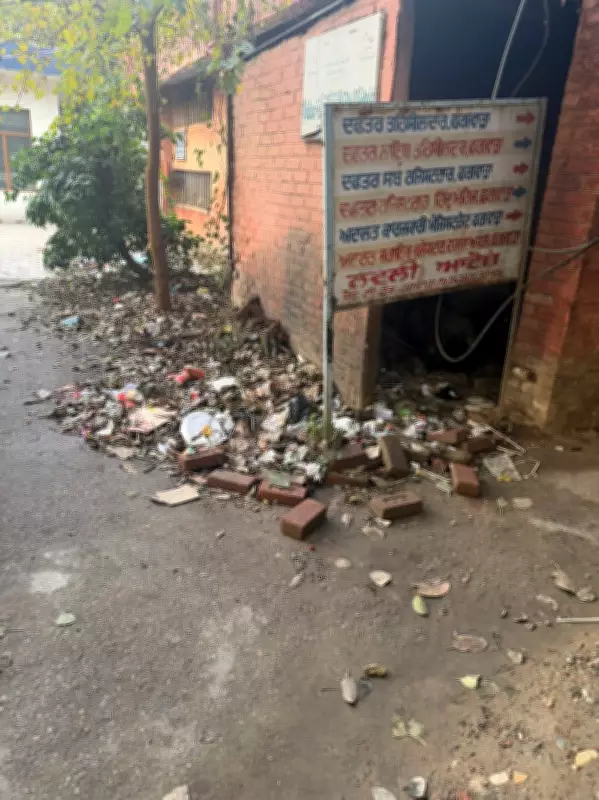
Phagwara Grapples with Escalating Garbage Crisis as Health Risks Intensify
The city of Phagwara is currently confronting a severe and persistent garbage crisis, with uncollected waste accumulating in multiple areas, exposing critical failures in municipal management and posing significant threats to public health and sanitation. Despite numerous complaints from distressed residents, overflowing garbage dumps, foul odors, and a lack of basic civic amenities continue to plague several neighborhoods, highlighting systemic issues in urban waste handling.
Administrative Complexes Overwhelmed by Waste Accumulation
Particularly alarming is the situation surrounding key government offices, including the Sub-Divisional Magistrate (SDM) office, Tehsildar office, and Suvidha Centre. Here, heaps of garbage have piled up, causing considerable inconvenience to both visitors and staff. Residents have voiced deep frustration over the authorities' apparent inaction, noting that even after multiple formal representations, the problem remains unresolved. Compounding these difficulties is the absence of essential facilities such as clean, accessible toilets—especially for women and elderly citizens—and drinking water provisions at these public offices, further exacerbating the public's plight.
Official Response and Calls for Community Cooperation
In response to the growing outcry, newly appointed Additional Deputy Commissioner Shikha Bhagat has acknowledged the concerns and assured that appropriate measures will be implemented swiftly to address the grievances. Emphasizing the need for collective responsibility, she urged residents to cooperate with the Municipal Corporation by segregating waste at the source and refraining from dumping in vacant or deserted plots. Bhagat also indicated that an awareness campaign is set to be launched soon to educate citizens on proper waste management practices, aiming to foster a more sustainable approach to garbage disposal.

Widespread Impact in Residential and Commercial Areas
The crisis extends far beyond administrative complexes, severely affecting densely populated zones such as the old Post Office road. In these areas, garbage heaps near a government primary school, a religious shrine, and a marriage palace have become a daily eyesore, with residents and pedestrians forced to cover their faces to cope with the unbearable stench. Many fear that this unsanitary environment could lead to the spread of diseases. Similarly, garbage dumps in busy markets and residential colonies have remained unattended, reportedly due to irregular lifting by Municipal Corporation vehicles. This accumulation not only hinders navigation but also poses serious environmental and health risks.
Political Criticism and Broader Urban Challenges
Former mayor and senior BJP leader Arun Khosla has strongly criticized the prevailing conditions, questioning the accountability of civic authorities. He pointed out that in low-lying areas, even brief rainfall results in rapid waterlogging, with garbage exacerbating the situation as waste spreads across roads. Khosla warned that the foul air, combined with the breeding of flies and mosquitoes, creates conditions ripe for the outbreak of serious diseases. Attempts to seek comments from Municipal Corporation officials reportedly yielded no response, further highlighting concerns over administrative responsiveness and transparency.
The worsening sanitation scenario in Phagwara reflects a broader challenge of urban waste management across many Indian cities. It underscores the urgent need for efficient garbage collection systems, improved civic infrastructure, and sustained public awareness initiatives to prevent such crises from recurring and to safeguard community health.






