

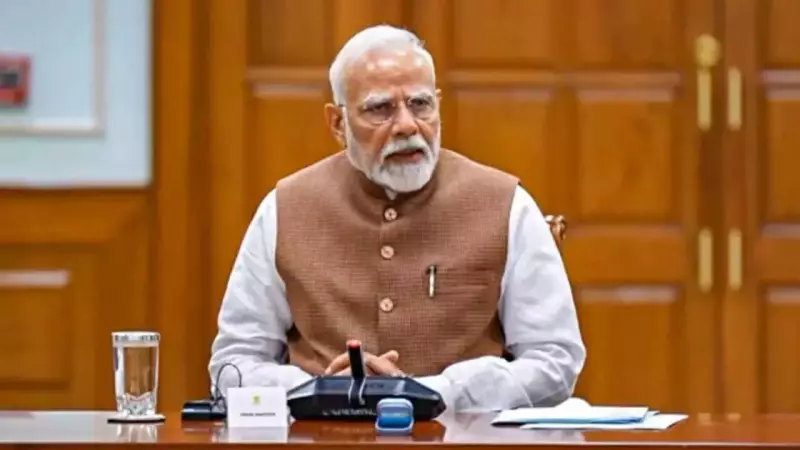
The new complex that will house the Prime Minister's Office (PMO) in New Delhi has been officially named 'Seva Teerth', a term that translates to 'service pilgrimage'. This nomenclature, announced by government officials, is designed to embody a spirit of public service over the traditional connotations of state power.
From Executive Enclave to a Symbol of Service
The building, previously known as the 'Executive Enclave' under the Central Vista Redevelopment project, is in its final stages of completion. It is a key component of the government's administrative overhaul in the national capital. Beyond the PMO, the integrated complex will also host the Cabinet Secretariat, the National Security Council Secretariat, and the India House, a dedicated venue for high-level talks with visiting foreign dignitaries.
Officials described Seva Teerth as a workplace conceived to reflect the ethos of service and where national priorities are formulated. They emphasized that the choice of name is not incidental but part of a deliberate and profound transformation underway within India's public institutions.

A Broader Cultural Shift in Governance
This renaming initiative is part of a wider pattern. For instance, just last week, the Union Home Ministry advised all states and Union Territories to rename Governor's houses from 'Raj Bhavan' to 'Lok Bhavan' or 'Lok Niwas', arguing that the former title carries colonial baggage. Several states have already acted on this directive.
Officials connected these changes to other symbolic rebrandings, such as the renaming of 'Rajpath' to 'Kartavya Path' and the Prime Minister's residence to '7, Lok Kalyan Marg' from its earlier address, '7, Race Course Road'. These moves are seen as reflecting Prime Minister Narendra Modi's focus on reorienting the bureaucracy towards the principles of 'seva' (service) and 'kartavya' (duty).
An officer explained that the idea of governance is consciously moving from 'satta' (power) to 'seva' (service) and from authority to accountability. They stated that this transition is not merely administrative but represents a deeper cultural and moral shift. The name 'Lok Kalyan Marg', for example, is intended to convey welfare and inclusivity, serving as a constant reminder of the responsibility borne by every elected government.
Institutional Names Reflect New Ethos
The reshaping of governance spaces under the current administration extends to other major buildings as well. The Central Secretariat is now known as 'Kartavya Bhavan', a vast administrative hub built around the core idea that public service is a solemn commitment.
"The change in nomenclature marks a deeper ideological transition and shift in mindset," remarked an officer. They added that today, government officials are expected to internalize and speak the language of 'seva', 'kartavya', and citizen-first governance. The overarching goal is to foster transparency and reinforce the notion that those in public office are first and foremost servants of the people.
The completion and operationalization of Seva Teerth will thus stand as a physical manifestation of this evolving governance philosophy, aiming to leave behind legacies associated with colonial rule and exclusivity in favor of symbols rooted in duty and public welfare.






