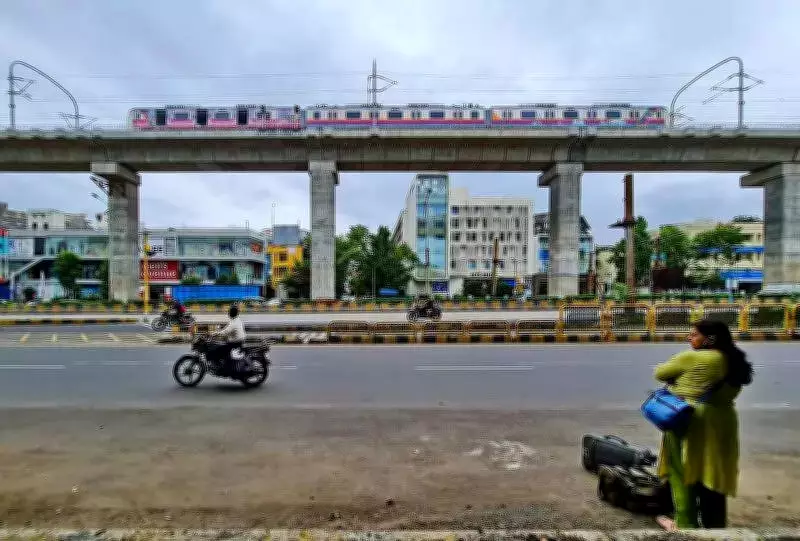
Pune's Southern Suburbs Set for Major Metro Expansion by 2030-31
Residents of Kondhwa-NIBM and Yewalewadi in Pune could witness the arrival of an elevated Metro line by 2030-31, provided all statutory clearances are secured promptly. Maha Metro officials disclosed this development to TOI on Thursday, confirming that comprehensive surveys and alignment studies are currently in progress for a proposed 20km corridor. This corridor will stretch from Shivajinagar to Yewalewadi, passing through key areas such as Camp and Pulgate, and will include a spur line extending from NIBM to Undri.
Integration with Existing Metro Line 3
This new corridor is designed as an extension of the broader 23km elevated Metro Line 3, which is being developed by the Pune Metropolitan Region Development Authority (PMRDA) between Hinjewadi and Shivajinagar. An official highlighted a significant distinction in the execution models: "While the Hinjewadi-Shivajinagar route is being constructed under a public-private partnership (PPP) model, the 20km extension toward Kondhwa and Yewalewadi will be executed directly by Maha Metro," citing a state government decision to streamline the project.
Detailed Project Report and Alignment Details
Atul Gadgil, director (works) at Maha Metro, provided insights into the ongoing preparations. "Consultants have been appointed to prepare the detailed project report (DPR) for the extension. Field surveys and alignment studies are actively underway," he stated. The proposed alignment will commence at Shivajinagar, proceed to the collectorate, traverse through Camp and Pulgate, and then head directly toward Kondhwa and Yewalewadi. Additionally, a spur line is planned from Jyoti Square to NIBM junction, extending further to Undri near Bishop's School. Stations are being considered at intervals of approximately 1km to ensure optimal connectivity.

Timeline and Approval Process
The consultants, appointed approximately two months ago, are expected to submit the DPR by May-June of this year. "The report will be presented before Pune Municipal Corporation (PMC)'s general body for discussion and approval before being forwarded to the state government," explained another official. This procedural step is anticipated to be completed by the end of the year. Following state approval, the proposal will be submitted to the central government next year. If all permissions are granted without delays, the project could be fully operational by 2030-31, marking a significant milestone in Pune's urban infrastructure development.
Public Demand and Political Advocacy
The demand for Metro connectivity to the Kondhwa-Yewalewadi belt has been a persistent issue, highlighted during the monsoon session by MLC Yogesh Tilekar. He emphasized the rapid urbanization and escalating traffic congestion in the area, noting that while Metro connectivity had been approved up to Hadapsar, Kondhwa and its surrounding regions remained underserved. "A dedicated Metro line is essential for this fast-growing region," Tilekar asserted, urging authorities to expedite the project through efficient models. Echoing this sentiment, Kondhwa resident Veena Chavan called for immediate action: "The administration needs to widen existing roads in Kondhwa and nearby areas and enhance public transport, especially Metro connectivity linking this area to the city's core."
Broader Metro Expansion Context
This initiative aligns with broader efforts to enhance Pune's Metro network. Last year, the state government approved a Metro corridor connecting Khadakwasla-Hadapsar-Swargate and Kharadi to improve east-west mobility. Officials also mentioned proposals to extend the Hadapsar line to Loni Kalbhor and further to Saswad under Line 4, which would improve access to the proposed Purandar airport. Given the accelerated growth in Pune's southern suburbs, officials maintain that a dedicated Metro line represents a sustainable, long-term transport solution to alleviate congestion and support urban development.