

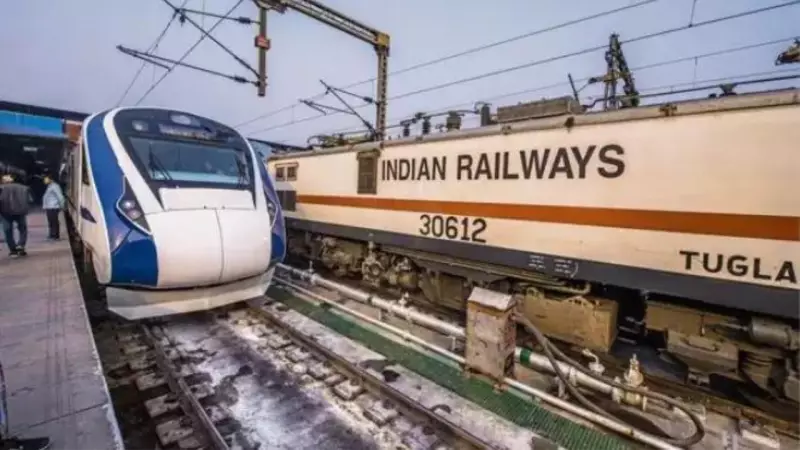
In a massive push to modernize its network, Indian Railways has launched a comprehensive overhaul of its national timetable. The initiative, dubbed the Timetable of Trains (TAG) 2026, was officially detailed in data released on Friday. The revamp focuses on adding new services, accelerating existing ones, and enhancing overall operational efficiency to benefit millions of passengers.
Massive Expansion: New Trains Across Categories
The cornerstone of TAG 2026 is the introduction of 122 new trains scheduled for 2025. This expansion covers a wide spectrum of services to cater to diverse passenger needs. The bulk of the new additions are 60 Mail/Express trains, providing crucial long-distance connectivity.
Significantly, the plan heavily emphasizes semi-high-speed travel with the addition of 28 new Vande Bharat trains. Furthermore, 26 new Amrit Bharat trains are part of the rollout. The premium segment also gets a boost with the introduction of 2 new Rajdhani, 2 Jan Shatabdi, and 2 Humsafar services. The list is rounded off with 2 new Namo Bharat Rapid Rail services. A portion of these new trains, including some Mail/Express and Amrit Bharat services, were introduced under the innovative TAG–Time on Demand (TAG-TOD) framework.

Faster Journeys: Punctuality Gets a Major Boost
Beyond new services, TAG 2026 aggressively tackles journey times. A staggering 549 trains across all railway zones have been speeded up. This systematic effort is designed to improve punctuality and reduce travel fatigue.
The time savings are substantial and widespread. Official data shows that 376 trains have seen their schedules trimmed by 5 to 15 minutes. For 105 trains, the reduction is between 16 and 30 minutes. Even more dramatic improvements are seen on 48 services, where journey times are cut by 31 to 59 minutes. The most significant upgrades belong to 20 trains that are now 60 minutes or more faster.
Zone-Wise Breakdown: Who Gains the Most?
The impact of TAG 2026 varies across the country's railway zones, with some regions witnessing transformative changes.
The South Western Railway (SWR) zone emerged as the top performer, receiving 8 new trains and achieving speed upgrades for 117 services—the highest number for any zone. The North Western Railway (NWR) followed closely, adding 12 new trains and speeding up 89 services. The Western Railway (WR) also saw major gains with 10 new trains and 80 services accelerated.
Other key zones include:
- Southern Railway (SR): 6 new trains, 75 services speeded up.
- Northern Railway (NR): A significant expansion with 20 new trains, 10 route extensions, and 24 trains made faster.
- East Central Railway (ECR): Major growth with 20 new trains, 20 extensions, and 12 trains speeded up.
- Northeast Frontier Railway (NFR): 10 new trains and 36 services accelerated.
- Central Railway (CR): 4 new trains, 6 extensions, and 30 speed upgrades.
- Eastern Railway (ER): 6 new trains and 32 services sped up.
- East Coast Railway (ECOR): 4 new trains and 3 services accelerated.
This nationwide timetable restructuring under TAG 2026 marks one of Indian Railways' most ambitious operational updates in recent years. By blending new connectivity with faster journeys, the move aims to set a new standard for passenger convenience and network efficiency across India.






