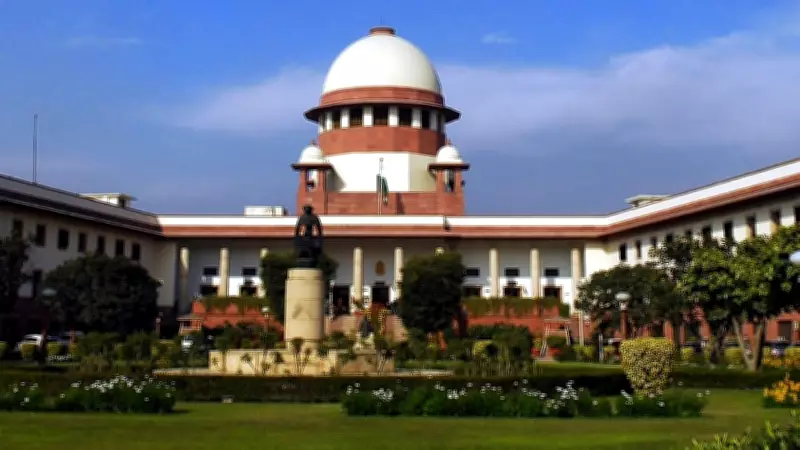
The Supreme Court has delivered a significant judgment, ruling that the state cannot deny regularisation to employees who are similarly placed. A bench comprising Justices Vikram Nath and Sandeep Mehta observed that regularisation, where permissible under law, falls within the domain of executive policy and administration.
Key Observations by the Supreme Court
The bench emphasised that regularisation is an executive function, not a judicial one. The court stated that once the state has a policy for regularisation, it must apply uniformly to all similarly situated employees. Denying regularisation to some while granting it to others would be arbitrary and violate the principles of equality under Article 14 of the Constitution.
Background of the Case
The judgment came in response to appeals filed by employees who had been working on a temporary or contractual basis for years. They sought regularisation, arguing that their counterparts in similar roles had been granted permanent status. The state had opposed the plea, citing administrative constraints.

Legal Implications
The ruling reinforces the doctrine of equality and fair treatment in public employment. Legal experts note that this decision will impact thousands of temporary workers across various state departments. The court clarified that regularisation does not confer a right to permanent employment, but where a policy exists, it must be implemented without discrimination.
What the Court Said
Justice Nath, writing for the bench, stated: “Regularisation is a policy decision. However, once the state adopts a policy, it cannot pick and choose who benefits from it. All similarly placed employees must be treated alike.” The court also directed the state to review pending regularisation cases within six months.
Reactions and Next Steps
Employee unions welcomed the verdict, calling it a victory for justice. The state government has not yet issued an official response, but sources indicate that a committee will be formed to implement the court’s directions. This judgment is expected to set a precedent for similar cases across the country.