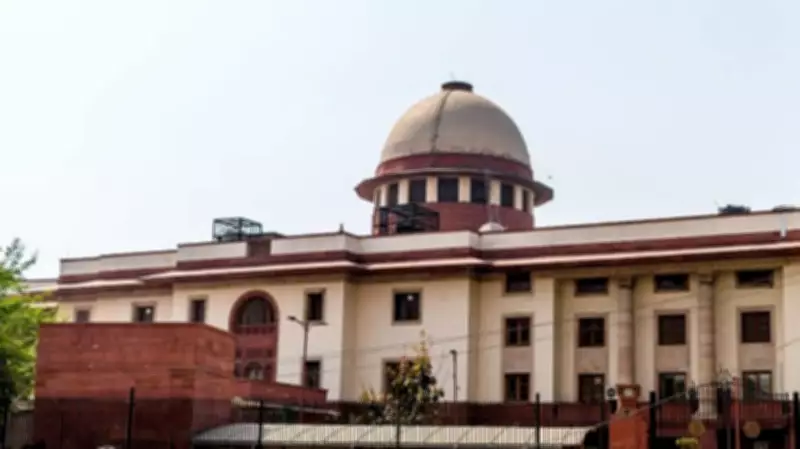
Supreme Court Cracks Down on AI-Generated Fake Judgments
The Supreme Court of India on Tuesday declared a zero-tolerance policy towards the citation of fake judgments produced by artificial intelligence tools, commonly referred to as 'AI hallucinations'. The bench directed the Bar Council of India (BCI) to urgently constitute a committee to frame guidelines and disciplinary measures to prevent lawyers from submitting such fabricated precedents before courts.
BCI Directed to Form Committee
Hearing a matter, the bench comprising Justices Sanjay Kishan Kaul and Sudhanshu Dhulia observed that the rising use of generative AI by legal professionals to cite non-existent case law is a serious threat to the integrity of the judicial system. The court stated that there must be strict accountability for advocates who rely on AI tools without verifying the authenticity of the judgments they cite.
According to the order, the BCI must take immediate steps to form a committee of experts, including senior advocates and technologists, to draft comprehensive rules. These rules will outline ethical obligations for lawyers when using AI tools and prescribe penalties for submitting fake citations. The court noted that similar issues have been reported in other jurisdictions, such as the United States and the United Kingdom, where lawyers faced sanctions for citing AI-hallucinated cases.

Rising Concern Over AI Misuse in Legal Practice
The Supreme Court's intervention comes amid growing concerns over the unchecked use of generative AI in legal research. In recent months, several instances have emerged where lawyers inadvertently submitted briefs containing references to cases that do not exist, generated by AI models like ChatGPT. The court emphasised that such practices undermine the rule of law and waste judicial time.
Senior advocate and BCI chairman Manan Kumar Mishra acknowledged the issue, stating, 'We take the court's direction very seriously. The BCI will form a committee within a week to draft guidelines that ensure responsible use of AI while upholding ethical standards.' The court also suggested that the committee consider mandatory training for lawyers on verifying AI-generated outputs.
Impact on Legal Profession and Future Steps
The decision is expected to have far-reaching implications for the legal profession in India. Law firms and individual practitioners may need to adopt stricter verification protocols before citing any case law. The BCI committee is likely to recommend amendments to the Advocates Act to include specific provisions on AI misuse.
Legal experts have welcomed the move. 'This is a timely step. AI is a powerful tool, but its hallucinations can cause real damage if not checked,' said Dr. Abhishek Singhvi, a constitutional expert. The court has asked the BCI to submit a progress report within three months.