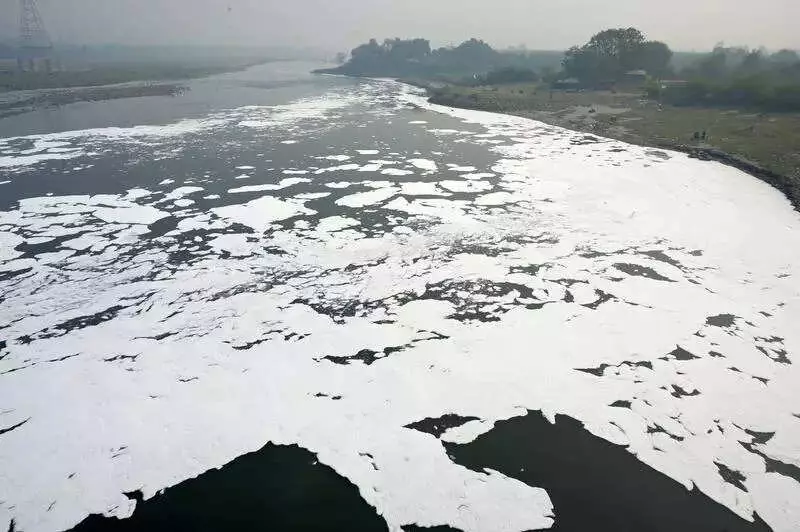
New Delhi: A high-level meeting held at the Delhi Secretariat last week has identified multiple critical factors contributing to the deteriorating water quality of the Yamuna River. The session, chaired by Chief Minister Rekha Gupta and attended by Water Minister Parvesh Verma along with senior government officials, aimed to frame future strategies and prioritize interventions for river rejuvenation.
Primary Pollution Sources Identified
Officials highlighted untreated and partially treated sewage as the most significant pressure point affecting the river. A persistent gap exists between sewage generation and effective treatment capacity, with large volumes continuing to enter the Yamuna through multiple drains due to incomplete sewer connectivity and underutilization of treatment infrastructure.
Industrial pollution emerged as another major concern, with officials noting the absence of a comprehensive industrial waste management framework at the sub-drain level. This regulatory gap allows harmful effluents to mix with domestic sewage, exacerbating pollution levels.

Structural and Seasonal Challenges
The meeting identified the absence of fresh water flow during dry seasons as a structural issue severely impacting river health. During these months, 23 drains discharge approximately 650 cubic feet per second of wastewater into the Yamuna, while the river carries minimal to no fresh water downstream of Wazirabad. This dramatically reduces dilution capacity and worsens water quality parameters.
Solid waste dumping was flagged as a significant contributor, with all 22 major drains carrying plastic, construction debris, cow dung, and other organic waste into the river. This organic load substantially increases biochemical oxygen demand levels, particularly in the most polluted stretches.
Infrastructure and Compliance Gaps
Delays in construction and upgradation of sewage treatment plants during the previous government's term were cited as factors affecting compliance with prescribed discharge standards. While Delhi has 37 STPs, only 16 had been upgraded according to new standards as of February 2025, though recent efforts have increased this number to 28 compliant plants.
The city generates 890-900 million gallons per day of sewage against an installed treatment capacity of 814 MGD, leaving an operational gap of approximately 69 MGD. Although treatment efficiency is estimated at 91.5%, officials emphasized that improving sewer connectivity and ensuring sewage reaches treatment plants are essential to bridging this capacity shortfall.
Institutional Coordination Issues
Officials drew attention to significant institutional challenges, noting that Delhi's 11,000-kilometer stormwater drain network is managed by seven different agencies. This fragmented arrangement leads to uneven maintenance, irregular desilting, and accountability gaps. Coordination failures between departments working in isolation were identified as non-technical factors slowing progress on river rejuvenation efforts.
Pollution Concentration in Delhi Stretch
The Yamuna flows for about 48 kilometers through the national capital, yet this relatively short stretch accounts for nearly 80% of the river's total pollution load. The most severely affected segment lies between Wazirabad and Okhla, spanning 22 kilometers, where dissolved oxygen levels approach zero, making the river uninhabitable for aquatic life.
Proposed Interventions and Strategy
The meeting outlined several measures to address identified gaps through a coordinated approach:

- Accelerating completion of pending sewer networks and household connections
- Strengthening sewage treatment plant operations and maintenance
- Intercepting and diverting major drains before they discharge into the river
- Conducting detailed surveys and mapping of drains and sub-drains
- Implementing stricter monitoring of industrial discharges
- Strengthening industrial waste management systems
- Preventing mixing of industrial effluents with domestic sewage
- Ensuring regular desilting and solid waste removal from drains
- Securing environmental flow in the Yamuna
- Increasing reuse of treated wastewater
- Strengthening data-driven monitoring systems
Officials confirmed that nodal officers and dedicated internal coordination cells have been established to improve inter-agency collaboration. The upgraded sewage treatment plants have increased combined treatment capacity from 329 MGD to 436 MGD, though further improvements are needed to ensure consistent performance and meet the river's rehabilitation goals.