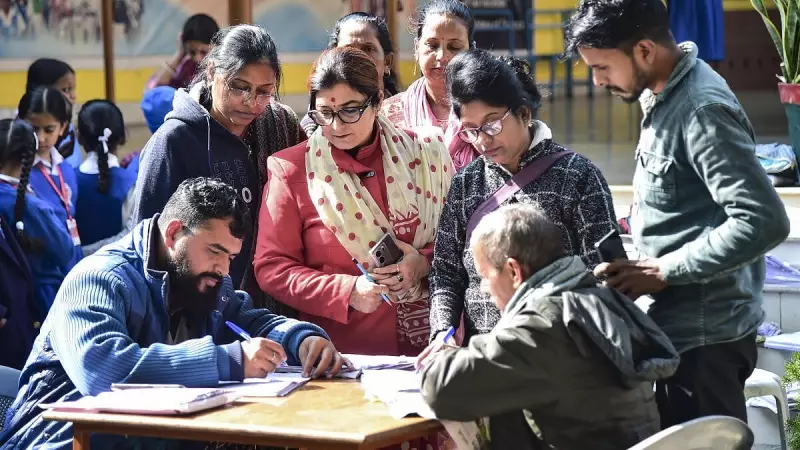
The first phase of the ambitious Statistical Intelligence Report (SIR) 2024 has uncovered a stark digital and administrative divide between India's urban and rural landscapes. Preliminary data indicates that the collection of enumeration forms is proceeding at a markedly slower pace in urban areas compared to their rural counterparts across a dozen states and union territories.
The Urban-Rural Disparity in Data Collection
According to officials familiar with the process, the enumeration form collection in urban localities is "much less" than in rural areas. This trend has been consistently observed in 12 states and union territories, raising concerns about the completeness of urban data for the crucial report. The SIR, a comprehensive data-gathering exercise often considered a precursor to the full census, aims to create a detailed socio-economic and demographic profile of the nation.
The reasons behind this urban lag are multifaceted. Authorities point to the transient nature of urban populations, higher mobility, and a general reluctance among city dwellers to engage with door-to-door enumerators. In contrast, rural communities, with more stable populations and closer-knit social structures, have shown greater participation and easier access for data collectors.
States and UTs Facing the Challenge
While the official report did not name all 12 regions, the pattern is clear and widespread. This urban shortfall presents a significant hurdle for the Office of the Registrar General and Census Commissioner. Accurate urban data is critical for planning infrastructure, allocating resources, and formulating policies for cities, which are engines of economic growth. The gap could lead to an underrepresentation of urban issues in the final SIR 2024 analysis.
Implications for Policy and Governance
The emerging disparity has immediate implications. The SIR 2024 data is vital for evidence-based policy-making and the revision of numerous government schemes. An incomplete urban dataset could skew the understanding of key metrics like housing, employment, amenities, and migration patterns in cities. Experts warn that this might affect the precision of welfare program targeting and urban development projects.
In response to the slow urban collection, authorities are likely to intensify their efforts. This may involve extending deadlines for specific urban wards, deploying additional teams, and launching targeted awareness campaigns to emphasize the importance of the SIR for local development. The use of technology-assisted methods is also being reviewed to improve coverage in hard-to-reach urban apartments and gated communities.
The successful execution of the Statistical Intelligence Report 2024 is a national priority. Its findings will lay the groundwork for the next decennial Census of India. Addressing the current urban-rural collection gap is therefore not just an operational fix but a necessary step to ensure the country's most important statistical exercise reflects an accurate and complete picture of both its bustling cities and its vast countryside.