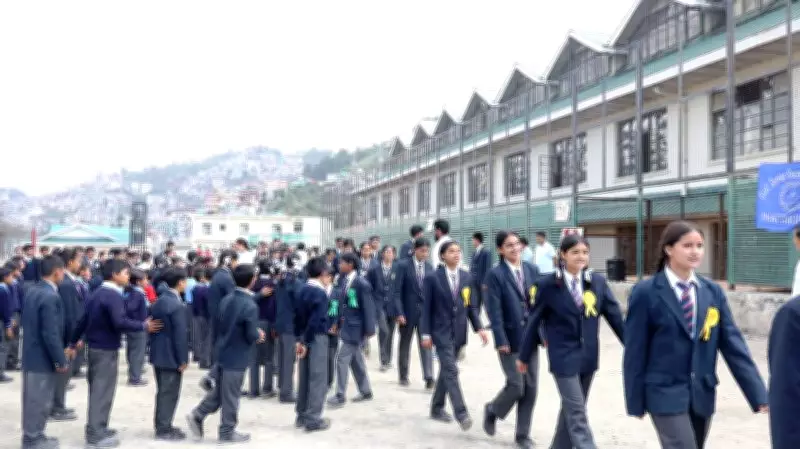
The school management committee (SMC) system in Himachal Pradesh is being revitalized as a key driver of educational transformation. These committees serve as a vital bridge between communities and quality education, with new elections underway to restore public confidence and infuse fresh energy into government schools.
Historical Background of Community Participation
The concept of community involvement in school governance has deep roots in India. The Hunter Commission of 1882 first recommended local community participation in primary education development. Later, the Kothari Commission (1964-66) emphasized that schools succeed only when society accepts them as its own institutions. These recommendations shaped the National Policy on Education in 1968, followed by the 1986 policy and the 1992 Programme of Action, all encouraging greater parental and community involvement in school management.
The Sarva Shiksha Abhiyan of 2001 further strengthened this concept, while the Right of Children to Free and Compulsory Education Act, 2009, made SMC constitution mandatory in all government schools. The National Education Policy (NEP) 2020 reinforced this vision by recognizing schools as community institutions and promoting collaboration among teachers, parents, panchayats, alumni, and local stakeholders.

New Guidelines for School Management Committees
On May 6, 2026, the Union Ministry of Education issued the School Management Committee (SMC) Guidelines 2026, establishing a common framework for schools from Balvatika to Class XII. These guidelines mandate 75 percent representation of parents or guardians and at least 50 percent women members in every committee. They require monthly SMC meetings, preparation of a three-year school development plan with annual reviews, regular school safety audits, monitoring of students' learning outcomes, and active participation of local communities, panchayats, and alumni. These reforms aim to make school governance more transparent, accountable, and effective.
Challenges Facing Himachal's Government Schools
Himachal Pradesh has long been recognized for its high literacy rate and strong educational infrastructure. However, declining enrolment, migration from rural areas, increasing preference for private schools, digital addiction, and substance abuse among youth have emerged as serious challenges for government schools. At this critical juncture, SMCs can serve as a vital bridge between schools and society. As the proverb says, 'Many hands make light work.' When teachers, parents, and communities work together, meaningful transformation becomes possible.
Most students in government schools come from rural and middle-income families. Their parents are often engaged in farming, labor, or small businesses and are unable to participate regularly in school activities. Consequently, many believe that education is solely the responsibility of teachers. This perception must change. Maria Montessori rightly observed: 'The child develops fully only when the home and the school work together.' Such cooperation forms the foundation of a child's holistic development.
Addressing Contemporary Issues Through SMCs
Today, school dropouts, lack of interest in studies, excessive mobile phone use, and substance abuse are major concerns. If SMCs regularly monitor absenteeism, communicate with parents, and promote sports, yoga, cultural programmes, and anti-drug awareness campaigns, many of these challenges can be effectively addressed. After all, 'Little drops make the mighty ocean.' Small and consistent efforts often lead to significant change.
Several countries have demonstrated that parental involvement is the cornerstone of quality education. In Finland, parents regularly meet teachers to discuss their children's academic progress. In Japan, parents actively participate in school cleanliness and community activities. In Singapore, parent support groups work closely with schools to promote the overall personality development of children. These examples prove that educational excellence depends not only on modern infrastructure but also on trust and cooperation between schools and families.

A Vision for the Future
As APJ Abdul Kalam said, 'Great teachers are built on knowledge, passion and compassion.' Equally, great schools are built when teachers, parents, and society work together with a shared vision. The ancient Indian maxim, 'Vidya Dadati Vinayam' (Knowledge gives humility), reminds us that education is not merely about acquiring knowledge but about building character.
Ultimately, the future of our schools will be determined not by buildings, budgets, or policies alone but by public participation. When every parent treats the school as an extension of family, every teacher earns the trust of the community, and every SMC fulfills its responsibilities with sincerity, government schools can emerge as centres of excellence. Indeed, school management committees are a new hope for quality education, capable of shaping a brighter future for the coming generations.