

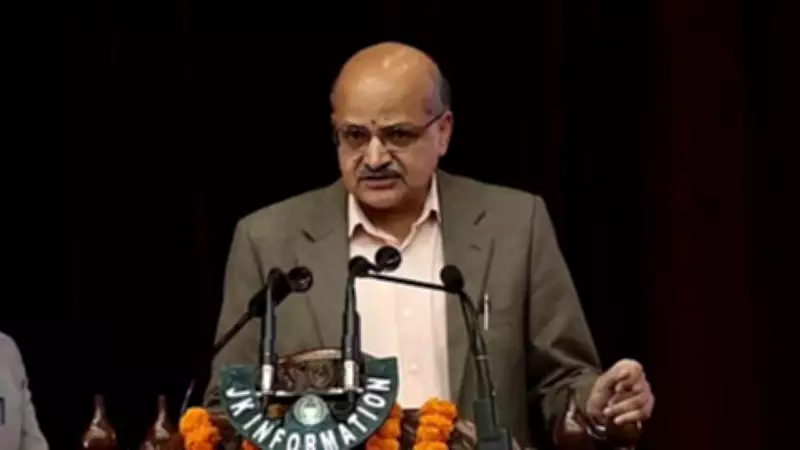
Niti Aayog CEO Calls for State-Led Reforms to Achieve India's 2047 Development Vision
In a significant address, Niti Aayog CEO BVR Subrahmanyam declared that the next major wave of reforms must originate from the states if India is to realize its ambition of becoming a developed nation by 2047. Speaking at an event organized by the All India Management Association on Saturday, Subrahmanyam highlighted that the central government has already accomplished the bulk of its necessary actions, making state-level initiatives the critical next step.
Central Government Actions Largely Complete, States Now in Focus
Subrahmanyam stated, "Most of the action in India is now at the state level. The government of India did probably 90% of what it had to do." He elaborated that key areas such as land, labor, electricity, water supply, and roads fall under state jurisdiction, underscoring their pivotal role in driving growth and development.
He emphasized that disparities in state-level governance are now decisive factors in determining economic outcomes. "Differences in state-level governance now determine growth outcomes. States that push reforms move ahead, while others risk falling behind," Subrahmanyam added, pointing to the urgent need for proactive state policies.

Demographic Advantage and Sustained Growth Essential for Development
Subrahmanyam expressed optimism about India's future, citing favorable demographic trends and enhanced capabilities. "India is in for good times… demography is behind us, our capabilities are behind us and there is wind in our sails," he remarked. However, he cautioned that achieving developed nation status by 2047 will require sustained high growth rates, which can only be fueled by robust state-level reforms.
Vishal Sikka Advocates for India's Own AI Stack to Avoid Dependency
At the same event, Vianai Systems founder Vishal Sikka contributed to the discourse on technological self-reliance. He argued that India must develop its own artificial intelligence stack to prevent dependency on foreign systems that are not fully understood or controlled. This call for technological independence aligns with the broader theme of state-driven initiatives enhancing national sovereignty and growth.
The discussions underscore a strategic shift towards empowering states as engines of reform, with implications for governance, economic policy, and technological innovation as India progresses toward its 2047 development goal.






