

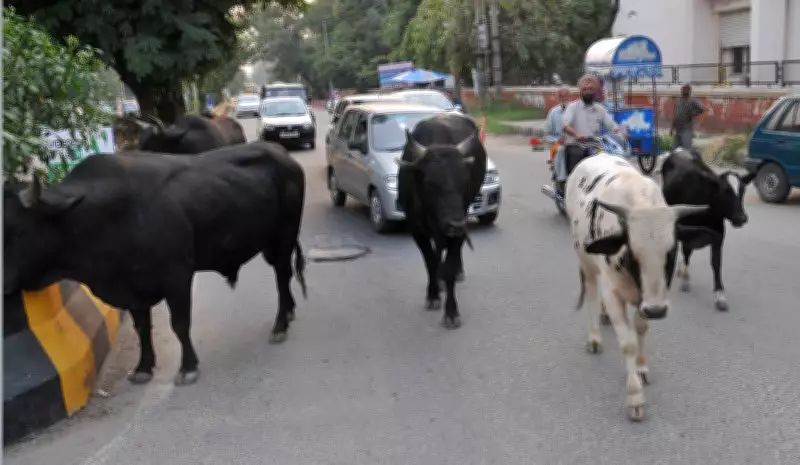
Stray Cattle Crisis Deepens in Punjab Amid Questions Over Cow Cess Utilization
The persistent issue of stray cattle in Punjab has surged to the forefront of public discourse, with mounting scrutiny over the alleged mismanagement of funds collected under the Cow Welfare Cess. Despite years of revenue generation, the plight of these animals remains dire, sparking widespread concerns about governance and accountability across the state.
Growing Public Safety and Animal Welfare Concerns
In urban and semi-urban regions, stray cattle are increasingly visible on bustling roads, highways, and marketplaces. These animals often lack access to adequate shelter or nutritious food, forcing them to scavenge from garbage dumps. Consequently, many ingest plastic waste and other hazardous materials, leading to severe health complications and, in some cases, painful deaths due to internal blockages.
The situation has escalated into a significant public safety hazard. Numerous road accidents have been reported in recent months, with vehicles colliding with cattle, especially during nighttime when visibility is reduced. These incidents have resulted in injuries and fatalities, heightening the urgency for immediate intervention.

Scrutiny Over Cow Welfare Cess Funds
The Cow Welfare Cess, imposed on items such as liquor and new vehicles, was designed to finance the protection, shelter, and healthcare of cows. However, there is little evidence of improvement on the ground, raising critical questions about the utilization of these funds, estimated to be in crores of rupees.
Noted industrialist and social activist SP Sethi has taken a proactive stance, engaging with the Punjab government through formal representations and applications under the Right to Information (RTI) Act. In his communications, he has highlighted the alarming number of stray cattle and the absence of effective management systems.
Demands for Transparency and Accountability
Sethi has sought detailed information regarding the implementation of the Cow Welfare Cess, including its introduction date and the total revenue collected over the years. He has also criticized the lack of transparency in disclosing expenditures on cow welfare initiatives.
Despite submitting multiple letters and RTI applications since 2024, with reminders in late 2025 and early 2026, Sethi claims that no concrete response has been received from relevant departments. He expressed concern that such delays undermine public trust and violate the transparency principles mandated by the RTI Act.
Calls for Immediate Action
Urging urgent intervention, Sethi has called on the government to implement immediate measures to ensure proper care, shelter, and medical facilities for stray cattle. He emphasized that this issue transcends animal welfare, impacting public safety and administrative responsibility.
As stray cattle continue to pose risks to both themselves and the public, the demand for accountability and effective action is growing louder across Punjab, putting pressure on authorities to address this escalating crisis.






