Telangana Government Embraces Advanced Tunnelling Method for SLBC Project
The Telangana government has made a strategic decision to accelerate the completion of the Srisailam Left Bank Canal (SLBC) tunnelling project by adopting an advanced observation-based technology, closely resembling the New Austrian Tunnelling Method (NATM). This move prioritizes safety while aiming to expedite the construction timeline.
Trial Runs Initiated, Full Work Set for March
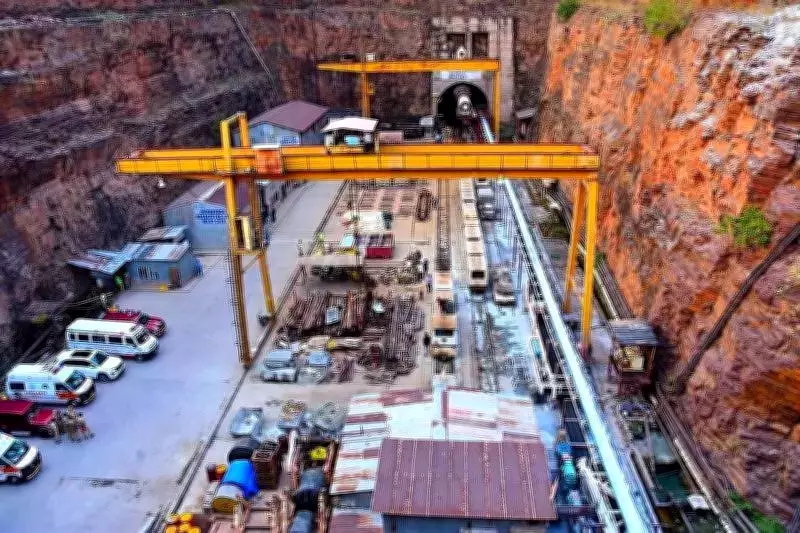
Trial runs commenced at the SLBC site on Tuesday, with full-fledged tunnelling operations scheduled to begin in the first week of March. According to official sources, the remaining 9.2-kilometer stretch of the tunnel is projected to take a minimum of two years to complete under this new approach.
Enhanced Safety with Observation-Based Technology
A senior government official involved in the project explained the methodology: "The tunnelling works will utilize jumbo drills and controlled blasting. The observation-based technology is particularly advantageous in unpredictable terrains like the SLBC area, enabling workers to monitor structural support and adjust operations based on real-time conditions. It is entirely safe and permits operational corrections after assessing local geological factors."

This advanced method is widely recognized and employed in Europe and the United States for various infrastructure projects, including railway tunnels. It has also been successfully implemented in specific sections of the Kaleshwaram project in Telangana.
Background: Previous Tunnel Collapse and Recovery Challenges
Works on the SLBC tunnel were halted in February last year following a tragic incident where a section of the tunnel roof collapsed near Domalpenta. This accident trapped eight workers and engineers, with only two being rescued. The remaining six individuals were declared "presumed dead" after rescue operations were suspended due to persistent water seepage and hazardous conditions, leaving their bodies unrecovered under debris.
Subsequently, the irrigation department dismantled and removed the wreckage of the Tunnel Boring Machine (TBM) from the site. The Geological Survey of India (GSI) designated a 40-meter stretch around the collapsed area as a "no-man's zone" to ensure safety.
Strategic Resumption of Tunnelling Work
Officials have outlined a plan to resume drilling and blasting using advanced technology from both ends of the tunnel—specifically, the outlet side at Devarakonda and the Domalpenta side. Of the total 42-kilometer tunnel length, approximately 9 kilometers remain unfinished.
A senior irrigation engineer detailed the strategy: "When resuming tunnelling from the Domalpenta side, the government will create a bypass approximately 100 to 150 meters away from the collapsed section to proceed with the work safely."
Comprehensive Safety Measures Implemented
Prior to restarting operations, the National Geophysical Research Institute (NGRI) conducted a helicopter-borne electromagnetic survey. This survey aimed to identify underground water flow patterns and shear zones, which are critical for ensuring safe tunnelling up to depths of 1,000 meters.
In a further commitment to oversight, Irrigation Minister N Uttam Kumar Reddy announced the establishment of a dedicated division to monitor the SLBC tunnelling works continuously.