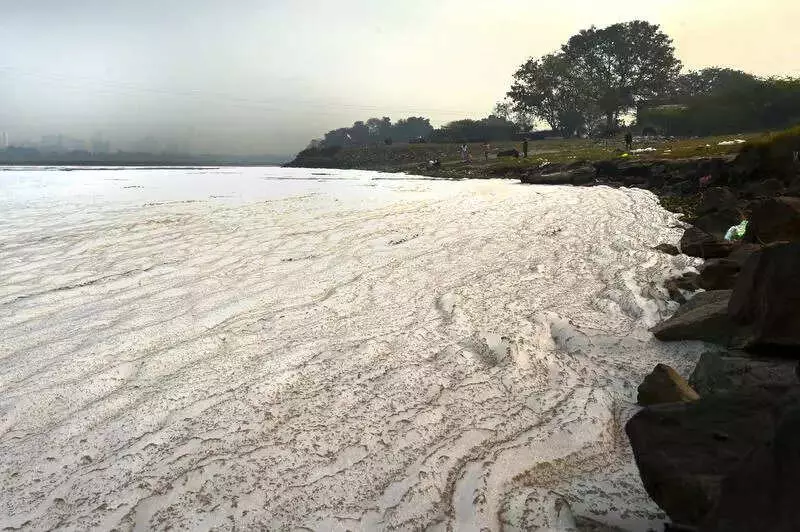
New Delhi: After lying dormant for decades, three crucial dam projects on the Yamuna river and its tributaries have finally been reviewed and revived by the Central government. Officials confirmed this significant development, stating these projects will directly address Delhi's persistent water shortage while ensuring better water flow throughout the river channel.
Meeting with Key Ministers
The projects—Lakhwar in Uttarakhand, Renukaji in Himachal Pradesh, and Kishau on the Uttarakhand-Himachal Pradesh border—received fresh attention during a high-level meeting. Home Minister Amit Shah, Delhi Chief Minister Rekha Gupta, and Water Minister Parvesh Verma participated in discussions about these dams. This meeting forms part of a broader strategy to rejuvenate the Yamuna river and secure sustainable water availability for the National Capital Territory.
Addressing Delhi's Water Deficit
Currently, Delhi produces an average of 900 million gallons of water daily. However, the city's actual demand stands much higher at 1,113 million gallons daily. This gap leaves at least ten percent of households in the national capital without access to piped water supply. The three revived dam projects promise to bridge this substantial deficit.

Once completed, these dams will collectively sustain Delhi's drinking water needs for a minimum of twenty-five years. The Lakhwar dam alone will supply 135 million gallons daily to Delhi. Meanwhile, the Renukaji and Kishau projects have the potential to provide the city with 275 million gallons daily and 372 million gallons daily respectively.
Improving Environmental Flow
Beyond simply increasing water supply, these projects aim to improve environmental flow in the Yamuna. Environmental flow refers to the quantity, timing, duration, frequency, and quality of water flow in rivers and wetlands necessary to sustain healthy freshwater ecosystems and human livelihoods that depend on them.
By storing monsoon water that currently flows unused into the plains, these dams will enhance river flow while reducing Delhi's dependence on erratic seasonal water availability. Officials expect water supply from these projects to begin reaching Delhi within the next five to seven years.
Project Details and Status
All three projects are strategically located in the Upper Yamuna Basin. The Lakhwar project represents the largest undertaking, involving construction of a 204-meter-high concrete dam on the Yamuna near Lohari village in Dehradun district. First planned in 1976, construction was suspended in 1992 due to funding constraints. Currently, this project stands partially constructed at 12.61 percent completion.
The Kishau multipurpose project, planned on the Yamuna's tributary called Tons, will feature a 236-meter-high dam with a live storage capacity of 1,324 million cubic meters. This project previously faced delays due to inter-state disagreements and financial hurdles.
The Renukaji dam, conceived as a storage project on the Giri river in Himachal Pradesh's Sirmour district, will involve a 148-meter-high rock-filled dam. This structure will also generate 40 megawatts of hydropower during peak flow periods, with water shared among Delhi, Haryana, Rajasthan, and Uttar Pradesh. The Renukaji project has entered the tendering phase, while Kishau remains at the inter-state agreement and approval stage.
Timeline and Coordination
The Union government is actively coordinating approvals, financing mechanisms, and inter-state consensus to target specific completion dates. Officials aim to finish Lakhwar by 2031, Renukaji by 2032, and Kishau by 2033. This coordinated approach seeks to overcome historical obstacles that stalled these projects for decades.
Expert Caution and Recommendations
While the revival of these dam projects brings hope for Delhi's water security, experts advise proceeding with caution. Water expert Rajendra Singh emphasized that dam designs must ensure the river's natural flow remains uncompromised.
"The design should ensure that the river's flow is not blocked upfront," Singh stated. "Reservoirs should be created near meandering points. The design should follow the river's meandering course, taking geo-hydro-morphology into account."

He further explained that when dams are constructed, engineers must ensure aquifers, ligaments, and fractures within the river system are not blocked. Proper engineering design should maintain the natural flow of water while harnessing it for human needs.
These three dam projects represent a major step toward solving Delhi's chronic water problems while addressing environmental concerns about the Yamuna's health. Their successful completion could transform water availability in the national capital for generations to come.