Vadodara's Sinkhole Crisis: From Cultural Hub to 'Bhuvanagari' Amid Infrastructure Woes
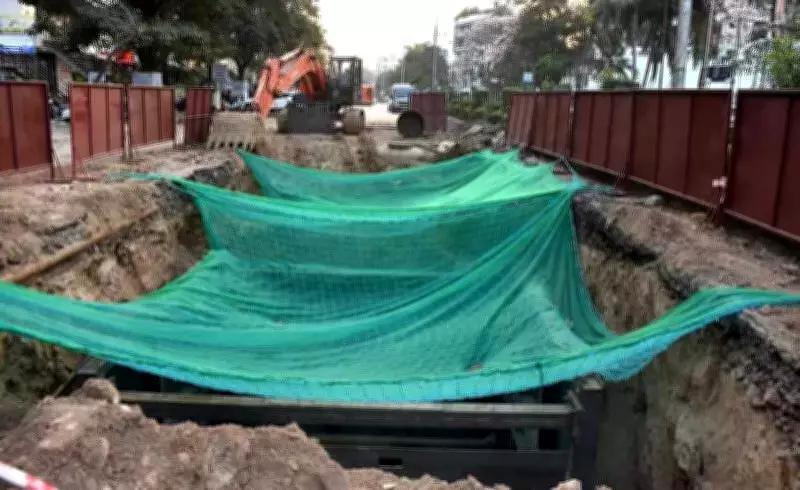
Once celebrated as Sanskarinagari, the cultural city of Vadodara is now being grimly nicknamed Bhuvanagari, or sinkhole city, by frustrated residents and critics. This stark transformation highlights a severe urban infrastructure crisis, with recurring cave-ins plaguing roads in the Akota and Mujmahuda localities, causing significant disruption to daily life and commerce.
Root Causes: Old Sewage Networks and Poor Soil Quality
Civic authorities have pinpointed the underlying issues beneath the surface. Despite recent installations of new drainage lines, the persistent problem stems from the aged and severely damaged sewage network, exacerbated by the area's inherently poor soil quality. These factors combine to create unstable ground conditions, leading to frequent and dangerous sinkholes.
An official from the Vadodara Municipal Corporation (VMC) reported that approximately a dozen sinkholes emerged in Akota and Mujmahuda following the devastating 2024 floods. The extreme pressure and soil settlement during these floods critically compromised the old sewage lines, resulting in leaks and subsequent ground collapses that have repeatedly halted traffic and impaired local business activities.

Multi-Crore Remedial Measures and Ongoing Challenges
In response, the VMC has launched a major infrastructure project, laying a new sewage pipeline stretching from Sarika Park in Akota to the Atladara sewage treatment plant. This initiative, costing Rs 92 crore, involves replacing a 2.5-kilometer drainage line with advanced Glass Reinforced Plastic (GRP) pipes, chosen for their enhanced durability and improved wastewater flow capacity. Officials emphasize that the new pipeline is being inserted into the existing line, a method designed to minimize extensive excavation and reduce public inconvenience.
However, complications persist. On Productivity Road, where a new pipeline was installed about a decade ago using micro-tunnelling technology, cave-ins have still occurred. Investigations revealed that these voids were forming not along the new line, but along the abandoned old sewage line, which had not been properly sealed, allowing water and soil infiltration that led to further settlement and collapses. The VMC has since sealed this abandoned line with concrete as a corrective measure.
"With the new GRP pipeline, the issue of cave-ins in the Akota and Mujmahuda areas will be resolved. On Productivity Road, the old line has been sealed, and the new pipeline is not responsible for the cave-ins," stated Haresh Rathwa, executive engineer for drainage projects at the VMC.
Comprehensive Soil Study Commissioned for Long-Term Solutions
Recognizing the recurring nature of this problem over several years, the VMC has commissioned a detailed soil study in the affected areas to better understand the soil's characteristics. Previous research has suggested that poor soil quality may be a primary driver of ground settlement in these localities. The corporation has appointed a specialized agency to conduct this study and deliver a comprehensive report, aiming to identify a permanent solution to the sinkhole epidemic that has so far eluded authorities.
This ongoing crisis underscores the critical need for robust urban planning and infrastructure maintenance in rapidly developing cities. As Vadodara grapples with its new moniker, the efforts to address these sinkholes reflect a broader challenge in balancing growth with sustainable civic management, ensuring the safety and well-being of its residents.