Bengaluru's Iconic Vidhana Soudha to Phase Out High-Maintenance Mexican Grass
In a significant move toward sustainable urban landscaping, the Karnataka government is planning to substantially reduce the area covered by Mexican grass at the historic Vidhana Soudha in Bengaluru. This decision stems from growing concerns about environmental sustainability, water conservation, and severe manpower constraints facing the horticulture department.
Drastic Reduction Planned Amid Maintenance Challenges
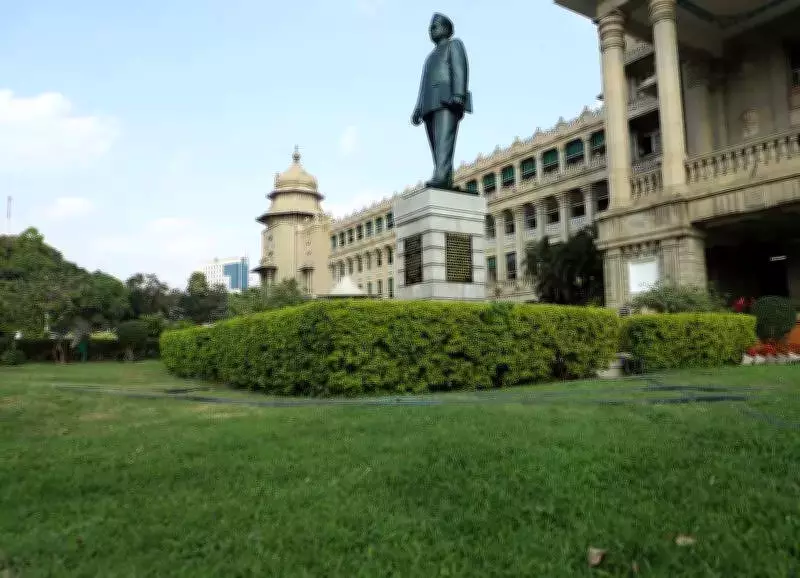
Authorities are currently engaged in discussions to cut the coverage of Mexican grass to approximately one-third of its current area. Of the sprawling 27-acre garden surrounding the 70-year-old legislative building, about four acres are presently occupied by this particular grass variety. The remaining landscape consists primarily of carefully maintained hedges and artistically shaped trees.
"This grass is predominantly used in VVIP areas, such as along the sides of the Kengal Hanumanthaiah statue at the north gate," explained Gangappa S Hombal, assistant director (horticulture) at Vidhana Soudha. "While it was once widespread across our lawns, Mexican grass has proven particularly sensitive to harsh weather conditions and foot traffic, making it increasingly difficult to maintain effectively."

Current Grass Composition and Procurement
Presently, only about 30% of the Vidhana Soudha lawns feature Mexican grass, which is largely procured from private nurseries in Devanahalli. The remaining 70% comprises more robust and resilient varieties—primarily pearl grass and buffalo grass—which are widely cultivated in neighboring Andhra Pradesh and have demonstrated superior durability.
Mexican grass presents additional challenges beyond weather sensitivity. It is notably prone to weed infestation, requiring constant monitoring and intervention. In contrast, pearl grass—which offers a similar aesthetic appearance—has proven significantly more resilient to both environmental stressors and invasive species.
Critical Resource Allocation and Water Usage
The resources required to maintain these extensive gardens have become a focal point during recent meetings preparing for the upcoming summer season. The horticulture department currently utilizes approximately 13.3 lakh liters of water per week to sustain the gardens during dry periods.
Monsoon seasons provide some relief, with water consumption dropping nearly fourfold to about 2.8 lakh liters per week. The department sources water from multiple channels including the Cauvery River, local borewells, and treated sewage supplied by the Bangalore Water Supply and Sewerage Board.
Severe Staffing Shortages Compound Maintenance Issues
Compounding these challenges is a critical staffing shortage. Currently, only 20% of the sanctioned 50 laborers are in place, with several existing staff members scheduled to retire by 2031. This severe manpower deficit has prompted the department to prioritize making the gardens as low-maintenance as possible.
"We remain hopeful about fresh appointments to address our staffing needs," Hombal stated. "At present, automated sprinklers cover most lawn areas, while gardeners must manually hose the remaining spaces. Even basic upkeep requires substantial manpower that we currently lack."
Transition Toward Sustainable Landscaping
The planned reduction of Mexican grass represents a strategic shift toward more sustainable landscaping practices at one of Karnataka's most important government complexes. By replacing high-maintenance varieties with more resilient alternatives, authorities aim to create gardens that are both aesthetically pleasing and environmentally responsible.
This initiative reflects broader concerns about water conservation in Bengaluru and demonstrates how public institutions can lead by example in adopting sustainable practices. The transition is expected to reduce both water consumption and labor requirements while maintaining the visual integrity of Vidhana Soudha's historic grounds.