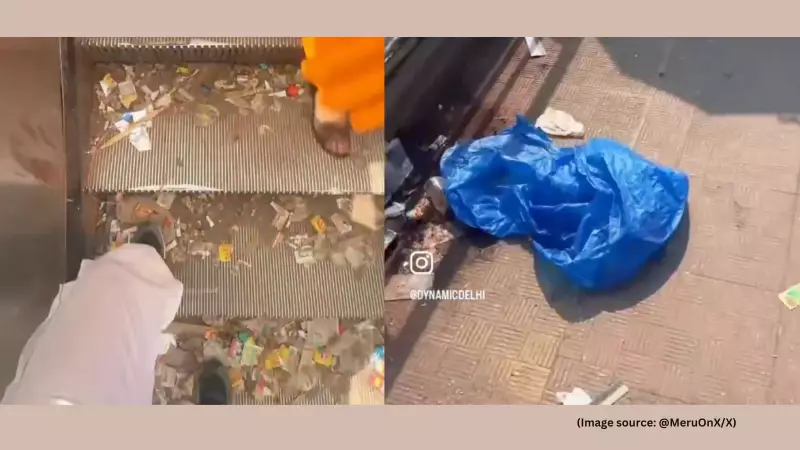
A disturbing video showcasing the deplorable state of one of Delhi's busiest transport hubs has set social media ablaze, reigniting a fierce national conversation about civic responsibility and public cleanliness. The clip, which emerged on January 4, 2026, exposes the grim reality of heavy littering and tobacco stains at the Anand Vihar bus interchange.
Scene of Neglect: What the Viral Video Shows
The footage, shared by an X user with the handle @MeruOnX, presents a disheartening sight. Commuters are seen navigating through a landscape marred by piles of uncollected garbage, dust, plastic wrappers, and ubiquitous red paan stains. The filth conspicuously covers critical pedestrian infrastructure, including escalators and foot overbridges, at this key transit point in the national capital.
The post accompanying the video carried a pointed message, urging people to repeat: "Don't blame the government for not providing facilities- blame the people with zero civic sense creating this mess." This caption directly challenged the common tendency to hold authorities solely accountable, shifting the focus onto individual behavior.

Social Media Erupts: A Divided Public Response
The viral clip prompted a deluge of reactions, revealing a sharp divide in public opinion on where the primary responsibility lies.
One camp strongly echoed the sentiment of the original post. A user commented, "Before questioning the government, we must learn civic sense. A disciplined society forces better governance. Responsibility starts with people, not excuses." This perspective underscores the belief that systemic change begins with individual accountability.
However, a counter-narrative also gained significant traction. Another user argued, "Firstly it is government's responsibility to keep infrastructure clean everyday, which govt fails to do, when garbage piles up, no one thinks twice to throw garbage on top of garbage. Responsibility is on both sides." This view highlights a cycle of neglect, where the failure of municipal services exacerbates public apathy.
A third reaction touched upon a deeper social issue, stating, "It's so painful to see such pictures. At the end of the day, it's taxpayers' money... What people of this nation lack is inclusiveness." This comment connects the state of public spaces to a broader deficit in collective ownership and community feeling.
Not an Isolated Incident: A Pattern of Public Littering
The Anand Vihar video is not a standalone case but part of a recurring pattern of similar incidents going viral. Just the week before, a video from the iconic Varkala beach in Kerala triggered similar outrage. That clip showed the picturesque shoreline littered with plastic bottles, food wrappers, beer cans, and other waste, with the situation reportedly worsening at night.
These repeated instances point to a persistent, nationwide challenge. They underscore the gap between cleanliness initiatives and on-ground reality, especially in high-footfall public areas like transport hubs and tourist spots.
The shocking state of Anand Vihar, as captured in the viral video, serves as a stark mirror to society. It has successfully moved the debate beyond mere complaint, forcing a critical examination of the shared contract between citizens and the state in maintaining public hygiene. While the search for solutions continues, the video stands as a powerful, if unpleasant, reminder of the work that remains to be done.