Visakhapatnam Embarks on Strategic Water Budgeting Initiative
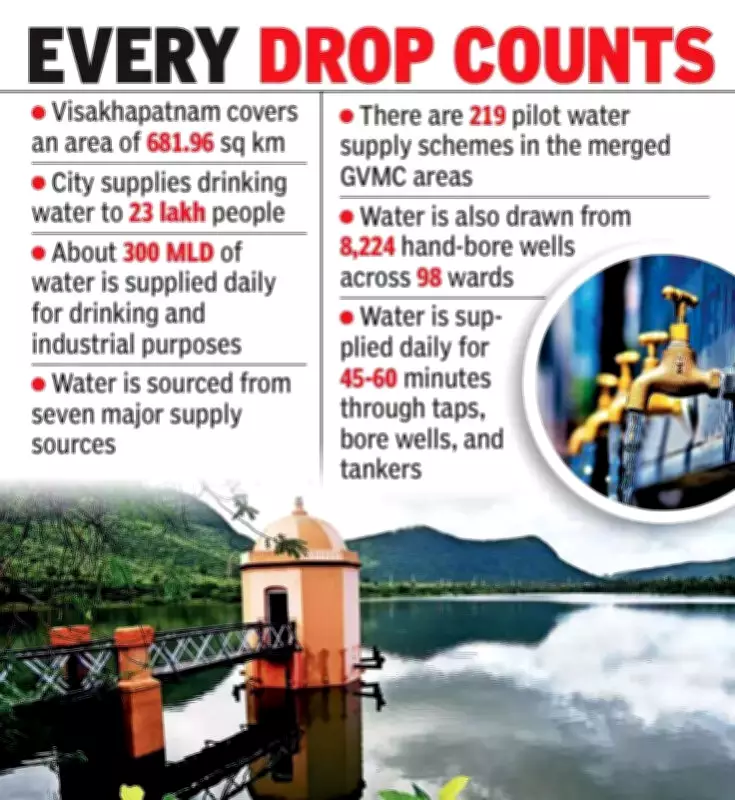
In response to escalating water demands and a surge of investment announcements in the IT and data centre sectors, the Greater Visakhapatnam Municipal Corporation (GVMC) is set to undertake a detailed water budgeting exercise. This proactive measure aims to ensure sustainable water management as the city positions itself as a major technological hub.
National Workshop and Collaborative Efforts
As a cornerstone of this initiative, GVMC will organize a national workshop in March, collaborating with the Singapore Water Centre, ISF Australia, and the International Finance Corporation. The workshop will focus on evaluating available water resources, identifying key consumer segments, and projecting demand growth through 2032 and 2047. This exercise is critical for long-term planning to meet the anticipated increase in water requirements.
Addressing Future Water Needs
To accommodate the growing demand, two primary options are under consideration: laying a dedicated pipeline from the Polavaram project and establishing a desalination plant. Data centres, known for their substantial water consumption, are a particular focus, as their operations require significant volumes of water. The state government has outlined plans to transform Visakhapatnam into a major data centre hub, targeting a combined capacity of 6 gigawatts, with nearly 3 gigawatts already announced.

GVMC commissioner Ketan Garg emphasized the importance of this planning, stating, "The workshop will examine projected water demand over the next 15 to 20 years, assess available sources, and identify key consumer groups, including domestic households, industries, IT companies, and other bulk users."
Current and Projected Challenges
The significance of water budgeting has intensified with recent industrial and IT investment announcements from leading firms such as Tata Consultancy Services, Cognizant, and Accenture. While some proposed data centres may be located outside GVMC's jurisdiction, water supply is likely to be routed through the city's infrastructure, adding to the demand.
Existing industries planning expansions and large residential projects emerging across the city are expected to further strain water resources. During peak summer months, areas like Bheemunipatnam and Madhurawada already experience shortages, especially when infiltration wells along the Gosthani river run dry. With migration anticipated to rise, overall water demand is set to increase significantly.
Proposed Solutions and Ongoing Measures
GVMC is advancing proposals for a desalination plant at Appikonda, with an initial target capacity of 100 MLD. The proposals have been submitted to the government, and once approved, a request for proposal will be floated for the project. Additionally, GVMC is supplying tertiary treated water from its sewage treatment plants to several major industries, supplementing freshwater sources.
Regarding water supply for IT companies, Commissioner Garg noted that individual firms are submitting requests specifying their water requirements. "We are providing connections on a chargeable basis according to their needs," he added.
Conclusion: A Call for Comprehensive Planning
In light of these developments, comprehensive planning to augment water withdrawals—whether through a dedicated pipeline from the Polavaram project or by expediting the proposed desalination plant—may need to be fast-tracked. This approach would enhance freshwater availability for domestic supply and support Visakhapatnam's growth as a thriving IT and industrial centre, ensuring water security for decades to come.