

India's Water Warriors: Women Leading the Charge Against Scarcity
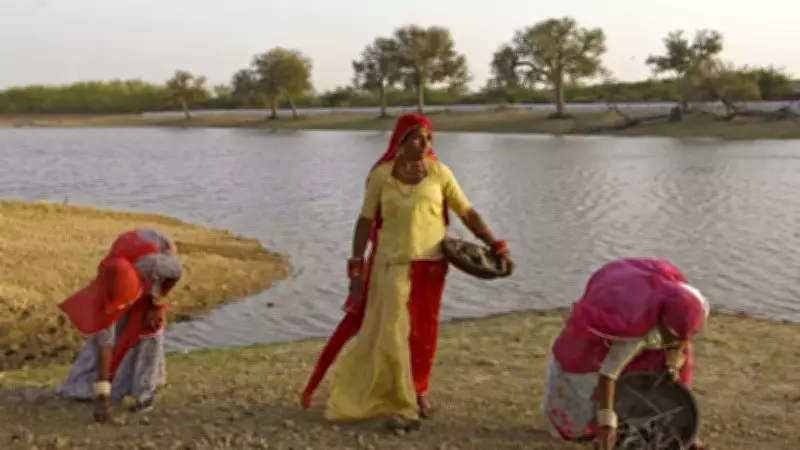
In the arid landscapes of Bundelkhand, among India's most water-deprived regions, a quiet revolution begins before dawn. Women awaken not to fetch water from distant wells, but to gather for meetings that will determine their communities' survival. These women, known as Jal Sahelis or "Friends of Water," represent a network of approximately 1,530 individuals across 321 villages who have spent the last decade transforming their water-scarce environments through check dams, pond revival, handpump repairs, and groundwater councils.
The Jal Saheli Movement: Grassroots Transformation
When rainfall failed for the thirteenth consecutive year in Bundelkhand, Shirkunwar Rajput, leader of the Paani Panchayat in Udguwan, Lalitpur, refused to wait for government intervention. Gathering village women, she declared a principle now carved in stone on local check dams: "In Bundelkhand, fetching water is entirely a woman or girl's job. Hence, women have the first right on water resources."
This conviction birthed the Jal Saheli movement in 2005, originating from Madhogarh in Jalaun, Uttar Pradesh. By 2024, the movement had expanded to 321 villages across Uttar Pradesh and Madhya Pradesh, with women aged 18 to 70 wearing distinctive blue sarees as they built over one hundred check dams, revived traditional ponds, installed new handpumps, and created soak pits to reduce runoff waste.

The agricultural impact has been profound. Before Jal Saheli intervention, farmers in many villages could only grow a single wheat crop annually. With assured irrigation from revived water sources, communities now achieve two to three harvests per year. Groundwater recharge from check dams has restored functioning wells to areas where children previously shared a single pump among 1,200 people.
Welthungerhilfe, collaborating with NGO Parmarth Samaj Sevi Sansthan, trained these women volunteers in water resource planning, water table monitoring, and conservation techniques before returning them to their villages as experts. This successful model has attracted government attention in Uttar Pradesh and Madhya Pradesh, both expressing interest in scaling the initiative to 5,000 villages.
Atal Bhujal Yojana: Institutionalizing Women's Leadership
India faces a severe groundwater crisis, with the Central Ground Water Board classifying 256 districts as water-stressed in 2020. Projections indicate sharp declines in per-capita water availability by 2050. In response, the Government of India launched the Atal Bhujal Yojana (Atal Jal) in 2020—a Rs. 6,000 crore ($756 million) scheme co-funded by the World Bank targeting 8,562 gram panchayats across seven water-stressed states: Gujarat, Haryana, Karnataka, Madhya Pradesh, Maharashtra, Rajasthan, and Uttar Pradesh.
What distinguishes Atal Jal is its political framework mandating that at least 33 percent of Village Water and Sanitation Committee (VWSC) members must be women. In practice, women's representation has exceeded this requirement, averaging 44 percent across participating gram panchayats. Crucially, 33 percent of women occupy decision-making positions—President, Vice President, Secretary, and Treasurer—within Water User Associations.
The scheme's results are substantial: 670,802 hectares covered under water efficiency activities, saving approximately 1,716 million cubic metres through micro-irrigation, crop diversification, and rainwater harvesting. An additional 642 million cubic metres of groundwater has been recharged through 77,052 structures, benefiting around 30 million people at approximately Rs. 2,627 per beneficiary.
In Haryana, the scheme has adopted the Jal Saheli model, training women from self-help groups as local resource persons to conduct water quality tests, communicate groundwater data, and advocate for efficient irrigation. In Rajasthan's Phalodi district, Jal Sahelis working with UNICEF and NGO Unnati revived a centuries-old village pond, raising Rs. 1.5 million through community funds and MGNREGA allocations.

Urban Water Governance: The Bhubaneswar Caller Club
India's water revolution extends beyond rural landscapes to urban slums, where smartphones have become tools for water justice. Between January 2023 and December 2024, the Centre for Advocacy and Research (CFAR), supported by Australia's Water for Women Fund, implemented an urban WASH initiative across 215 informal settlements in Bhubaneswar, Odisha.
The initiative's core was a "Caller Club"—trained community members who logged and escalated water, sanitation, and hygiene grievances through the Janhit-Vaani Interactive Voice Response System (IVRS). Over two years, community members made 18,750 calls, with women leading the effort through 10,419 calls and providing majority feedback through 5,610 water-related calls.
Of 8,517 water-related grievances recorded, 4,550 (53.4 percent) were formally addressed, benefiting 8,696 people. Sanitation grievances achieved even higher resolution rates: 4,783 of 6,767 issues (70.7 percent) resolved, with hygiene complaints reaching 98.4 percent resolution.
Local authorities including the Public Health Engineering Department and Watco responded positively to online grievances, collaborating with communities to resolve issues and educate residents on infrastructure maintenance. The project also funded climate-resilient upgrades across 126 settlements: elevated toilets to prevent monsoon flooding, stormwater drains, and solar-powered water filtration plants—all designed with input from the women who use them.
Laxmipriya Lenka, President of Bhubaneswar's Slum Development Association, exemplifies the leadership that makes such feedback loops effective, embodying what UN Women's 2026 World Water Day campaign advocates: not merely access to water, but agency over it.
The Empirical Case for Women's Water Leadership
The argument for women's centrality in water governance extends beyond morality to empirical evidence. A landmark study on India's panchayats, cited by UN Women, found that areas with women-led local councils had 62 percent more drinking water projects than those led by men. Research across 44 water projects in Asia and Africa, cited by the World Resources Institute, demonstrated that when women helped shape water policies and institutions, communities used water more sustainably and equitably.
Despite this evidence, structural barriers persist. Fewer than 50 countries globally have laws or policies specifically mentioning women's participation in water resources management. India's national water policies of 1987, 2002, and 2012 consistently sidelined women—policies drafted predominantly by men who traditionally didn't carry water home. Only through schemes like Jal Jeevan Mission and Atal Bhujal Yojana, combined with grassroots movements like Jal Sahelis, is this omission beginning to be corrected.
The economic imperative is equally compelling. In India alone, productivity losses from women's water-collection duties are estimated at approximately Rs. 10 billion—roughly $160 billion, nearly 4.7 percent of GDP. Every tap closer to home, every check dam retaining monsoon water through March, translates into hours returned to women for education, employment, rest, and leadership development.
Chandrakant Kumbhani, Chief Operating Officer of Community Development at Ambuja Foundation, emphasizes this transformation: "Water resource development is one of the most powerful drivers of women's empowerment in rural India. But the real shift happens when women move beyond being beneficiaries to becoming decision-makers—involved in planning, managing, and governing water systems at the village level. This participation builds confidence, visibility, and leadership, enabling them to influence not just water-related decisions, but broader community priorities. As climate pressures intensify, this role becomes even more critical. Women's involvement strengthens how communities plan for and manage water resources, making systems more adaptive and sustainable."
Carving Equality in Stone
In Bundelkhand, check dams bear inscriptions in local dialect chiseled into concrete: "Women have the first right on water resources." This declaration recognizes that women suffering most from scarcity have earned authority to manage abundance.
Leela Khatun, Leader of the Jal Sahelis, described reviving a village pond: "The pond is a lifeline for villagers, particularly during summer, drought, and periods of scanty rainfall. We undertook cleaning using both manual labour and excavators. Some desilting work was carried out under MGNREGA. We held discussions with the village head and villagers to ensure sustainable water supply."
Across India—from Bhubaneswar's slums to Rajasthan's gram panchayats, from Haryana's overexploited aquifers to Madhya Pradesh's drought-scarred plateaus—women like Devwati Sharma perform the technical, political, and physical labour of water governance. They conduct meetings, file grievances, repair infrastructure, and teach water literacy to communities beyond formal sector reach.
On World Water Day, the United Nations promotes the slogan: "Where Water Flows, Equality Grows." In India, women with years of hands-on experience already know this truth. The question remains whether governments, donors, and institutions will incorporate this principle into policies with the same permanence that Jal Sahelis carve it into stone.





