

Andhra Pradesh Announces Major Battery Storage Initiative to Boost Power Grid
In a significant move to enhance power reliability and facilitate the integration of renewable energy sources, the state of Andhra Pradesh has unveiled plans to establish extensive Battery Energy Storage Systems (BESS) across its territory. This strategic initiative is designed to guarantee an uninterrupted electricity supply, efficiently handle peak demand periods, and stabilize the state's power grid as it expands its renewable energy capacity.
Phased Implementation and Capacity Targets
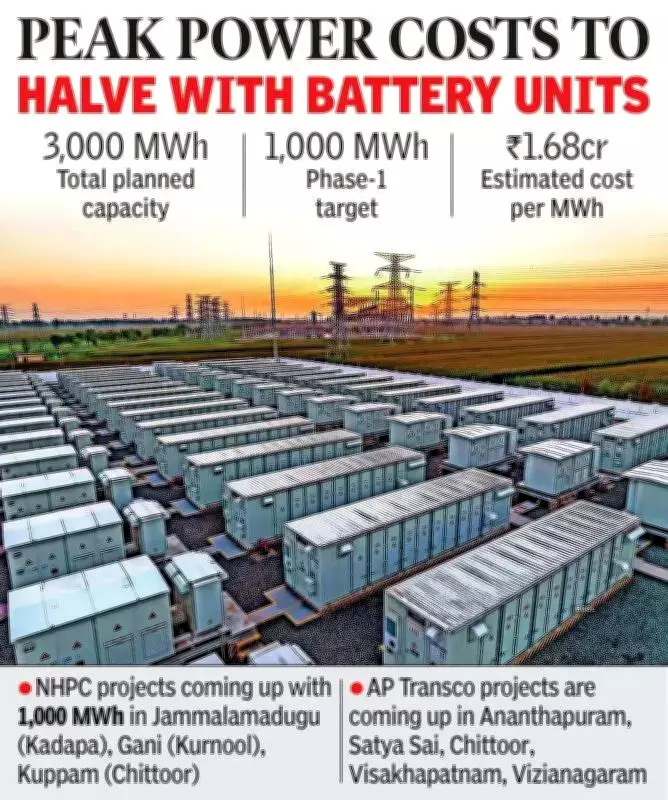
The ambitious project involves deploying BESS with a combined capacity of 3,000 megawatt-hours (MWh), to be rolled out in multiple phases. The first phase targets the completion of 1,000 MWh by January 2027. State authorities are expected to issue tenders shortly, with active participation from private sector entities anticipated to drive the implementation forward.
Investment and Funding Mechanisms
The investment required for this large-scale endeavor is estimated at approximately ₹1.68 crore per MWh. To ensure financial viability, the project will likely leverage viability gap funding and central government assistance. Additionally, officials are exploring the co-location of these battery storage systems with existing solar and wind power plants to maximize operational efficiency and optimize resource utilization.

Operational Benefits and Cost Savings
Battery storage systems serve as a critical bridge between electricity generation and consumption. They enable the storage of excess solar power generated during daytime hours, which can then be discharged during evening peak demand periods. This capability reduces dependence on more expensive thermal power sources. According to official estimates, the operationalization of BESS units could lead to a substantial reduction in peak-hour power purchase costs, from the current ₹10 per unit to about ₹4.85 per unit. This transition is projected to yield annual savings in the range of ₹400 to ₹500 crore for the state.
Strategic Deployment and Grid Enhancement
Multiple substations and key load centers have been identified for the installation of these battery systems, with priority given to regions experiencing high penetration of renewable energy. The deployment is expected to deliver multiple benefits, including:
- Reduction in power outages and improvement in supply quality
- Strengthening of the financial health of distribution companies through lowered power purchase expenses
- Enhanced grid stability and reliability
Technological Advancements and Future Outlook
The increasing viability of such projects is being driven by declining battery costs and advancements in smart grid technologies. State officials emphasize that the implementation of BESS will fundamentally transform Andhra Pradesh's power sector. This transformation will focus on ensuring consistent reliability, robustly supporting renewable energy integration, and paving the way for a sustainable and resilient energy future for the state.






