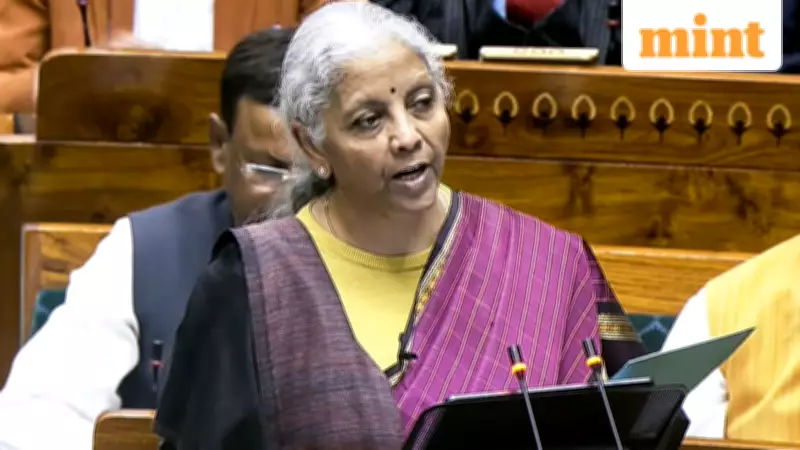
In a landmark announcement during the Union Budget 2026-27 presentation on February 1, Finance Minister Nirmala Sitharaman unveiled a transformative initiative to establish dedicated hostels for girls in every district across India. This ambitious scheme is strategically designed to promote girls' education as a powerful catalyst for sustainable economic growth and national development.
Addressing Critical Barriers to Female Education
The programme directly confronts one of the most significant obstacles hindering female participation in higher education: the acute shortage of safe, secure, and affordable accommodation. By creating residential facilities in close proximity to colleges and universities, the government aims to dismantle this barrier, with particular emphasis on smaller towns and rural areas where such infrastructure is most lacking.
Comprehensive Objectives and Expected Outcomes
The initiative has been structured with multiple interconnected goals. Primarily, it seeks to substantially reduce the alarming dropout rates observed among girls after completing Class XII. Furthermore, it aims to boost enrolment figures in higher education institutions and specialized skilling centers across the country.

Currently, millions of young women are forced to abandon their educational aspirations post-schooling simply due to the absence of a secure place to reside near academic institutions. This problem is especially pronounced in districts where higher education facilities are sparse or inadequately connected by public transportation networks.
Substantial Financial Commitment and Implementation Strategy
Officials closely associated with the programme have confirmed that the government has allocated a substantial outlay of approximately ₹10,000 crore for this nationwide endeavor. This funding will be distributed over several years to ensure systematic and effective implementation.
The development of these hostels will be executed through collaborative partnerships with state governments and local authorities. Districts exhibiting critically low female enrolment rates and disproportionately high dropout statistics will receive priority in the rollout plan.
Leveraging Existing Resources for Efficiency
To accelerate implementation and maintain cost-effectiveness, the scheme plans to utilize existing government land parcels and underutilized public infrastructure. This pragmatic approach is expected to streamline project execution while optimizing the use of available national resources.
Contextualizing the Initiative Within Broader National Goals
This budget announcement arrives at a crucial juncture, addressing growing concerns over India's comparatively low gross enrolment ratio for women in higher education when measured against global benchmarks. It also seeks to bridge the persistent gap between educational attainment and actual workforce participation among women.
The hostel scheme is designed to synergize seamlessly with existing governmental initiatives in the domains of education, skill development, and women's empowerment. Each facility will adhere to stringent minimum standards encompassing safety protocols, sanitation facilities, and reliable digital connectivity.
Anticipated Multiplier Effects on Society and Economy
Government officials project that this initiative will generate significant multiplier effects across various sectors. By improving educational outcomes and delaying trends of early marriage, the programme is expected to cultivate a stronger, more robust pipeline of skilled women ready to enter the labor market. This, in turn, is poised to enhance overall economic productivity and contribute to a more inclusive growth trajectory for the nation.