Budget 2026: Powering Make in India's Next Phase with Strategic Reforms
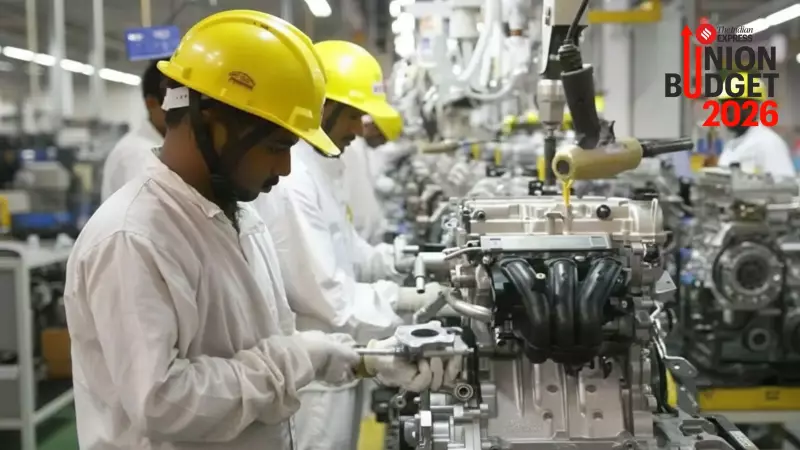
India's manufacturing sector is experiencing significant momentum, with factories emerging as a central pillar of economic growth. Recent data highlights how manufacturing is meeting robust domestic demand while simultaneously strengthening the country's position within global value chains. Over the past decade, manufacturing output has grown at an impressive annual rate of approximately 6%, now valued at over $450 billion. However, despite this growth, manufacturing's share in India's overall economy has remained relatively stagnant, hovering between 15% to 17% of GDP. This underscores the critical need for the upcoming Budget 2026-27 to focus on outcome-oriented policy measures that directly enhance scale, competitiveness, and cost efficiency within domestic manufacturing.
PLI Schemes and the Investment Push
The Production-Linked Incentive (PLI) scheme has emerged as the most significant driver of manufacturing growth in recent years. The government has allocated approximately ₹2.9 lakh crore for PLI initiatives across 20 diverse sectors. By March 2025, this scheme had successfully attracted substantial private investment, generated output worth more than five times the scheme's cost, and created nearly 12 lakh jobs. The electronics sector serves as a prime example of this success, with production expanding about sixfold over a decade, positioning India as the world's second-largest mobile phone manufacturer. Mobile phone exports have surged approximately 127 times since FY2014-15, while imports have declined sharply.
Budget 2026-27 can build upon this foundation by extending PLI tenures, expanding the list of eligible products, and allowing fresh applications in key sectors such as smartphones, solar equipment, white goods, automotive components, and food processing. Furthermore, introducing new PLI schemes in emerging areas like EV charging equipment, heavy construction machinery, battery ecosystems, semiconductor ecosystems, and specialty chemicals could prove transformative. Releasing the second version of next-generation PLIs for semiconductors, green hydrogen, and lithium-ion cells would significantly contribute to making India's economy more self-sustainable amid ongoing global tensions.

Phased Tariff Strategy and Quality Guardrails
India's measured tariff policy has effectively supported industries in scaling up efficiently. Duties have been strategically raised in phases—starting with finished goods, then moving to components, and finally addressing raw materials. Once domestic manufacturing achieves sufficient capacity, duties on finished goods and components are significantly reduced to create a level playing field for foreign manufacturers while protecting domestic consumer interests. This "glide path" approach has provided adequate protection and demonstrated proven results in establishing manufacturing capabilities across sectors like automotive, mobile phones, and solar modules.
The upcoming Budget can advance this strategy by implementing similar phased approaches in sectors where PLI schemes are already operational and in areas of national importance such as defence and aviation. Quality measures have evolved significantly, serving as effective non-tariff barriers while ensuring that substandard products are not dumped into Indian markets by either foreign or domestic manufacturers. Mandatory Indian standards under Quality Control Orders (QCOs) have expanded dramatically from 80+ products in 2019 to over 750 products today. The next logical step involves developing a multi-year standards roadmap and establishing more accredited testing laboratories, helping Indian manufacturers meet global quality norms as they expand into new export markets while simultaneously supporting domestic production.

GST 2.0 and Customs Modernization
Indirect tax reforms continue to improve the ease of doing business across India. The "next-generation" GST reforms implemented in September 2025 simplified rate structures and reduced taxes on numerous goods, lowering industry costs while expanding the tax base. Registered taxpayers increased from 66.5 lakh in 2017 to 1.51 crore in 2025, with FY2024-25 recording gross GST collections of ₹22.08 lakh crore. Budget 2026-27 can solidify these gains by implementing similar modernization efforts within Customs procedures.
On the Customs front, digital trade facilitation is advancing rapidly. The CBIC's SWIFT 2.0 initiative—a unified single-window platform—will enable importers and exporters to obtain all necessary approvals online. Integrating regulatory agencies like FSSAI and plant/animal quarantine services into a single portal will significantly reduce delays and minimize paperwork burdens. When combined with faceless assessment and risk-based inspection systems, these measures will lower logistics costs and enhance competitiveness for manufacturing exporters.
Manufacturing Momentum and Global Integration
India's manufacturing strategy now emphasizes scale, domestic value addition, and stronger integration into global value chains, supported by initiatives like the National Manufacturing Mission (2025) and the National Critical Minerals Mission. These programs aim to build upstream capabilities ranging from rare-earth magnets to advanced batteries. Budget 2026-27 can accelerate this strategic shift by boosting research and development funding, expanding Skill India programs, and strengthening industrial infrastructure.
India is progressively aligning its tax, tariff, and regulatory frameworks to better meet industry requirements, helping the country fortify its position within global supply chains. With manufacturing performance improving, exports reaching record highs, and foreign investment remaining strong, these comprehensive steps could propel Make in India into its next phase—characterized by larger scale, superior quality, and enhanced global competitiveness.