Cabinet Greenlights Major Railway Expansion Project to Boost North-East Connectivity
The Cabinet Committee on Economic Affairs (CCEA), under the leadership of Prime Minister Narendra Modi, has given its official approval for a substantial railway infrastructure project. On Saturday, the committee sanctioned a massive investment of Rs 14,926 crore dedicated to constructing third and fourth railway lines along the crucial Ghaziabad to Sitapur corridor. This strategic decision aims to dramatically enhance transportation capacity and alleviate severe congestion on this vital arterial route.
Addressing Critical Capacity Constraints on a Vital Corridor
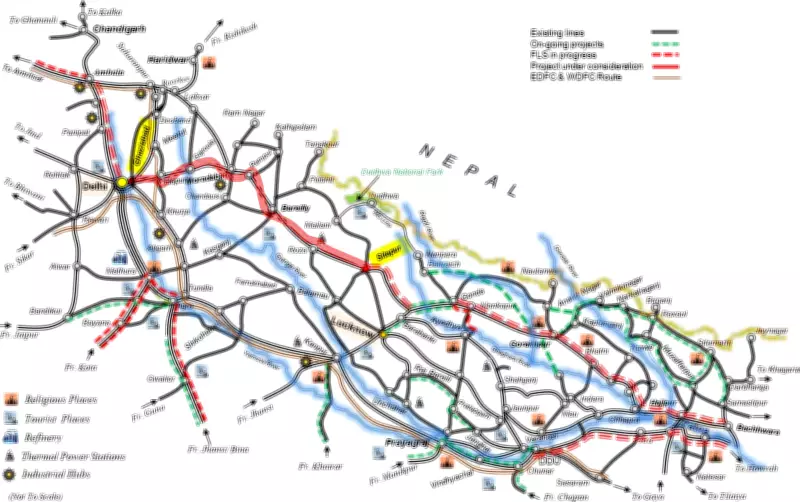
The existing 403-kilometer Ghaziabad–Sitapur section currently operates as a double-line route and serves as an indispensable component of the Delhi-Guwahati High Density Network, designated as HDN-4. This network forms a primary link connecting Northern and Eastern India, facilitating the movement of both passengers and essential freight. Railway officials have highlighted a pressing concern: the existing infrastructure is already operating under immense strain.
Current utilization has reached a staggering 168% of its designed capacity, and projections indicate this figure could soar to 207% if expansion efforts are not implemented promptly. The newly approved project is fundamentally designed to tackle this congestion head-on, promising to improve connectivity between the northern and eastern regions of the country and ensure smoother, more reliable movement for all rail traffic.

Detailed Project Alignment and Strategic Bypasses
The proposed construction of the third and fourth lines will traverse through several key districts, including Ghaziabad, Hapur, Amroha, Moradabad, Rampur, Bareilly, Shahjahanpur, Lakhimpur Kheri, and culminate in Sitapur. This corridor is not just a transportation route but an economic lifeline, connecting major industrial centers across Uttar Pradesh.
- Ghaziabad is renowned for its machinery, electronics, and pharmaceutical industries.
- Moradabad stands as a global hub for brassware and handicrafts.
- Bareilly hosts significant furniture, textile, and engineering manufacturing units.
- Shahjahanpur is home to carpet weaving and cement-related industries.
- The route also serves Roza, which houses a critical thermal power plant.
To optimize efficiency and speed, the project's alignment has been meticulously planned to bypass several heavily congested stations. These include major junctions at Hapur, Simbhaoli, Moradabad, Rampur, Bareilly, Shahjahanpur, and Sitapur. As part of this bypass strategy, six new stations are proposed to be constructed on these alternative sections, ensuring continued accessibility while improving flow.
Multifaceted Benefits: Economic, Environmental, and Social Impact
The expansion project is anticipated to deliver a wide array of significant benefits, extending far beyond simple decongestion.

- Economic and Freight Boost: The railways project a substantial increase in freight traffic capacity, estimated at an additional 35.72 million tonnes per annum. Key commodities expected to benefit include coal, foodgrains, chemical fertilizers, and finished steel.
- Employment Generation: The construction phase is projected to create employment opportunities amounting to 274 lakh human-days, providing a significant boost to local and regional labor markets.
- Logistics Cost Savings: A major economic advantage is the anticipated annual saving in logistics costs of approximately Rs 2,877.46 crore when compared to road transport alternatives.
- Environmental Sustainability: The project carries a strong green mandate, with estimates suggesting a reduction in carbon emissions by about 128.77 crore kilograms annually. This environmental benefit is equivalent to the positive impact of planting an estimated 5.15 crore trees.
Connecting Cultural and Religious Destinations
Beyond its industrial and economic roles, the Ghaziabad-Sitapur corridor also serves as a gateway to several prominent religious and tourist destinations. These include the Dudheshwarnath Temple, the sacred Garhmukteshwar Ganga Ghat, the historic Dargah Shah Wilayat Jama Masjid in Amroha, and the revered pilgrimage site of Naimisharanya in Sitapur. The improved rail connectivity is expected to facilitate easier access for pilgrims and tourists alike, supporting local cultural economies.
This comprehensive railway expansion initiative represents a major step forward in strengthening India's core infrastructure, directly supporting economic growth, regional integration, and sustainable development goals for Northern and Eastern India.