

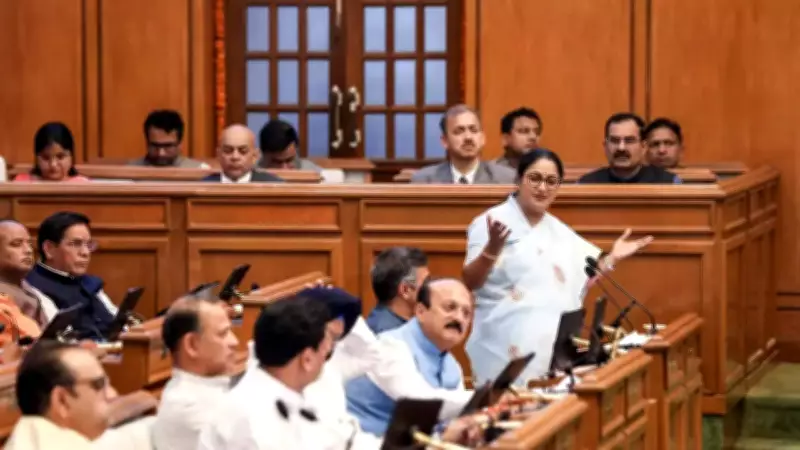
Delhi Government Unveils Student-Focused Budget for 2026-27
Presenting a comprehensive budget of Rs 1.03 lakh crore for the fiscal year 2026-27, the Delhi government has placed a significant emphasis on student welfare and educational advancement. Chief Minister Rekha Gupta described the budget as a "green budget," highlighting its environmental priorities alongside substantial allocations for education and digital learning initiatives.
Major Student Welfare Schemes Announced
Among the key measures, the budget includes a groundbreaking scheme to provide free bicycles to approximately 1.3 lakh Class IX girls enrolled in government schools. This initiative, allocated Rs 90 crore, aims to improve school attendance and accessibility for female students across the capital.
Additionally, the government has earmarked Rs 10 crore for distributing laptops to meritorious students. This program is designed to enhance digital access and support academic performance, reflecting a broader push toward modernizing education in Delhi.

Record Education Allocation and Infrastructure Push
The education sector has received the highest allocation in the budget, with over Rs 19,000 crore dedicated to various initiatives. This includes:
- Rs 200 crore for constructing new school buildings
- Rs 275 crore for expanding existing educational facilities
- Rs 150 crore for implementing smart classrooms
- Rs 720 crore for strengthening technical education programs
These investments underscore the government's commitment to improving learning outcomes and educational infrastructure throughout Delhi.
Environmental Focus and Broader Welfare Measures
True to its "green budget" designation, over 21% of the total outlay (Rs 22,236 crore) has been allocated for environmental initiatives. Beyond student-specific schemes, the budget expands welfare measures that impact families and daily life:
- Rs 450 crore for free bus travel for women and transgender persons
- Rs 260 crore for free LPG cylinder distribution
- Rs 128 crore for the Lakhpati Beti Yojana program
Comprehensive Budget Breakdown and Revenue Sources
The overall budget outlay of Rs 1,03,700 crore represents a 3.7% increase over the previous year's budget. This includes:
- Rs 62,550 crore allocated for schemes and projects
- Rs 41,150 crore designated for revenue and capital expenditure
The government expects to mobilize revenue through multiple channels, including Rs 43,500 crore from GST collections, Rs 74,000 crore from its own tax revenue, along with support from centrally sponsored schemes and market borrowings.
Sector-Wise Allocations and Infrastructure Development
The budget demonstrates balanced development across multiple sectors:
- Health: Rs 13,034 crore, including Rs 150 crore for ICU and hospital projects, Rs 787 crore for medicines, and Rs 202 crore for Ayushman scheme expansion
- Transport and Roads: Rs 12,613 crore, with plans for 6,130 electric buses and fleet expansion to 7,500 by 2027
- Housing and Urban Development: Rs 11,572 crore
- Social Security: Rs 10,537 crore
- Water and Sanitation: Rs 9,000 crore
Infrastructure development receives substantial attention, with Rs 11,266 crore allocated to the Municipal Corporation of Delhi, Rs 5,921 crore for the Public Works Department, and Rs 7,887 crore for urban development projects. Plans include redevelopment of 750 km of roads and Rs 800 crore for unauthorized colonies.
Healthcare Expansion and Transport Modernization
The healthcare sector benefits from Rs 12,645 crore in allocations, supporting the establishment of more than 750 new health centers across Delhi. Transport modernization initiatives include Rs 2,885 crore for metro expansion and Rs 200 crore for electric vehicle policy implementation.
Governance Strengthening and Employment Initiatives
To enhance governance and employment opportunities, the government plans to establish 13 mini secretariats, digitize land records, and roll out MSME training programs for 32,000 enterprises. New semiconductor and drone policies are also included in the budget framework.

Officials emphasized that the budget strategically combines student welfare, infrastructure development, and environmental priorities to create a more accessible and future-ready ecosystem for Delhi's youth. The comprehensive approach aims to address both immediate needs and long-term development goals across the capital region.





