

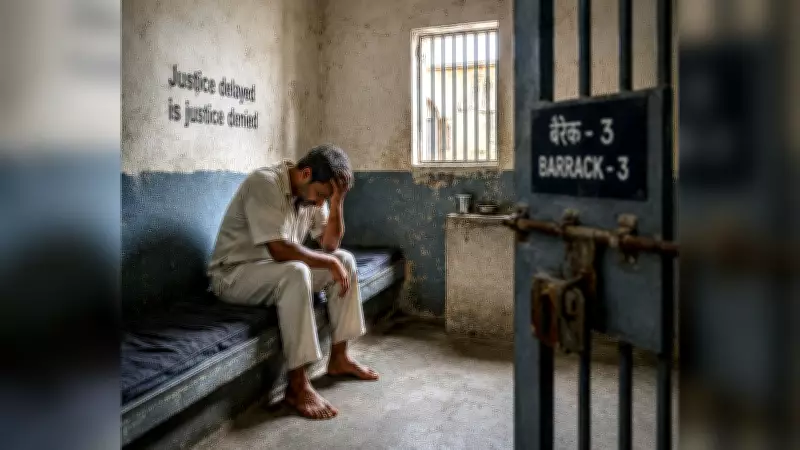
Nearly five decades ago, the Supreme Court underscored that justice delayed is justice denied, holding that the right to a speedy trial is an integral part of the fundamental right to life and personal liberty under Article 21 of the Constitution. Building on this principle, a division bench of the apex court earlier this month held that regardless of the gravity of the offence, including murder, courts must consider granting bail when an accused person’s right to a speedy trial has been violated due to delays attributable to the judiciary or the prosecution.
Massive Pendency of Cases
Despite these landmark rulings, the reality on the ground paints a grim picture. As per recent data, approximately 1.85 lakh cases are pending across various courts in the country, with many accused persons languishing in jails for years awaiting trial. The delays are often attributed to a shortage of judges, inadequate infrastructure, and procedural bottlenecks.
Supreme Court's Stance on Bail
The division bench, while hearing a bail plea, reiterated that the right to a speedy trial is not merely a statutory right but a constitutional guarantee. The court observed that prolonged incarceration without trial violates the fundamental rights of the accused, and bail should be the rule, not the exception, even in serious offences.

Challenges in Implementation
Legal experts point out that while the judiciary has consistently upheld the principle of speedy trial, its implementation remains a challenge. The high pendency of cases is exacerbated by a lack of judicial officers and frequent adjournments. The government has taken steps to increase the number of judges and introduce fast-track courts, but the impact has been limited.
Need for Systemic Reforms
Activists and jurists have called for comprehensive reforms to address the root causes of delay. This includes increasing the judge-to-population ratio, leveraging technology for case management, and ensuring strict adherence to timelines. The recent Supreme Court judgment is expected to provide relief to many undertrials, but long-term solutions require sustained effort from all stakeholders.






