Delhi Government Expands Atal Canteen Initiative with 25 New Outlets
In a significant move to enhance food security in the capital, Lieutenant Governor VK Saxena and Chief Minister Rekha Gupta jointly inaugurated 25 new Atal Canteens across Delhi on Thursday. This expansion brings the total number of operational canteens to 71, marking a rapid scale-up of the subsidized meal program launched just over a year ago.
Digital Launch and On-Ground Celebration
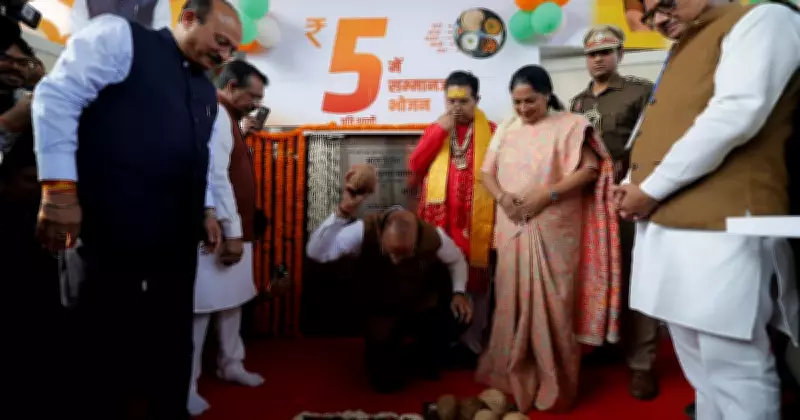
The new canteens, strategically spread throughout the city to maximize accessibility, were launched digitally from an event held in Krishna Nagar. Demonstrating their commitment to the initiative, both the Lieutenant Governor and Chief Minister shared a meal with beneficiaries at one of the canteens during the inauguration ceremony, symbolizing the government's direct engagement with the community.
Political Momentum and Operational Scale
Chief Minister Rekha Gupta highlighted the accelerated pace of implementation under the current administration. "In the previous government's 11 years, the canteen files remained stuck, while in just one year of the BJP government, 71 Atal Canteens have already opened. This is our speed and scale of work," she stated emphatically. "From today, 71,000 thalis will be served daily in these Atal Canteens. These facilities are a tribute to every hard-working person in our city."

Gupta further explained that the initiative draws inspiration from former Prime Minister Atal Bihari Vajpayee and Prime Minister Narendra Modi, with a goal to establish 100 such canteens across Delhi. The primary objective is to ensure that no needy individual in the city has to sleep on an empty stomach, providing nutritious food with dignity for just Rs 5 per meal.
Targeted Support for Vulnerable Groups
Lieutenant Governor VK Saxena emphasized the program's focus on supporting key demographic groups. He noted that the initiative, which was launched on December 25 last year to coincide with the birth anniversary of Atal Bihari Vajpayee, has proven particularly beneficial for migrant workers, students, rickshaw pullers, sanitation workers, and daily wage laborers. These groups often face financial constraints and food insecurity, making the subsidized meals a critical support system.
Subsidy Structure and Impact Metrics
The Delhi government provides a substantial subsidy of Rs 25 per meal, enabling beneficiaries to access food at the heavily reduced rate of Rs 5. This financial model ensures affordability while maintaining quality and nutritional standards. According to official data, the scheme has already made a significant impact, with over 14.5 lakh meals served within the first 57 days of its launch. This rapid uptake underscores the pressing need for such services in the urban landscape.
Operational Framework and Future Vision
The Atal Canteens are operated under the oversight of the Delhi Urban Shelter Improvement Board, which manages the logistics, staffing, and daily operations to ensure efficiency and hygiene. The expansion to 71 canteens represents a major step toward the government's vision of a hunger-free Delhi, with plans to reach the 100-canteen target in the near future. This initiative not only addresses immediate nutritional needs but also fosters social inclusion by offering meals in a respectful and dignified environment.
As the network grows, it is expected to further alleviate food poverty among the city's most vulnerable populations, reinforcing the government's commitment to welfare and public service. The success of the Atal Canteens serves as a model for other urban centers grappling with similar challenges, highlighting the importance of targeted, subsidized food programs in promoting public health and social equity.