Delhi Government Unveils Pink Mobility Card for Women's Free Bus Travel and Dual LPG Benefit Scheme
In a significant move to enhance women's mobility and household welfare, the Delhi government is set to launch a Pink National Common Mobility Card (NCMC) on Monday. This innovative smart card initiative aims to provide free bus travel for women across the national capital while enabling seamless, integrated access to multiple public transport systems through a single digital solution.
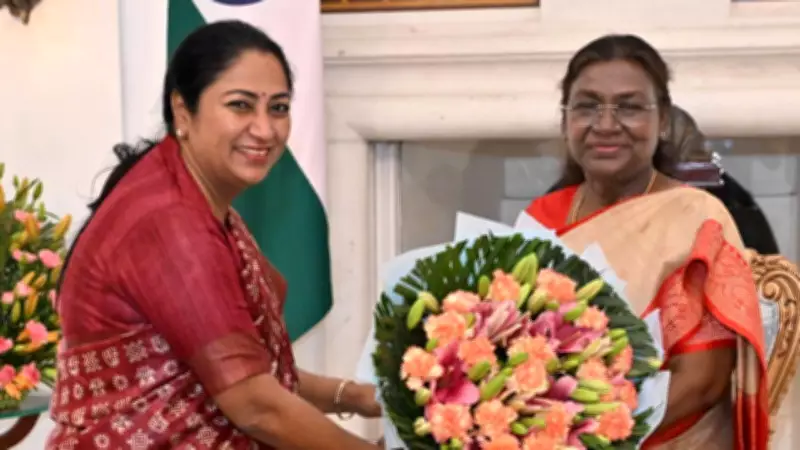
Formal Launch by President Droupadi Murmu
The scheme will be formally inaugurated by President Droupadi Murmu at a program titled "Sashakt Nari, Samriddh Delhi" (Empowered Women, Prosperous Delhi) at the Indira Gandhi Indoor Stadium. According to official statements, this event marks a pivotal moment in Delhi's public transport and social welfare landscape.
Dual Benefit: Free LPG Cylinders for Festival Seasons
Simultaneously, President Murmu will launch a complementary scheme to provide two free LPG cylinders annually to all ration card-holding families in Delhi. Chief Minister Rekha Gupta confirmed that this benefit will be delivered during the festive occasions of Holi and Diwali through Direct Benefit Transfer (DBT).

The financial assistance, equivalent to the prevailing market price of one LPG cylinder, will be directly credited to the Aadhaar-linked bank account of the family head named on the ration card. This initiative is projected to cover approximately 1.55 million eligible families, substantially easing the financial burden of cooking fuel expenses and enabling dignified festival celebrations.
Pink Card Features and Benefits
Chief Minister Gupta elaborated that the Pink NCMC card will permit women residents of Delhi to travel free of cost on Delhi Transport Corporation (DTC) buses. Additionally, the card will function as a universal payment tool for paid journeys on the Delhi Metro, Regional Rapid Transit System (RRTS), and other public transport services.
"This initiative is strategically designed to make public transport more accessible, digital, and affordable," stated Gupta. "By reducing daily travel costs for women, we aim to improve their access to education, employment opportunities, and healthcare services, fostering greater gender equity and urban mobility."
Three-Tier Card System and Implementation Partners
The Delhi Transport Corporation will introduce three distinct types of mobility cards:
- Pink Card: Exclusively for eligible women residents of Delhi.
- Blue Card: Designed for general commuters.
- Orange Card: Catering to monthly pass users.
In the initial phase, Pink and Blue cards will be rolled out, with Orange cards to follow subsequently. The Delhi Transport Corporation has authorized Hindon Mercantile Limited (operating as MufinPay) and Airtel Payments Bank Limited as official issuers of these smart cards.
Integration and Operational Details
The Pink NCMC cards will be fully integrated with Delhi's existing Automatic Fare Collection System across the public transport network. Notably, the Pink Card will be provided free of charge, with all associated expenses borne by the Delhi government.
Approximately 50 dedicated centers will be established for card issuance, including District Magistrate offices, Sub-Divisional Magistrate offices, and selected DTC locations. The process will require minimal documentation to ensure simplicity and transparency.
Each Pink Card will be securely linked to the beneficiary's mobile number and Aadhaar details to verify age, gender, and Delhi residency credentials. This digital system will replace the existing paper-based pink tickets, offering touch-free travel, comprehensive digital journey records, and enhanced transparency in revenue accounting.
Symbolic Distribution and Future Vision
At the launch event, selected women beneficiaries will receive the first Pink NCMC cards, symbolizing a crucial step toward a more integrated, efficient, and women-friendly public transport ecosystem in the capital. This dual-launch of mobility and welfare schemes underscores the government's commitment to holistic urban development and social empowerment.