

Centre's Directive Empowers Districts to Accelerate City Gas Approvals
Amid ongoing LPG supply disruptions triggered by recent disturbances in West Asia, both the state and Union governments have intensified efforts to fast-track the transition to piped natural gas (PNG). This move aims to mitigate the impact of the LPG crisis on domestic, commercial, and industrial users across Karnataka.
Karnataka's Push for Rapid PNG Adoption
Chief Secretary Shalini Ranjeesh has issued a directive to all District Commissioners (DCs), urging them to prioritize permissions for city gas distribution (CGD) entities. She emphasized that the swift adoption of PNG is critically dependent on the rapid expansion of infrastructure. According to Karnataka's CGD Network Development Policy, all such permissions must be granted within a strict timeline of 15 days.
Highlighting the urgency of the situation, Ranjeesh referenced a Union government order issued on March 24, which establishes clear timelines for gas pipeline and distribution permissions. "It also provides that if the permissions are not provided within the said timelines, it shall be deemed to have been granted," she stated, underscoring the government's commitment to removing bureaucratic delays.

District-Level Empowerment and Compliance
Sources within the Dharwad DC's office revealed that the new order empowers district administrations to clear all pending CGD permission requests within 24 hours. They are required to report compliance directly to the secretary of the food, public distribution, and consumer affairs department. "Henceforth, all permissions should be granted strictly within the timelines laid down. District administrations should discuss with the GAIL representative about the expansion of the PNG network, especially in high-density residential, commercial, and industrial areas in a time-bound manner," the sources added.
Industry Response and Conversion Challenges
Vinod Papal, Deputy General Manager at Indian Oil and Adani Gas Pvt Ltd (IOAGPL) in Hubballi-Dharwad, welcomed the order, noting that it will further accelerate the shift to PNG. "Since the LPG crisis exists for domestic and commercial use, demand for PNG for domestic, commercial, and industrial use is increasing," he explained.
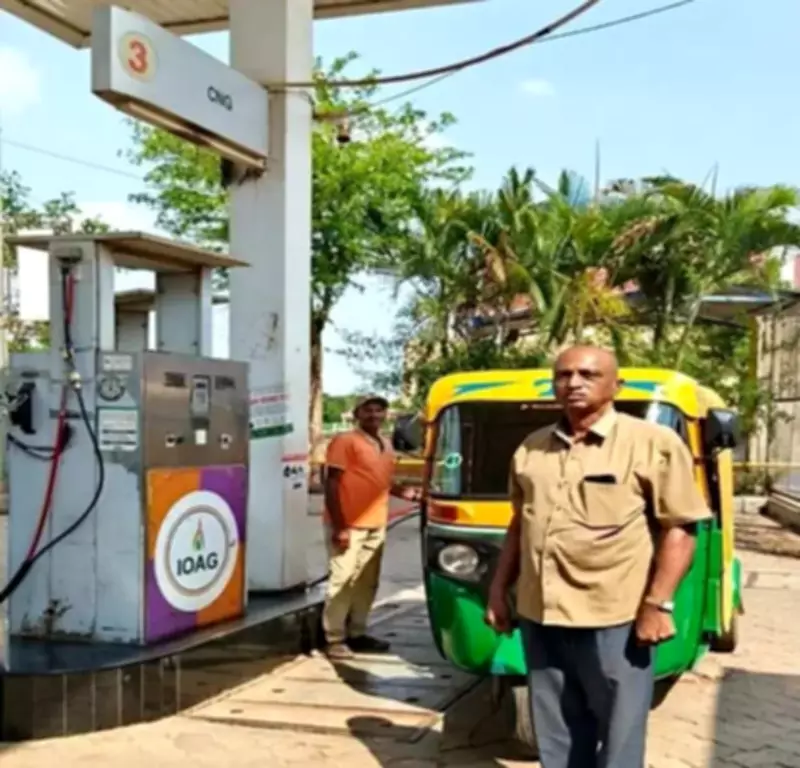
Papal detailed the financial aspects of the transition, pointing out that converting a vehicle from LPG to CNG costs approximately Rs 30,000. This expense has prompted many vehicle owners in the twin cities to consider the switch. "Currently, we have 14 CNG stations in Hubballi-Dharwad, and three more are coming up within a year. About 5,000 CNG vehicles are running on city roads. We can also provide partial financial assistance to auto-rickshaw owners to get converted from LPG to CNG," he said.
Auto-Rickshaw Drivers' Plea for Support
Auto-rickshaw drivers, including Fakkiresh Kundagol and Laxman Badiger, have appealed to the government to fully cover the Rs 30,000 conversion cost from LPG to CNG for all autorickshaw drivers. This request highlights the financial burden faced by small-scale operators amidst the ongoing energy crisis.
The combined efforts of the Centre and state government, through streamlined permissions and infrastructure expansion, aim to bolster energy security and promote cleaner fuel alternatives in Karnataka.






