

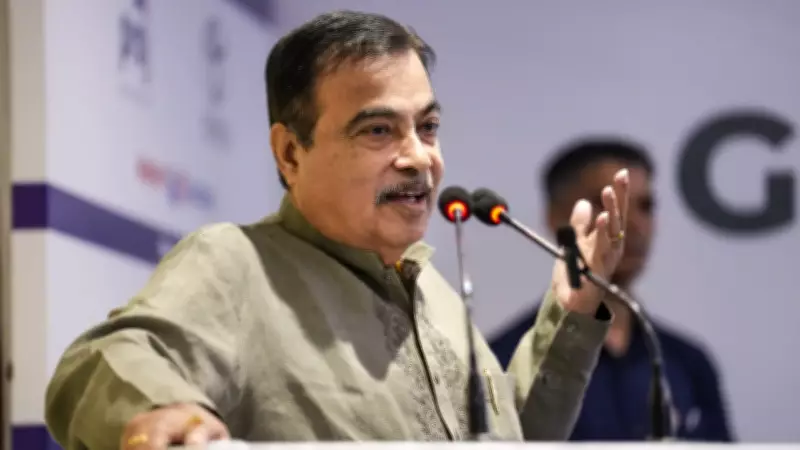
Gadkari Advocates for 100% Ethanol Blending to Boost India's Energy Independence
Union Minister for Road Transport and Highways, Nitin Gadkari, has made a strong push for India to target 100 percent ethanol blending in the near future. Speaking at the Indian Federation of Green Energy's Green Transport Conclave on Tuesday, Gadkari emphasized that this ambitious goal is crucial for strengthening the nation's energy self-reliance, particularly in light of vulnerabilities in oil supplies due to the ongoing crisis in West Asia.
Addressing Energy Security Amid Global Turmoil
Gadkari pointed out that the current geopolitical tensions have exposed India's heavy dependence on imported fossil fuels, making it imperative to develop domestic alternatives. "In the near future, India should aspire to achieve 100 percent ethanol blending," he stated, as quoted by PTI. "Today, we are facing an energy crisis due to the war in West Asia, so it is necessary for us to become self-reliant in the energy sector."
He highlighted alarming statistics, noting that India imports a staggering 87 percent of its oil requirements, which translates to fossil fuel imports worth approximately Rs 22 lakh crore annually. This not only strains the economy but also contributes significantly to pollution levels across the country.

Current Ethanol Blending Status and Global Benchmarks
India has already taken steps toward ethanol integration, with vehicles currently permitted to run on E20 petrol—a blend containing 20 percent ethanol—after minor engine modifications to prevent corrosion issues. In 2023, Prime Minister Narendra Modi officially launched petrol blended with 20 percent ethanol, marking a milestone in the nation's green energy journey.
Gadkari drew attention to global examples, citing countries like Brazil that have successfully achieved 100 percent ethanol blending, demonstrating the feasibility and benefits of such a transition.
Challenges and Opportunities in Alternative Fuels
While advocating for ethanol, the minister also discussed other green energy solutions, particularly green hydrogen. However, he acknowledged significant hurdles in this area, including high production costs and logistical challenges in transportation. "Transport of hydrogen fuel is a problem. Also, we need to produce 1 kg of hydrogen at $1 dollar, to make India an exporter of energy," Gadkari explained. He suggested exploring hydrogen production from waste as a potential avenue to overcome these obstacles.
On the topic of transitioning away from traditional fuels, Gadkari clarified that while reducing reliance on petrol and diesel vehicles is essential, "we cannot force people to stop buying petrol and diesel vehicles." Instead, he urged automobile manufacturers to prioritize quality over cost to expand into new markets and support the shift toward cleaner technologies.
Economic and Agricultural Benefits of Ethanol Program
The minister underscored the broader economic advantages of India's ethanol initiative, particularly for the agricultural sector. He revealed that ethanol production from maize has provided farmers with better prices, resulting in cumulative gains of around Rs 45,000 crore. This aligns with his emphasis on fostering a circular economy, which he believes can generate substantial employment opportunities across various industries.
Addressing Opposition and Ensuring Quality
Gadkari did not shy away from addressing resistance to the E20 fuel push, noting that the petroleum sector is actively lobbying against the move. He also referenced past criticisms, dismissing what he described as a "paid" social media campaign aimed at targeting him politically over ethanol blending.
To bolster his case, Gadkari mentioned that organizations like the Society of Indian Automobile Manufacturers (SIAM) and the Automotive Research Association of India (ARAI) have conducted studies and shared findings supporting the viability of ethanol blending in petrol, further validating the government's approach.
In conclusion, Gadkari's call for 100 percent ethanol blending represents a bold vision for India's energy future, combining environmental sustainability with economic resilience and agricultural prosperity.






