

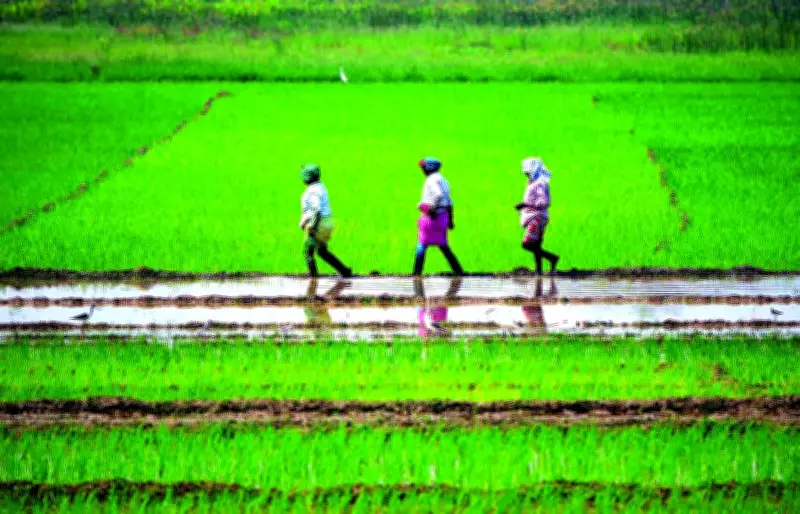
Goa Government to Fund 90% of Community Farm Infrastructure Costs
In a significant move to boost agricultural productivity, Goa Chief Minister Pramod Sawant announced in the state assembly on Monday that the government will provide 90% of the funds required for all infrastructure needs on community farmlands. This initiative targets plots with a minimum area of two lakh square meters, aiming to alleviate financial burdens on farmers.
Financial Support Details and Legislative Discussion
Chief Minister Sawant clarified that farmers will only need to contribute 10% of the funds for essential infrastructure such as fencing, irrigation facilities, and agricultural machinery. He urged legislators to actively encourage more land within their respective jurisdictions to be brought under community farming to maximize the benefits of this scheme.
The discussion was initiated through a calling attention motion by legislator Deviya Rane, who emphasized the necessity for government support schemes to cover infrastructure costs. Rane highlighted that this assistance is particularly crucial for small and marginal farmers engaged in paddy and vegetable cultivation in the Sattari region, where such support can significantly enhance their livelihoods.

Addressing Land Ownership Challenges
During the assembly session, several MLAs raised concerns about farmers who do not own the land they cultivate. Fatorda MLA Vijai Sardesai pointed out that many farmers work on comunidade land or other leased properties, which often disqualifies them from availing various government schemes designed for landowners. This situation renders Krishi cards irrelevant for these farmers, limiting their access to agricultural benefits.
In response, Chief Minister Sawant assured the House that aid for community farmers will be extended even if they cultivate on alvara, comunidade, or other lands where they do not hold ownership rights. He acknowledged the complexities involved in providing assistance for smaller land holdings under such circumstances and called on legislators to facilitate the transition to community farming models wherever feasible.
Long-Term Commitment and Implementation
Sawant further elaborated that the financial aid will not be a one-time provision but a continuous support system. He stated, "The aid will cover 90% of the costs, not just for paddy farmers, but for vegetable and all other farmers. It will not be a one-time aid. It will be continued." To ensure effective implementation, the Chief Minister announced that he will instruct zonal agriculture officers to streamline the process of providing aid to community farmers, making it more accessible and efficient.
This proactive approach by the Goa government underscores a commitment to revitalizing the agricultural sector by addressing key challenges related to infrastructure funding and land ownership, thereby promoting sustainable community farming practices across the state.






