

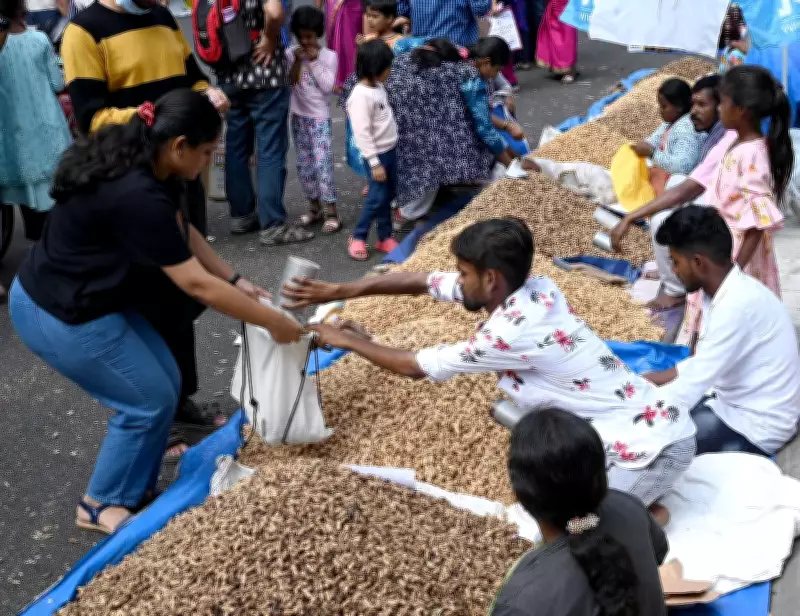
The Gujarat government has released a comprehensive account of Minimum Support Price procurement over the past decade, revealing that between 2015-16 and 2025-26, 1.1 crore metric tonnes of agricultural produce worth Rs 65,570 crore were procured at MSP from more than 48.98 lakh farmers across the state.
Groundnut and Cotton Dominate
Groundnut and cotton dominate the procurement figures. Over the 10-year period, 52.5 lakh metric tons of groundnut were procured, with farmers receiving Rs 31,941 crore. Cotton procurement stood at 25.2 lakh MT, yielding Rs 17,759 crore, with the government stepping in to maintain support prices even during periods of declining global cotton rates.
Gram and Tur Procurement
Gram and tur also recorded significant procurement. Gram, a major rabi crop, saw 16.8 lakh MT procured for Rs 9,549 crore. Tur, grown widely in central and south Gujarat, contributed 5 lakh MT worth Rs 3,222 crore. Mustard, soybean, urad, and moong procurement has additionally benefited smaller and marginal farmers, though crop-specific figures for these were not detailed.

Sharp Expansion in Scheme
The sharpest indicator of the scheme's expansion is the year-on-year comparison. In 2016-17, procurement worth Rs 1,775 crore was made from 2.01 lakh farmers. By 2025-26, more than 14 lakh farmers sold 32.5 lakh MT of produce worth Rs 23,800 crore under MSP — a 7-fold increase in farmer participation and a 13-fold increase in procurement value.
Rise in MSP Rates
MSP rates themselves have risen considerably over the period. Paddy MSP increased by 61%, wheat by 59%, bajra by 108%, hybrid jowar by 127%, groundnut by 102%, and cotton by up to 99%.
Central Government Announcements
The central government now announces MSP before the sowing season, allowing farmers to plan cropping patterns accordingly. Rates are determined by the Commission for Agricultural Costs and Prices, which factors in seeds, fertilisers, electricity, diesel, and labour costs, with the stated aim of ensuring approximately 50% profit over the cost of production.
Direct Benefit Transfer Implementation
On the administrative side, direct benefit transfer has replaced older payment channels, crediting MSP amounts directly to farmer bank accounts and reducing middlemen. Online registration and SMS-based systems have cut queuing at procurement centres.
Government's Perspective
The state government has framed these figures as evidence of farmer welfare during the 12 years of Prime Minister Narendra Modi's tenure, though the procurement data itself covers the 10-year period from 2015-16 to 2025-26.






