Haryana Government Greenlights Gurgaon-Faridabad-Noida Namo Bharat Corridor
The Haryana government has officially approved the alignment for the proposed Gurgaon–Faridabad–Noida Namo Bharat corridor, marking a pivotal advancement in expanding high-speed regional connectivity across the National Capital Region (NCR). Chief Minister Nayab Singh Saini hailed this decision as a crucial step toward strengthening urban transport infrastructure in these rapidly growing cities.
Key Features of the Gurgaon Segment
As outlined in the proposal by the National Capital Region Transport Corporation (NCRTC), Gurgaon will benefit from six dedicated metro stations along the alignment. Additionally, two integrated RRTS-cum-metro hubs are planned at IFFCO Chowk and Sector 61, designed to facilitate seamless transfers between high-speed regional trains and local metro services.
Strategic Station Locations in Gurgaon
The proposed metro stations in Gurgaon are strategically positioned at Sector 29, Millennium City Centre, Sector 52, Wazirabad, Sector 57, and Sector 58/61. These locations have been carefully selected to serve densely populated residential neighborhoods and bustling commercial hubs, significantly improving last-mile and intra-city travel efficiency.

Dual-Service Model on a Single Corridor
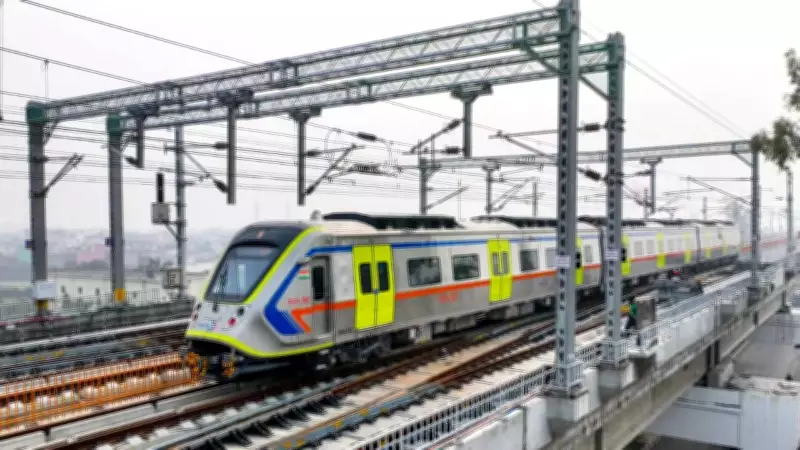
NCRTC has introduced an innovative dual-service model, proposing to operate both Namo Bharat high-speed trains and metro services on the same alignment within the city. While RRTS trains will enable fast intercity movement between Gurgaon, Faridabad, and Noida, metro services will cater to shorter, daily commuting needs within Gurgaon itself.
Project Scope and Financials
The total length of the proposed corridor is 64 kilometers, with 52 kilometers falling within Haryana, covering key areas of Gurgaon and Faridabad. The project is estimated to cost approximately ₹15,000 crore and is anticipated to dramatically reshape regional mobility patterns, offering a sustainable alternative to road travel.
Environmental Considerations and Integration
Officials emphasized that the route has been meticulously planned to serve upcoming sectors while avoiding environmentally sensitive zones, such as the Tau Devi Lal Biodiversity Park. Integration points have been designed to connect with Delhi Metro’s Yellow Line, Rapid Metro at Sector 61, and the proposed Gurgaon Metro network, ensuring comprehensive multimodal access.
Faridabad's Integrated Stretch
In Faridabad, a 16-kilometer section from Sainik Colony to Badshapur has received approval. This stretch will cover important localities including NIT, Bata Chowk, and Sectors 12 to 15, and will connect with Delhi Metro’s Violet Line, further enhancing regional connectivity.
Vision for Airport-to-Airport Connectivity
The corridor is envisioned to provide seamless connectivity between Indira Gandhi International Airport in Delhi and the upcoming Noida International Airport in Jewar. This long-term goal could ease airport access for millions of commuters and support substantial economic growth across the NCR.
Debates Over Alignment and Starting Point
Earlier discussions involved Gurgaon Metro Rail Limited suggesting an underground alignment within the city and proposing Rajiv Chowk as the starting point instead of IFFCO Chowk. The argument centered on Rajiv Chowk serving denser residential and commercial zones, potentially generating stronger all-day ridership.
Expected Benefits and Future Steps
Chief Minister Saini stated that the corridor will alleviate traffic congestion in Gurgaon and Faridabad, promote sustainable mobility, and open new avenues for investment and employment. With the detailed project report set to be prepared soon, this initiative is positioned as a cornerstone of Haryana’s long-term urban transport strategy, promising transformative impacts on regional travel and development.