For decades, Tamil Nadu has been a beacon of social progress in India, driven by the Dravidian ideal that education and opportunity are universal rights. This philosophy powered remarkable achievements in literacy and social mobility, lifting countless families out of poverty.
The Alarming Downturn in National Exam Success
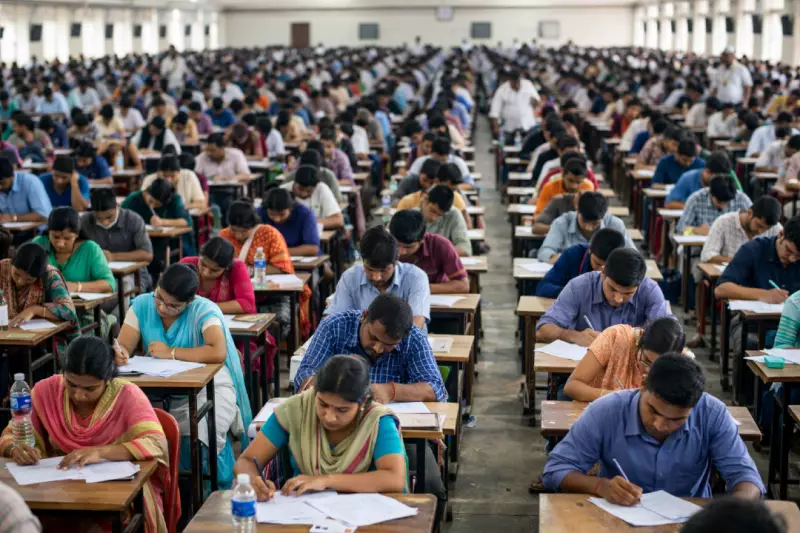
However, a worrying trend surfaced after 2017. Data indicated a steady decline in the state's representation in prestigious national competitive exams, particularly the Union Public Service Commission (UPSC) civil services examination. The core issue was stark inequality: aspirants in metropolitan hubs had access to premium coaching institutes, while those from smaller towns and rural areas faced prohibitive costs, scarce quality materials, and a lack of structured mentorship. This disparity led to a drastic fall, with only 27 students clearing the exam in 2021—a figure that sounded an urgent alarm for a state renowned for its administrative talent.
Naan Mudhalvan Competitive Exams: A Structural Solution
In response, the Tamil Nadu government launched the Naan Mudhalvan Competitive Exams (NMCE) vertical on March 7, 2023, under the Tamil Nadu Skill Development Corporation. Conceived from direct dialogues with students across districts, the initiative addressed a common plea: the ambition to succeed was present, but the financial means were not. NMCE was designed not as a temporary subsidy but as a comprehensive ecosystem reform to make competitive exam preparation accessible, affordable, and aspirational once more.

The program aligns with Chief Minister M K Stalin's broader Naan Mudhalvan vision to empower every student as a first-generation achiever. While the parent scheme covers diverse sectors, NMCE specifically targets exams conducted by Union government recruiting agencies.
Three-Pillar Strategy: Finance, Coaching, and Residence
NMCE's architecture rests on three core pillars: financial support, professional coaching, and residential programs. Under the UPSC civil services incentive scheme from the 2023–2024 budget, 1,000 aspirants are selected annually via a transparent test. They receive a monthly scholarship of ₹7,500 for 10 months for prelims preparation. Qualifiers for the mains exam get a one-time grant of ₹25,000, and from 2025, those reaching the personality test will receive ₹50,000.
The results speak volumes. In 2023–2024, 453 students cleared the prelims. The following year, 2024–2025, saw 559 prelims successes, 134 mains clears, and 50 final merit list entries. Notably, B Sivachandran from Dharmapuri secured an impressive All India Rank 23. In the ongoing 2025–2026 cycle, 659 candidates have passed the prelims, with 155 selected for the personality test; 87 of them were trained at the government-run All India Civil Services Coaching Centre (AICSCC).
Beyond Statistics: Restoring Confidence and Expanding Inclusion
The scheme's most profound impact is psychological. An atmosphere of renewed confidence is palpable in smaller towns, with libraries buzzing and study circles revitalized. A symbolic success story is that of S Inba from Tenkasi, daughter of a retired bus conductor and beedi-roller. As a NMCE UPSC scheme beneficiary, she was selected for the Indian Police Service (IPS) in 2023, proving how removing financial barriers unlocks potential.
Building on this, the 2024–2025 budget introduced a residential coaching program for Staff Selection Commission (SSC), Railway, and Banking examinations. The six-month full-time residential training, offered in Chennai, Coimbatore, and Madurai, covers coaching, accommodation, food, and resources. In its first year, 80 out of 510 trained students were placed in nationalised banks, SSC, and Railway services. K Bhuvaneshwari from a remote Dharmapuri village, who could never afford private coaching, is now an Agriculture Field Officer at Punjab National Bank after benefiting from this program.

The scheme ensures transparency through technology-driven merit-based selection, direct benefit transfers, and periodic audits. By institutionalizing this support, Tamil Nadu is reinforcing a tradition of inclusive, merit-based public service, demonstrating that the pursuit of excellence and equality can go hand in hand.