Maharashtra Electricity Regulatory Commission Opens Public Consultation on 2026-27 Renewable Energy Tariffs
The Maharashtra Electricity Regulatory Commission (MERC) has officially initiated a public consultation process regarding its suo motu draft order for determining the generic renewable energy tariff applicable for the financial year 2026-27. This comprehensive draft order encompasses proposed rates for surplus and inadvertent power exported under various arrangements including net metering, gross metering, and net billing systems.
Urgent Call to Action for Rooftop Solar Stakeholders
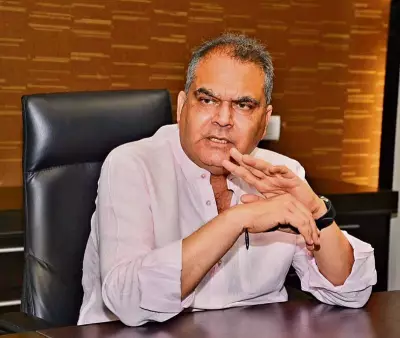
Reacting to this significant development, prominent solar consultant Sudhir Budhay has issued an urgent appeal to rooftop solar owners across Maharashtra. He strongly encourages active participation in the consultation process before the critical deadline of March 20, 2026. "This is a crucial opportunity for stakeholders to voice their concerns and ensure fair tariff structures," Budhay emphasized.
Consultation Process Details and Submission Guidelines
The draft order has been formally issued under the MERC (Terms and Conditions for Determination of Renewable Energy Tariff) Regulations, 2019, and is currently available for public review on the Commission's official website. Stakeholders have multiple avenues to submit their objections or suggestions:

- Through the dedicated 'E-Public Consultation' tab on the MERC portal
- Via email to the designated commission addresses
- By submitting hard copies addressed to the commission's Mumbai office
All submissions must be received by 6:00 PM on March 20, 2026, and can be presented in either English or Marathi. The commission has scheduled an e-public hearing via video conference on March 24, 2026. Participants wishing to be heard during this hearing must explicitly mention this intention while filing their initial submissions, as no separate notices will be issued for the hearing.
Historical Context and Current Concerns
Budhay highlighted that this consultation follows MERC's April 2025 order, where the commission established the rooftop solar generic tariff at ₹2.82 per kilowatt-hour (kWh). According to his analysis, this rate was derived from tariffs discovered for large ground-mounted solar projects under government schemes such as KUSUM and MSKVY. "This approach fundamentally ignores the distinct economic realities of rooftop solar installations," Budhay asserted.
He elaborated that rooftop solar systems represent small-scale, decentralized installations with significantly different and higher cost structures compared to massive megawatt-scale solar farms. "Equating these two fundamentally different segments creates economic disincentives that discourage investment in rooftop solar infrastructure," Budhay explained.
Understanding the Compensation Mechanism
Budhay provided detailed clarification about how net metering mechanisms function in practice. Net metering is primarily designed to allow consumers to utilize their own solar power during daylight hours, thereby reducing their overall electricity bills. Compensation at the generic tariff rate applies only to surplus power—specifically, electricity exported when generation exceeds immediate consumption.
For practical illustration, consider a 5 kW rooftop system generating 25 units in a single day. If the consumer utilizes 15 units while exporting 10 units to the grid, credit is provided exclusively for those 10 exported units. "This arrangement does not constitute a commercial power-selling business model," Budhay clarified. "Rather, it represents fair compensation for unavoidable exports that benefit the broader grid system."
Market Evidence Supporting Higher Rooftop Tariffs
Citing substantial market evidence, Budhay presented compelling data demonstrating the economic realities of rooftop solar projects. Recent rooftop installations for Indian Railways and Metro systems have discovered tariffs ranging from ₹3.25 to ₹4.35 per kWh. Similarly, REMCL rooftop auctions conducted in 2017 yielded rates between ₹2.39 and ₹4.00 per kWh.

"These concrete figures unequivocally demonstrate that rooftop solar economics operate on fundamentally different principles than utility-scale solar farms," Budhay stated. "A fair and sustainable tariff structure must accurately reflect the actual costs associated with rooftop installations."
Critical Importance of Stakeholder Participation
With MERC now actively considering tariffs for the financial year 2026-27, Budhay's appeal carries particular urgency. He emphasized that widespread participation from rooftop solar owners, industry stakeholders, and concerned citizens is essential to ensure the final tariff structure supports sustainable growth of decentralized solar energy throughout Maharashtra.
"The upcoming consultation represents a pivotal moment for Maharashtra's renewable energy future," Budhay concluded. "Active engagement from all stakeholders will help create tariff structures that genuinely encourage rooftop solar adoption while ensuring economic viability for system owners."