

NHAI Announces Toll Rate Increase for Delhi-Meerut Expressway in 2026-27
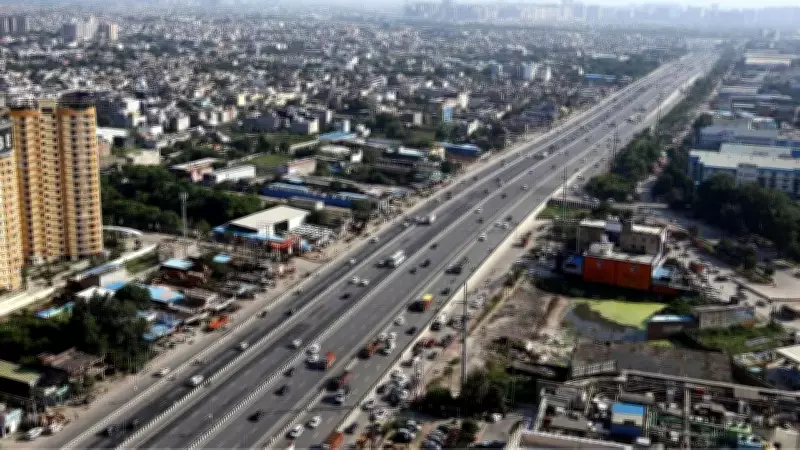
The National Highways Authority of India (NHAI) has proposed a significant revision in toll rates for the Delhi-Meerut Expressway (DME), set to take effect from the midnight of April 1, 2026. This adjustment marks an average increase of approximately 5% across various vehicle categories, impacting daily commuters and commercial traffic alike.
New Toll Structure and Payment Methods
In a move towards digitalization, NHAI has eliminated cash payments entirely on this stretch. Commuters will now be required to pay tolls exclusively through FasTag or UPI modes, streamlining the process and reducing congestion at plazas. The Delhi-Meerut Expressway, an access-controlled corridor, features seven key entry and exit points: Sarai Kale Khan, Indirapuram, Dundahera, Dasna, Rasoolpur Sikrod, Bhojpur, and Kashi toll plaza.
According to an NHAI official, the revised rates vary based on vehicle type and distance travelled. For light vehicles, including cars, jeeps, vans, and light motor vehicles, the one-way toll from Sarai Kale Khan to Meerut (approximately 82 kilometers) will rise from Rs 170 to Rs 175. The return journey fare will see a Rs 10 increase, moving from Rs 255 to Rs 265.

Impact on Commercial and Heavy Vehicles
Light commercial vehicles, light goods vehicles, and minibuses will experience a similar hike. The one-way toll on the Sarai Kale Khan to Meerut route will increase from Rs 275 to Rs 285, while the return journey cost will go up from Rs 415 to Rs 425. For other vehicle categories, such as buses, trucks with two axles, multi-axle vehicles (MAV) with three to six axles, and oversized vehicles with seven or more axles, rates have been adjusted proportionally.
From Indirapuram to Meerut, light vehicles will now pay Rs 120 for a one-way trip, up by Rs 5, with the return journey fare increasing from Rs 175 to Rs 189. These changes reflect NHAI's ongoing efforts to maintain and upgrade infrastructure while managing traffic flow efficiently.
Traffic Volume and Tolling Technology
The Delhi-Meerut Expressway and adjacent NH9 collectively handle an impressive 398,000 passenger car units (PCU) per day, with DME alone accounting for about 50,000 PCU. To accommodate this high volume, NHAI has implemented a "closed tolling" system on this stretch. This innovative approach ensures that all exits are equipped with FasTag readers, allowing commuters to pay only for the actual distance travelled.
Supporting this system, cameras have been installed at every entry and exit point of DME. These devices work in tandem with tag readers to accurately calculate the distance covered by each vehicle, enhancing transparency and fairness in toll collection.
Expressway Development and Specifications
The Delhi-Meerut Expressway was developed in four distinct packages, each contributing to its current form. The 8.7-kilometer stretch from Sarai Kale Khan to UP Gate became operational in May 2018, followed by the 22.2-kilometer segment from Dasna to Hapur in September 2019. The remaining sections, covering 19.22 kilometers from UP Gate to Dasna and 31.8 kilometers from Dasna to Meerut, were formally inaugurated in November 2021.
DME is designed as a six-lane expressway, complemented by a four-lane NH9 that accommodates two-wheelers and all other vehicle types. Speed limits are regulated at 100 km/hour in Uttar Pradesh and 70 km/hour in Delhi, ensuring safety and efficient traffic management along the corridor.
This toll rate revision is part of NHAI's broader strategy to fund maintenance and future enhancements, ensuring the expressway remains a vital artery for regional connectivity and economic growth.






