

Odisha Cabinet Greenlights Major Policy Reforms for Households and Homebuyers
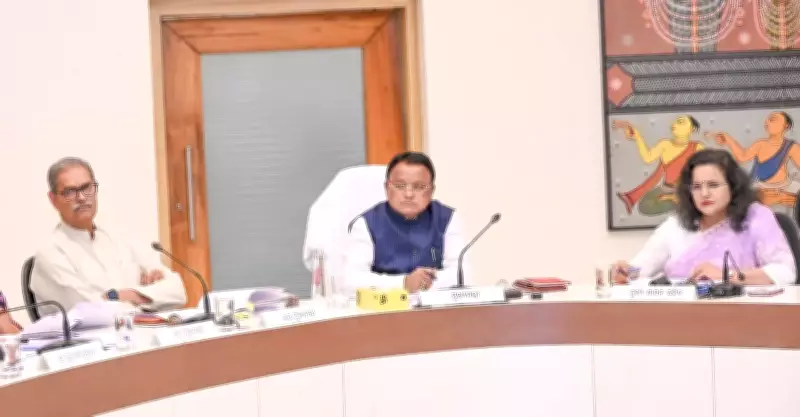
In a significant move aimed at providing relief to households and homebuyers, the Odisha state cabinet on Wednesday approved a comprehensive package of policy reforms. The decisions include a new city gas distribution policy to accelerate the rollout of cleaner fuels, substantial reductions in stamp duty costs for apartment associations, and amendments to improve the delivery of public services through digital governance.
New City Gas Distribution Policy to Boost PNG and CNG Access
Amid ongoing concerns about LPG availability, the cabinet cleared the Odisha City Gas Distribution (CGD) Policy, designed to ensure faster and wider access to piped natural gas (PNG) for households and compressed natural gas (CNG) for vehicles. Chief Secretary Anug Garg explained that the policy eliminates multiple clearance requirements by creating a single, unified regulatory framework.
"This policy is expected to significantly speed up project execution, making cleaner, more reliable, and more affordable cooking and transport fuel available to consumers much sooner," Garg stated.

The Housing and Urban Development Department has been designated as the nodal agency for implementation, supported by a state-level high-powered committee and district monitoring panels. Officials emphasized that the policy imposes no financial burden on the state government and includes a one-time moratorium on approval fees until March 2027.
This approach is anticipated to encourage private investment, generate employment opportunities, and facilitate the expansion of city gas networks to more urban centers. The benefits are projected to extend to households, daily commuters, and small businesses across the state.
Substantial Stamp Duty Relief for Apartment Associations
The cabinet also approved important amendments to the Odisha Apartment (Ownership and Management) Act, 2023, which will substantially reduce the stamp duty burden on Association of Allottees (AOA). Under the revised provisions, AOAs can now pay a nominal stamp duty of Rs 50,000 for the execution of the deed of conveyance for the transfer of common areas and facilities.
This replaces the previous rate of 5%, which often amounted to lakhs of rupees depending on the land size. Additionally, stamp duty for individual apartment units, including the undivided share in common areas, will now be collected at the time of execution of individual conveyance deeds.
Furthermore, the earlier three-slab stamp duty structure of 3%, 4%, and 5% has been replaced with a uniform 5% rate at the time of apartment registration. Officials clarified that these amendments are designed to simplify the registration process, remove procedural bottlenecks, and safeguard government revenue.
To implement these changes effectively, the cabinet approved the promulgation of an ordinance to amend the Indian Stamp Act, 1899.
Auto-Appeal System and Data Governance Framework Introduced
In a push to enhance administrative efficiency, the cabinet approved amendments to the Odisha Right to Public Services Rules, 2012 to introduce an innovative auto-appeal system. Under this new provision, online applications for notified services that exceed the prescribed time limit will be automatically escalated to the appellate or revisional authority.
This mechanism is expected to strengthen accountability and ensure time-bound service delivery for citizens. Simultaneously, the cabinet approved the Odisha State Data Policy 2.0, which seeks to institutionalize a comprehensive data governance framework covering the entire data lifecycle across all state government departments and affiliated bodies.
A multi-tier governance structure has been approved for implementation. While state data steering and governance committees will provide strategic oversight, the state data authority will guide critical aspects including data governance, protection, interoperability, and capacity-building efforts.
These collective decisions represent a holistic approach to governance reform, addressing energy access, housing affordability, and administrative efficiency through technological and policy innovations.






