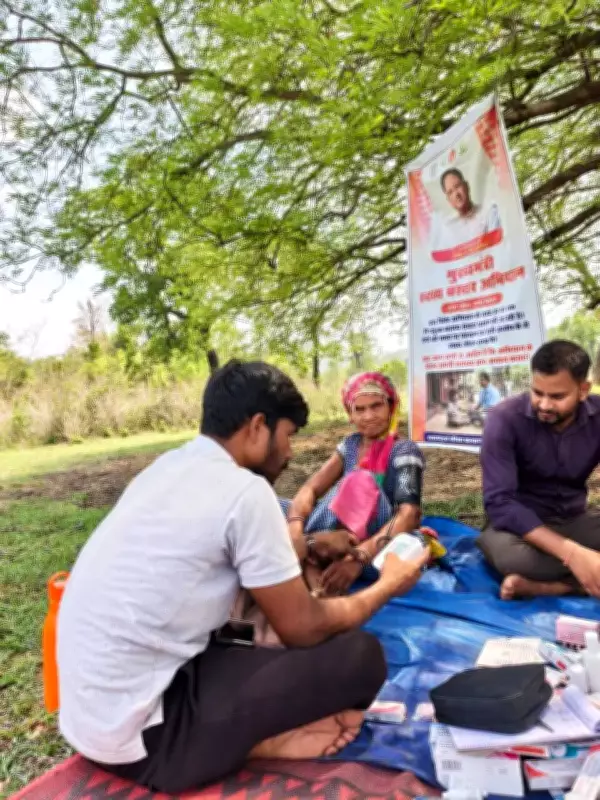
In a sweeping doorstep healthcare push in Bastar's interiors, over one lakh villagers in Narayanpur's regions have been screened under the 'Mukhyamantri Swasth Bastar Abhiyan', with nearly 800 patients flagged for specialised treatment. This marks a rare scale of early disease detection in one of Chhattisgarh's most inaccessible districts.
Campaign Launch and Objectives
Launched by Chief Minister Vishnu Deo Sai on April 13, the campaign aims to bring healthcare to remote and tribal regions, ensuring early detection and timely treatment of serious illnesses. The initiative is being run under the slogan 'Mawa Sehat, Mawa Bastar' (my health, my Bastar) and is seen as a key step towards improving health indicators in Bastar's interior belts.
Implementation in Narayanpur
In Narayanpur, the district administration has deployed 64 medical teams to carry out house-to-house health screening across far-flung villages. Each team works on a micro-plan, covering every household and screening all family members. Officials stated that screening is being conducted for diseases such as malaria, tuberculosis, leprosy, sickle cell, anaemia, diabetes, hypertension, cataract, and oral cancer.

- Free diagnostic and treatment services are being provided.
- Counselling is offered to promote early intervention and prevention.
- Villagers are being enrolled for Ayushman and ABHA health cards, enabling cashless treatment and digital health records.
- Patients showing symptoms of serious ailments are referred to district hospitals and higher medical centres for specialised care.
Data and Impact
Data released by the district administration shows that, as of May 10, a total of 1,03,474 people have been screened out of the targeted population of 1,68,645. As many as 792 patients have been referred to higher centres for advanced treatment. Officials say the campaign is building awareness around preventive health practices. With continuous monitoring and field-level follow-up, the administration hopes to strengthen last-mile healthcare delivery in the insurgency-affected region.
The initiative is a significant effort to address health challenges in one of India's most remote areas, bringing essential medical services directly to the doorsteps of vulnerable tribal populations.