Rajasthan Inks Crucial MoU to Extend Jal Jeevan Mission Until 2028 for Universal Tap Water Access
In a significant development aimed at transforming rural water infrastructure, the state of Rajasthan has formally signed a Memorandum of Understanding (MoU) with the Union Ministry of Jal Shakti. This agreement, executed under the revised guidelines of the Jal Jeevan Mission (JJM) 2.0, secures a vital extension of the flagship scheme until December 2028, positioning Rajasthan to achieve the ambitious goal of 100% household tap water coverage across the state.
High-Level Signing Ceremony in New Delhi
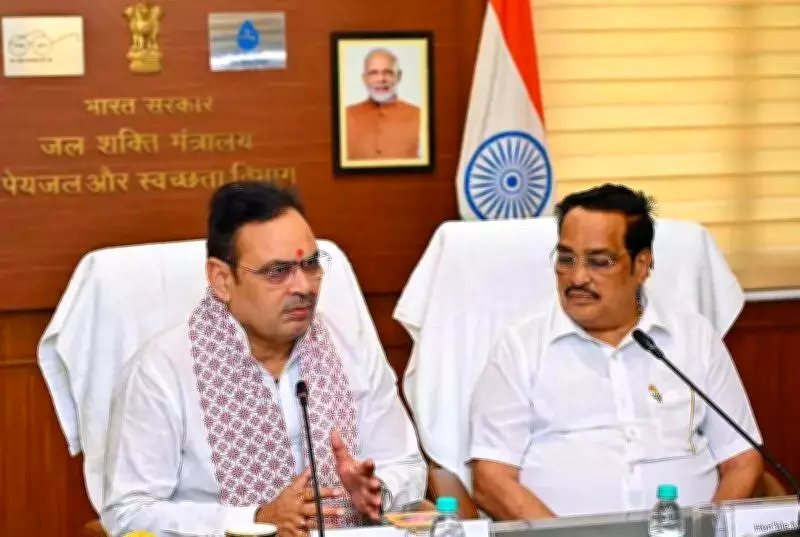
The MoU was signed in New Delhi on Tuesday in a ceremony graced by key dignitaries. Union Jal Shakti Minister C R Paatil, Rajasthan Chief Minister Bhajan Lal Sharma, and Rajasthan Public Health Engineering Department Minister Kanhaiya Lal Choudhary were present to witness and endorse this pivotal agreement. The signing marks a collaborative effort between the central and state governments to address one of Rajasthan's most pressing challenges: ensuring reliable access to clean drinking water for all its residents.
Current Status and Strategic Importance of the Extension
Rajasthan currently reports approximately 58% tap water coverage in households, placing it fourth from the bottom among states in the performance dashboard of the first phase of JJM, which concluded in 2024. Only Kerala, Jharkhand, and West Bengal rank lower. This extension under JJM 2.0 is expected to provide a critical and much-needed push to bridge the existing gaps, ensuring universal tap water access becomes a reality.

The MoU encompasses 11 key structural reform areas specifically designed to strengthen governance, enhance institutional capacity, and ensure the long-term sustainability of rural drinking water systems. These reforms are crucial for creating a resilient water supply network that can withstand the challenges posed by Rajasthan's arid climate and growing population.
Leadership Perspectives and Government Commitment
Chief Minister Bhajan Lal Sharma emphasized that the state government, keeping public interest at the forefront, had proactively urged the Centre to permit the implementation of JJM 2.0 under its revised guidelines. The MoU was finalized following the Centre's approval, which was granted after careful consideration of Rajasthan's unique needs and challenges.
Sharma termed the MoU a major step towards fortifying the state's water supply infrastructure and guaranteeing clean drinking water for every household. "The state government is committed to providing safe drinking water to every home, and this MoU will help accelerate the mission with better Centre-state coordination," he stated, underscoring the collaborative spirit driving this initiative.
Targeted Implementation and Regional Focus
Officials have indicated that the revised guidelines under JJM 2.0 will empower Rajasthan to fast-track pending water connections and significantly improve service delivery. This is particularly vital in rural and water-scarce regions, which have historically suffered from inadequate water access. Key districts identified for focused intervention include Jaisalmer, Barmer, Pali, Sirohi, Jodhpur, Churu, Sikar, and Jhunjhunu.
In alignment with the extended timeline, the state has now set a clear target to achieve full tap water coverage by 2028. This deadline provides a structured framework for planning, execution, and monitoring, ensuring that progress is measurable and accountable.
Far-Reaching Social and Economic Benefits
Experts and officials have highlighted that expanding piped water access will yield profound social and economic benefits, transforming lives and communities. An official from the Chief Minister's Office elaborated on these advantages:

- Health and Hygiene Improvement: Access to clean drinking water is expected to markedly improve health and hygiene, especially for women and children, by reducing the incidence of water-borne diseases and promoting better sanitation practices.
- Women's Empowerment: It will alleviate the daily burden on women, who often travel long distances to fetch water, thereby enhancing their safety, productivity, and overall quality of life.
- Migration Reduction: Reliable water supply in rural areas is likely to help curb distress migration, as water scarcity has long been a primary driver forcing families to relocate in search of basic resources and livelihoods.
This comprehensive approach not only addresses immediate water needs but also fosters long-term community resilience and economic stability, making the Jal Jeevan Mission 2.0 a cornerstone of Rajasthan's development strategy for the coming years.