

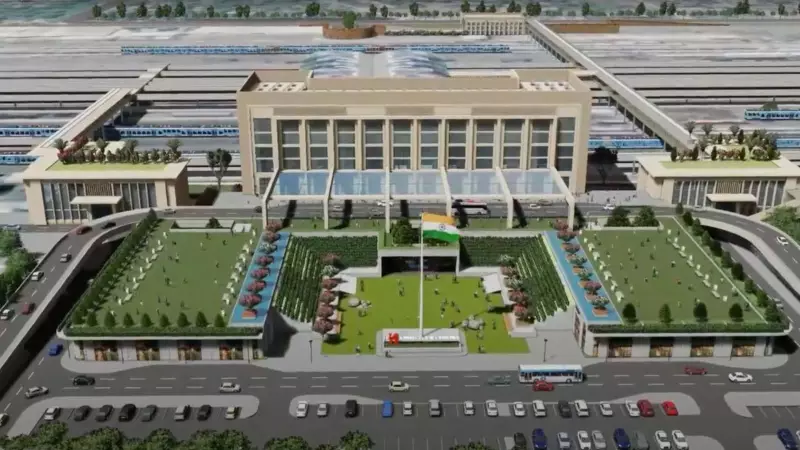
In a landmark infrastructure push, the Indian Railways has embarked on a transformative journey to redevelop 101 railway stations across West Bengal with a colossal investment of approximately Rs 3,600 crore. This ambitious initiative is part of the nationwide Amrit Bharat Station Scheme (ABSS), which aims to modernize over 1,300 stations, signaling a decisive shift from planning to large-scale delivery of future-ready public infrastructure.
Amrit Bharat Scheme: A New Benchmark for Railway Infrastructure
The Ministry of Railways has positioned the ABSS as a comprehensive blueprint to overhaul passenger experience and connectivity. According to official statements, the scheme marks the end of an "era of drift," establishing delivery, scale, speed, and outcomes as the new benchmarks for leadership in public projects. The vision extends beyond mere facelifts, aiming to create integrated hubs that cater to metropolitan centers, district headquarters, industrial towns, pilgrimage sites, and strategically vital border areas alike.
The selection of stations in West Bengal underscores a commitment to widespread, equitable development. The list includes major hubs like Howrah, Sealdah, Asansol, Kharagpur, and Kolkata, alongside critical junctions such as New Jalpaiguri (NJP), Siliguri, Malda Town, and Bolpur Shantiniketan. This geographical spread ensures that the benefits of modernization reach every corner of the state, from the industrial belts in the west to the gateways of the northeast.

Key Stations and Their Transformative Redevelopment
Several stations are poised for particularly significant upgrades that will redefine regional connectivity and economic activity.
New Jalpaiguri (NJP) is being transformed with a sanctioned cost of about Rs 335 crore into a modern gateway to the Northeastern states. The project includes the construction of new terminals, an air concourse, and upgraded platforms, significantly enhancing passenger comfort and operational capacity.
Santragachi station is emerging as a pivotal multi-modal hub with an investment of around Rs 380 crore. This redevelopment is strategically designed to decongest the busy Howrah-Kolkata corridor by distributing passenger traffic more efficiently.
In the industrial heartland, Asansol junction is being rebuilt at an estimated cost of Rs 431 crore to serve as a state-of-the-art rail hub for western Bengal's industrial belt, facilitating smoother movement of both passengers and goods.
A Unified Vision for Regional Growth
The overarching goal of redeveloping these 101 stations under a single, unified vision is to catalyze regional economic growth. Once completed, these stations are expected to evolve into vibrant centers of commerce and community activity, far surpassing their traditional role as transit points.
The Railways emphasizes that this initiative demonstrates that development is no longer confined to a few urban centers. From Adra and Alipurduar to Purulia and Digha, the scheme touches districts, towns, and border areas, promising a more balanced and inclusive infrastructural advancement for West Bengal.
The full list of 101 stations slated for modernization includes a diverse mix: Adra, Alipur Duar Jn., Andal Jn., Asansol Jn., Bandel Jn., Barddhaman, Barrackpore, Bolpur Shantiniketan, Canning, Digha, Howrah Jn., Jalpaiguri, Kharagpur Jn., Malda Town, New Cooch Behar, Rampurhat Jn., Ranaghat, Shalimar, and many others.
This massive redevelopment drive, reported on January 12, 2026, represents one of the most significant infrastructural investments in West Bengal's recent history, poised to reshape the state's rail travel experience for generations to come.






