

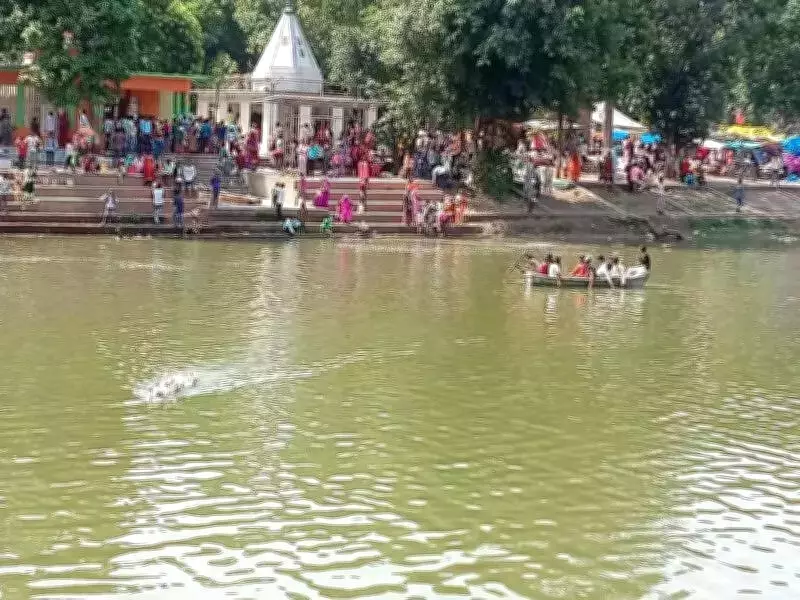
Major Boost for Gomti River Rejuvenation: Centre Approves Rs 56.8 Crore Project in Pilibhit
In a significant development for river conservation and religious tourism, the Central government has given its approval for a comprehensive Rs 56.8 crore project aimed at rejuvenating the Gomti river and developing its place of origin at Madhotanda village in Pilibhit district into a scenic pilgrimage and tourism destination of national importance.
Project Implementation Under National Mission for Clean Ganga
The ambitious initiative has been cleared by the Union Ministry of Jal Shakti and will be implemented under the aegis of the National Mission for Clean Ganga (NMCG). According to Rahul Dwivedi, director (projects) at NMCG, a government of India undertaking has been entrusted with preparing the detailed project report and executing the work in strict accordance with NMCG's prescribed standards and guidelines.
The decision was formally taken during the 68th meeting of NMCG's executive committee, marking a crucial step forward in preserving one of Uttar Pradesh's important river systems.

Transforming Gomti's Origin into Spiritual and Heritage Hub
Union Minister of State for Electronics and Information Technology and Pilibhit MP, Jitin Prasada, emphasized that the plan aims to transform the Gomti's origin into a well-developed spiritual and heritage hub. The proposed facilities include:
- A comprehensive heritage centre
- Modern retail plaza
- Dedicated yoga-sthal (yoga area)
- Musical fountains
- Contemporary crematorium facilities
Prasada revealed that he had consistently pursued the project with Jal Shakti Minister CR Patil, who approved it after careful consideration of the Gomti's religious significance, ecological value, and utility for the state.
Ecological and Cultural Significance of Gomti River
The Gomti river originates from Phulhar Lake, which spreads over approximately 850 metres and is fed by artesian wells. Historically, the physical condition of these wells had not been scientifically examined, leading to temporary arrangements being made to maintain water levels. These included linking the lake to a canal through a narrow channel and installing a solar water pumping unit to supply groundwater.
The river flows through 35 villages in Pilibhit district over a stretch of about 47.3 kilometers before entering Shahjahanpur district. Due to the absence of clearly demarcated revenue land for the river, portions of its course have been repeatedly encroached upon for agricultural purposes, giving it the appearance of a drain in several stretches.
Once complete, the origin of the Gomti river—which flows nearly 960 kilometers before joining the Ganga at Kaithi village in Ghazipur district—is expected to emerge as a major tourism and pilgrimage site, attracting visitors from across the country.
Two-Phase Implementation Strategy
The rejuvenation plan focuses on restoring the ecological health of Phulhar Lake while simultaneously improving facilities for pilgrims and tourists. It also seeks to showcase the river's rich cultural and mythological heritage. Key components of the project include:
- Improving river flow and enhancing water quality through sewage treatment
- Implementing solid waste management systems
- Developing the lakefront with proper landscaping
- Upgrading the temple area and surrounding infrastructure
The project will be implemented in two distinct phases. The first phase, with an outlay of Rs 43.8 crore, will integrate ecological restoration, wastewater management, and cultural infrastructure development. The second phase will focus on pilgrim- and tourist-oriented amenities such as:
- Well-designed pathways and walkways
- Modern lighting systems
- Food courts and dining facilities
- Recreational spaces for visitors
This comprehensive approach aims to balance environmental conservation with tourism development, creating a sustainable model for riverfront management that could potentially serve as a blueprint for similar projects across India.






