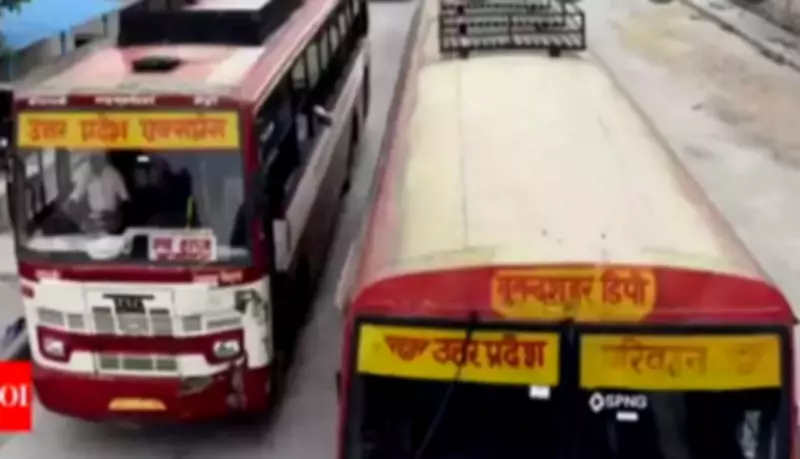
Uttar Pradesh Cabinet Greenlights Ambitious Rural Transport Scheme
The Uttar Pradesh state cabinet has given its formal approval to the Mukhyamantri Gram Parivahan Yojana-2026, a landmark initiative designed to ensure comprehensive bus connectivity reaches every single village across the state. This decision was announced following a cabinet meeting where the proposal was among 30 out of 31 presented items that received the go-ahead.
Bridging the Rural Transport Gap
Finance and Parliamentary Affairs Minister Suresh Khanna confirmed the cabinet's endorsement, highlighting the scheme's inclusion in a broad agenda of governance approvals. Elaborating on the policy's mechanics, Transport Minister Dayashankar Singh provided detailed insights into how it will transform rural mobility.
"At present, buses do not reach approximately 12,200 villages in Uttar Pradesh," Minister Singh stated. "Under the new Mukhyamantri Gram Parivahan Yojana, bus services will be extended to all 59,163 gram sabhas, fundamentally altering accessibility for the state's vast rural population."

Operational Framework and Vehicle Specifications
A key feature of the scheme is the involvement of private individuals and operators, who will be permitted to run these village buses. To facilitate operations, the buses will be exempt from permits and taxes, reducing financial barriers for service providers.
Recognizing infrastructural constraints, the policy mandates tailored solutions. "Out of the 12,200 villages currently without bus service, around 5,000 cannot accommodate large buses due to narrow or winding roads," Singh explained. "Therefore, we will deploy smaller buses with a maximum length of 7 metres and a seating capacity of up to 28 passengers to ensure these communities are not left behind."
Daily Schedule and Local Employment
The operational blueprint outlines a structured daily schedule. Buses will halt overnight in the villages. In the morning, they will travel via block and tehsil routes, aiming to reach district headquarters by 10 AM. This timing is strategically set to benefit students, individuals traveling to courts and government offices, and farmers or vendors heading to urban markets to sell their produce.
Between 10 AM and 4 PM, these buses may be diverted for other local transport services, after which they will return to their respective villages by 8 PM, depending on the distance. To ensure smooth operations and community integration, drivers, conductors, and cleaners will be recruited from nearby villages. This local hiring policy is expected to facilitate convenient overnight halts and early morning departures.
Governance and Implementation Timeline
Oversight of the scheme will be managed by a district-level committee chaired by the District Magistrate (DM), with the Chief Development Officer (CDO), Superintendent of Police (SP), Assistant Regional Transport Officer (ARTO), and Assistant Regional Manager (ARM) as members. This committee will have several critical responsibilities:
- Determining affordable fares at the local level to keep ticket prices accessible.
- Examining and selecting applications from prospective bus operators.
- Finalizing routes while appointing service providers.
- Ensuring each gram panchayat within a block receives service at least twice daily.
The implementation process is designed for efficiency. Application screening will be completed within 15 days. Successful applicants will then have 15 days to arrange their vehicles, with the entire selection and setup process targeted for completion within 45 days. The responsibility for ongoing implementation and monitoring will rest with the concerned regional transport managers.
Long-Term Vision and Benefits
The buses under the Mukhyamantri Gram Parivahan Yojana are projected to have an average operational life of 15 years, although initial operational permission will be granted for a 10-year period. By removing the requirement for permits and taxes, the scheme aims to create a sustainable and beneficial model for both operators and the commuting public.

"The government's core objective is to provide superior and reliable transport facilities to the public, particularly in underserved rural areas," Minister Singh emphasized. "Each approved operator will have the right to run vehicles on all gram panchayat routes within their designated block and can determine the frequency of trips accordingly, ensuring flexibility and coverage."
This comprehensive policy marks a significant step towards inclusive development in Uttar Pradesh, promising to enhance economic opportunities, educational access, and overall quality of life for millions of rural residents by seamlessly integrating them into the state's broader transport network.