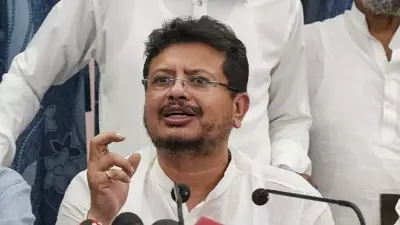
In a significant move for rural development, Uttarakhand Chief Minister Pushkar Singh Dhami on Tuesday announced the pivotal role of the Viksit Bharat-Guarantee for Rozgar and Ajeevika Mission (Gramin), or VB-G RAM G, for the hill state. He emphasized the scheme's critical importance for enhancing water conservation efforts, improving disaster management capabilities, and strengthening rural infrastructure in a region frequently affected by natural calamities.
Enhanced Employment and Accountability
Addressing a press conference in Dehradun, CM Dhami outlined the core enhancements of the scheme. A major highlight is the increase in guaranteed rural employment days from 100 to 125, marking a substantial 25% rise. To ensure accountability, the scheme mandates an unemployment allowance if work is not provided to a registered individual within 15 days, with officials held responsible for the delay.
Furthermore, to streamline the process for beneficiaries, all payments under the scheme will be made on a weekly basis. The government has also instituted a compensation mechanism for any delays in these payments, aiming to provide immediate financial relief to workers.

Technology for Transparency and Local Empowerment
Dhami positioned VB-G RAM G as a corruption-free employment guarantee programme, heavily reliant on technology for transparency. The system will employ a suite of digital tools including biometric attendance, geo-tagging of worksites, GIS mapping, and dedicated mobile applications. A public dashboard will allow for real-time monitoring, while AI-based systems will be deployed for fraud detection.
Adding another layer of oversight, the scheme mandates two social audits every year. The Chief Minister stressed that greater authority has been devolved to gram panchayats and gram sabhas. Development works will now be identified and planned locally, rather than being imposed by higher authorities. At least 50 per cent of the work will be executed directly at the gram panchayat level.
Processes such as job card issuance, new registrations, and the formulation of local work plans will be decided by the gram sabhas themselves, fostering grassroots democracy and self-reliance.
Financial Provisions and Expected Benefits
The scheme also outlines clear financial management protocols. The funding ratio between the centre and states is set at 60:40 for general states. Recognizing the unique challenges of hill states, the ratio is a favourable 90:10 for Himalayan and north-eastern states like Uttarakhand.
Citing an analysis by the State Bank of India, Chief Minister Dhami stated that states are projected to receive a net benefit of approximately Rs 17,000 crore from the act. This infusion is expected to significantly boost local economies and aid in the creation of durable assets in rural areas, directly contributing to the state's resilience against disasters and water scarcity.