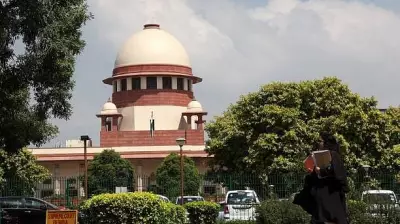
Ahmedabad Court Clears Morris Samuel Christian in 2011 Lawyer Impersonation Case
In a significant legal development, an Ahmedabad court has acquitted Morris Samuel Christian in a 2011 case where he was accused of cheating by allegedly impersonating a lawyer at the family court without a valid licence to practise. The ruling, delivered by Additional Chief Judicial Magistrate D R Thakur, highlighted that the prosecution could not establish the charges beyond a reasonable doubt, leading to Christian's acquittal.
Background of the 2011 Case
The case dates back to September 2011, when a commotion erupted at the family court located in the Old High Court compound in Ahmedabad. Members of the family court's Bar raised objections against Christian, asserting that he was appearing as an advocate in a maintenance case without holding a licence from the Bar Council of Gujarat. In response, other lawyers called the police, leading to an FIR being filed against Christian under Section 419 of the Indian Penal Code for cheating by impersonation.
During the incident, witnesses reported that Christian was seen wearing a black coat and a white neckband, attire typically associated with lawyers. However, the Bar Council of Gujarat and the family court's Bar confirmed that Christian was not a registered member and lacked the necessary authorization to practise law. Despite these allegations, the prosecution faced challenges in proving that Christian intended to deceive by posing as a lawyer.
Court's Verdict and Legal Reasoning
In his verdict, Magistrate D R Thakur stated, "The ingredients of Section 419 of IPC are not proven against the accused... The prosecution here failed to prove its case beyond a reasonable doubt, and when there is a doubt, the benefit should go to the accused." This principle of criminal law, emphasizing the presumption of innocence until proven guilty, played a crucial role in the acquittal.
Christian defended himself by arguing that he was a member of the Income Tax Bar and had visited the family court solely to get an affidavit prepared, not to practise law. The court found that the evidence presented was insufficient to conclusively demonstrate that he had engaged in cheating by impersonation, thereby leading to the dismissal of the charges.
Recent Context and Broader Implications
This acquittal comes amid heightened attention on Christian in 2024, when local courts ordered FIRs against him for allegedly acting as an unauthorised arbitrator. In those separate cases, he is accused of conducting arbitration proceedings without legal authority and awarding government and Ahmedabad Municipal Corporation (AMC) land parcels, valued at crores of rupees, to private parties. These ongoing matters highlight the complexities of legal practice and enforcement in India.
The case underscores the importance of rigorous evidence in criminal proceedings and serves as a reminder of the legal safeguards protecting individuals from unproven allegations. It also raises questions about the regulation of legal professionals and the challenges in preventing unauthorized practice.
As the legal landscape evolves, this ruling may influence future cases involving similar accusations, reinforcing the need for clear proof in establishing guilt. The acquittal of Morris Samuel Christian marks a pivotal moment in this long-standing legal saga, with potential ramifications for both his personal legal battles and broader judicial practices.