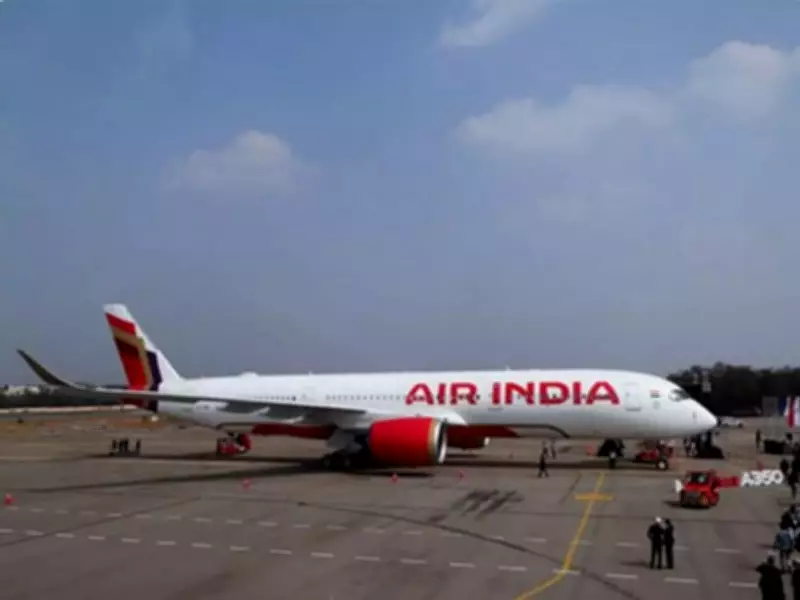
Airlines Navigate Airspace Disruptions Following US-Israeli Strikes on Iran
In the wake of the recent US-Israeli military strikes against Iran, airlines operating in the affected regions are implementing significant operational changes. Carriers are now actively avoiding the impacted airspaces while simultaneously working to evacuate their crew members from high-risk areas. This development is set to have far-reaching consequences for global aviation, particularly for flights connecting the West with India and other eastern destinations.
Immediate Flight Diversions and Safety Measures
When the combat operations commenced in Iran, hundreds of commercial flights were either traversing or preparing to enter the affected airspaces stretching from Iran to Israel. Among these was Air India's flight AI 139, en route from Delhi to Tel Aviv, which found itself in Saudi airspace at the critical moment. In a swift response to ensure passenger and crew safety, the airline instructed the pilots to abort the mission and divert to Mumbai instead.
Similarly, Air India's Chicago-Delhi flight, AI 126, was on the verge of entering Iraqi airspace when it was redirected towards Syria to adopt a longer, albeit safer, route back to India. An Air India spokesperson emphasized the airline's commitment to safety, stating, "AI139 operating from Delhi to Tel Aviv on Feb 28 is air returning to Mumbai due to closure of air space in Israel and in the interest of safety of passengers and crew. Air India regrets the inconvenience caused to passengers due to this unforeseen situation and remains committed to maintaining the highest standards of safety. We will continue to assess the safety and security environment for our flight operations and adjust operations proactively as needed."

Extended Flight Durations and Operational Adjustments
Looking ahead, flights between Western nations and India, along with other eastern locales, are anticipated to experience increased travel times. For routes to North America, airlines may need to incorporate additional fueling stops to accommodate the extended distances necessitated by the altered flight paths. Air India, for instance, is considering Vienna or Rome as potential refueling points for its North American services.
Industry insiders reveal that Air India had already ceased overflying Iraq on its night flights to and from Europe starting Friday night. The airline has now extended this precaution to daytime flights as well, further complicating its operational logistics. The entire airspace west of Pakistan, extending to Iraq, has been declared a no-go zone for Indian carriers. This restriction is expected to impact all flights destined for or originating from Europe, the United Kingdom, and North America.
Crew Evacuations and Broader Impacts
Air India is currently engaged in efforts to evacuate its crew members from Tel Aviv, underscoring the heightened security concerns in the region. Meanwhile, other carriers like IndiGo are also evaluating the repercussions on their flight schedules. IndiGo's services to the Commonwealth of Independent States (CIS) are among those likely to be affected by the ongoing airspace disruptions.
In a strategic move to circumvent these challenges, Air India has sought permission to utilize the Hotan waypoint in northwestern China. If approved, this route would allow the airline to bypass Pakistani airspace entirely for its flights to and from Europe, the UK, and North America, navigating instead through high mountainous terrains. However, clearance for this alternative path has not yet been granted, leaving airlines in a state of operational uncertainty.
The cumulative effect of these adjustments highlights the intricate balance between ensuring passenger safety and maintaining efficient flight operations in times of geopolitical tension. As airlines continue to monitor the evolving situation, further changes to flight routes and schedules may be imminent, potentially reshaping air travel patterns in the region for the foreseeable future.